
- Also called:
- Quelpart Island
- Korean in full:
- Jeju-teukbyeoljachi-do

Jeju Island
-
What is Jeju Island?
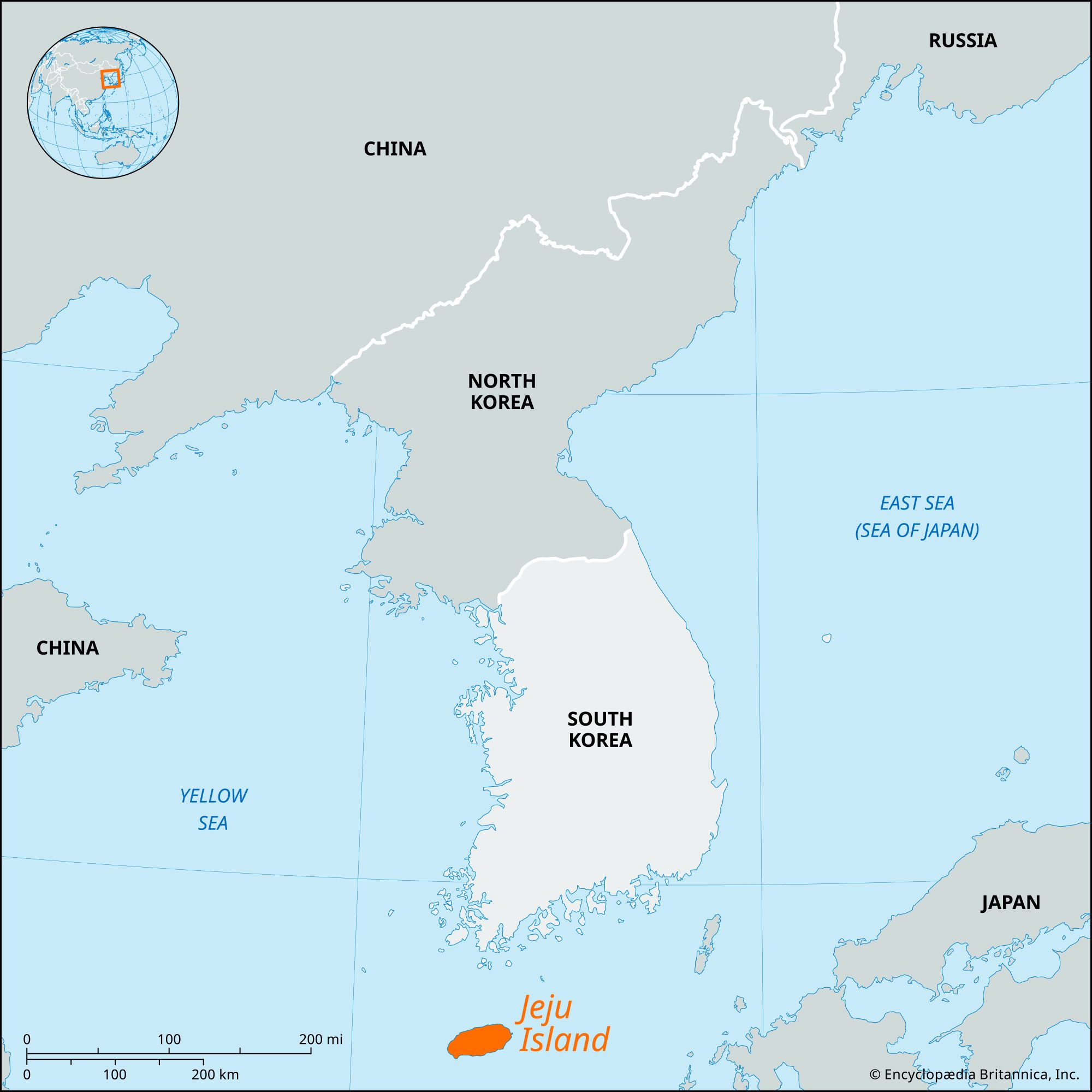
Jeju Island is an oval-shaped island and special autonomous province of South Korea, located in the East China Sea. Measuring 40 miles east to west and 16 miles north to south, it is composed of volcanic material that rises to Mount Halla, a national park with a lake in its crater.
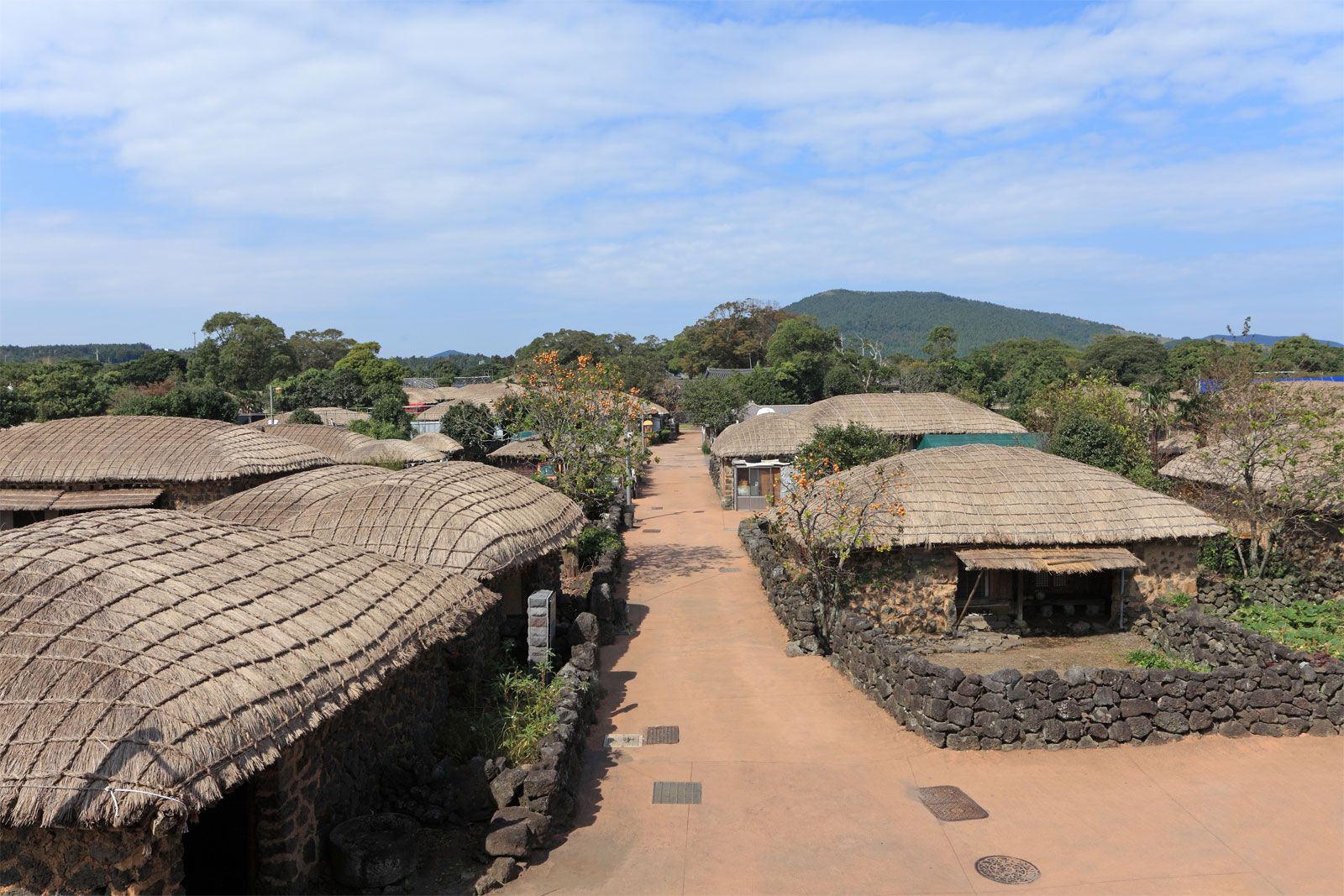
Jeju was an independent kingdom called Tamna until 938. Later, it was used for political exile and grazing. The island is known in the West as Quelpart. Jeju achieved provincial status in 1946. Today, tourism, agriculture, and fishing drive the economy. The city of Jeju is the principal port and airport.
2 Britannica SourcesCreated from Britannica articles using AI. AI can make mistakes, so verify using Britannica articles. -
Where is Jeju Island located?
Jeju Island is a special autonomous province of South Korea in the East China Sea. It is located 60 miles (100 km) southwest of South Jeolla province. The island is oval, measuring 40 miles (64 km) from east to west and 16 miles (26 km) from north to south. Jeju is also the name of the island's capital city, which is the island’s principal port and the site of its main airport.
2 Britannica SourcesCreated from Britannica articles using AI. AI can make mistakes, so verify using Britannica articles. -
What is the climate like on Jeju Island?
Jeju Island has an oceanic climate that allows for the growth of subtropical plants. The island is bathed in warm currents, contributing to its mild weather conditions. Jeju's climate is influenced by its location off the southern coast of South Korea, where the frost-free season lasts for more than 240 days. The southern part of Jeju Island is the wettest area in South Korea, receiving more than 70 inches (1,800 mm) of precipitation annually. Late-summer typhoons occasionally bring heavy showers and storms to the island.
2 Britannica SourcesCreated from Britannica articles using AI. AI can make mistakes, so verify using Britannica articles. -
What are some famous natural features of Jeju Island?
Jeju Island, a special autonomous province of South Korea since 2006, boasts several famous natural features. The island's volcanic origins have created a unique landscape, highlighted by Mount Halla, a dormant volcano with a crater lake at its summit. Hundreds of smaller crater-formed hills dot the landscape, and seaside precipices feature stunning waterfalls.
Lava tunnels, also called tubes, are significant attractions, and, along with Mount Halla and other volcanic formations, contribute to Jeju's designation as a UNESCO World Heritage site. The island's climate also supports subtropical plants, adding to its diverse natural beauty.
1 Britannica SourceCreated from Britannica articles using AI. AI can make mistakes, so verify using Britannica articles. -
How is Jeju Island different from other provinces in South Korea?
Jeju Island stands out from other South Korean provinces because it is a special autonomous province, the smallest in the country, located in the East China Sea. Historically, it was once an independent kingdom known as Tamna. Jeju's unique volcanic landscape, featuring Mount Halla and lava tubes, has earned it a UNESCO World Heritage site designation. Its oceanic climate also supports subtropical plants, which are not as common in other provinces. While South Korea is divided into nine provinces, Jeju holds this special autonomous status.
3 Britannica SourcesCreated from Britannica articles using AI. AI can make mistakes, so verify using Britannica articles. -
Why is Jeju Island a popular destination for tourists and visitors?
Jeju Island is a popular destination for tourists and visitors because of its natural beauty and unique geological features. The island has a core of volcanic material that rises to form Mount Halla, which is a national park with a lake in its crater. Hundreds of crater-formed hills, seaside precipices with waterfalls, and lava tunnels are international sightseeing attractions. Jeju Island's lava tubes and volcanic formations were collectively designated a UNESCO World Heritage site in 2007. The island's warm currents and oceanic climate also support subtropical plants, adding to its appeal.
1 Britannica SourceCreated from Britannica articles using AI. AI can make mistakes, so verify using Britannica articles.
Jeju Island, island and (since 2006) special autonomous province of South Korea. The province, the smallest of the republic, is in the East China Sea 60 miles (100 km) southwest of South Jeolla province, of which it once was a part. The provincial capital is the city of Jeju.
Oval in shape, Jeju Island measures 40 miles (64 km) from east to west and 16 miles (26 km) from north to south. The island is composed of a core of volcanic material that rises symmetrically to the crest of Mount Halla (6,398 feet [1,950 meters]), which has a lake in its crater. The mountain and its surrounding area are a national park. Hundreds of crater-formed hills from which volcanic material once flowed, seaside precipices with waterfalls, and lava tunnels (or tubes) are international sightseeing attractions. The island’s lava tubes and certain other volcanic formations (including Mount Halla) were collectively designated a UNESCO World Heritage site in 2007. Jeju is bathed in warm currents, and its oceanic climate supports some subtropical plants.
Until 938 the island was an independent kingdom called Tamna. During the Goryeo period (935–1392) and the Joseon dynasty (1392–1910), it was used as a place of political exile and for grazing horses. The Dutch seaman Hendrik Hamel, the first Westerner known to have visited Korea, drifted to the island in 1653 and introduced it to the West by the name of Quelpart. Jeju achieved provincial (do) status in 1946. Following World War II, the island became a center of unrest as opposition to the planned division of the Korean peninsula grew. A major rebellion led by leftist guerrillas began on April 3, 1948, ahead of South Korea’s first general election, planned for early May. Government security forces attempted to suppress the uprising and regained control of the island in 1949, but sporadic fighting continued until the early 1950s. The government was later accused of having committed atrocities during the conflict; although there were no confirmed death tolls, decades later an official investigation estimated that more than 25,000 people had been killed. The extent of the U.S. military’s role in quelling the uprising caused much debate as well. In the early 21st century the South Korean government apologized for any abuses committed by its forces.



The city of Jeju is the island’s principal port and the site of its main airport, which handles domestic and international traffic. Seogwipo, on the southern coast, is the second largest city and the center of tourist activity on the island. Tourism, agricultural products (notably oranges), and fishing are among the chief contributors to the economy. A valuable marine product is a species of clam, the shell of which furnishes a special iridescent mother-of-pearl used for inlaid lacquer. Skilled women divers, called haenyeo (“sea women”), gather seaweed and shellfish. In the early 21st century, controversy erupted over the construction of a South Korean naval base on the southern coast. Area, including 26 small associated islands, 714 square miles (1,849 square km). Pop. (2020) 670,858.