
Quick Facts
- Related Places:
- Portugal
- ancient Rome
- Spain

Adding us as a Preferred Source tells Google you trust our content, so our articles show up more often in your Google Search, Discover feed, and AI Overviews.
verifiedCite
While every effort has been made to follow citation style rules, there may be some discrepancies.
Please refer to the appropriate style manual or other sources if you have any questions.
Select Citation Style
Hispania
ancient region, Iberian Peninsula
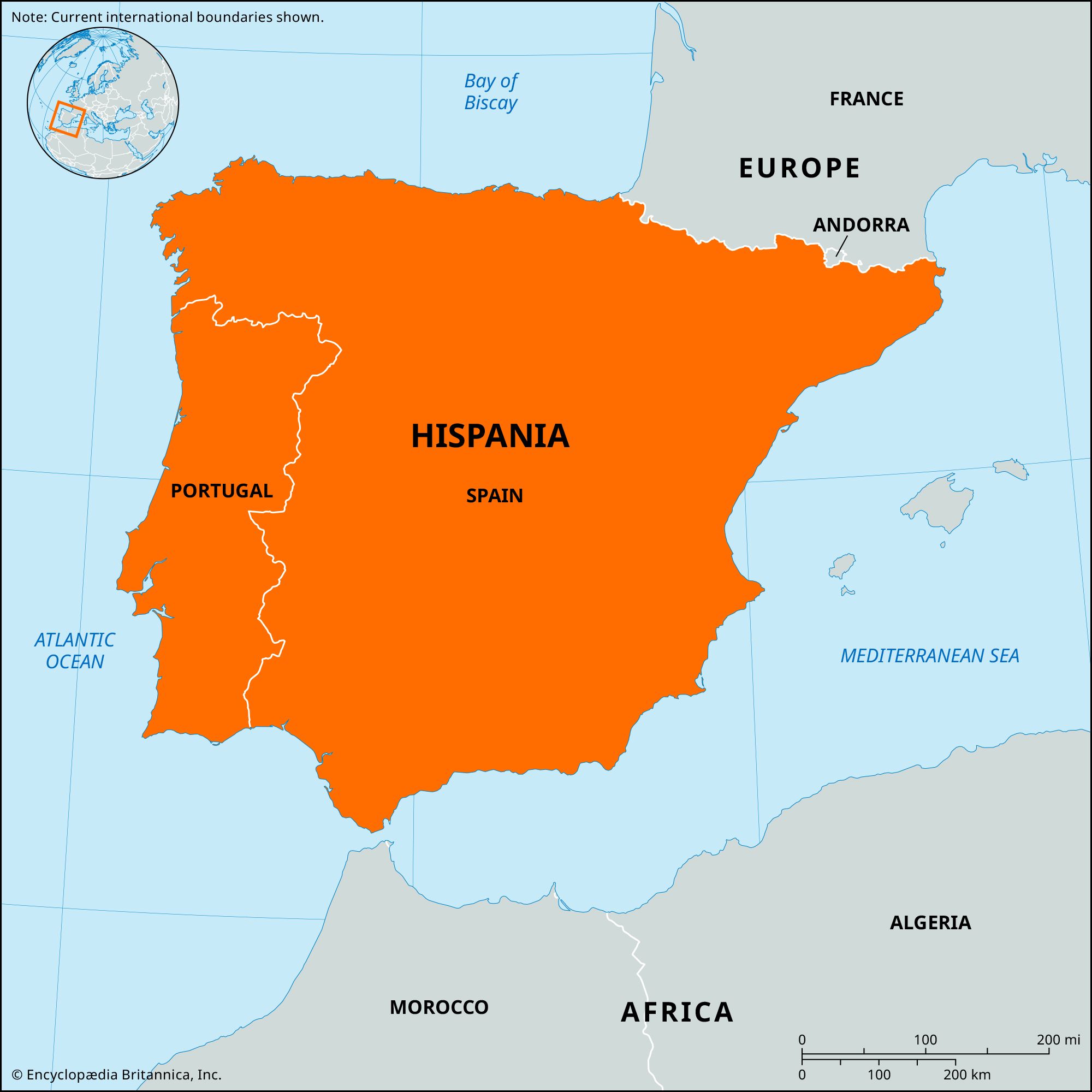
Hispania, in Roman times, region comprising the Iberian Peninsula, now occupied by Portugal and Spain. The origins of the name are disputed. When the Romans took the peninsula from the Carthaginians (206 bce), they divided it into two provinces: Hispania Ulterior (present Andalusia, Extremadura, southern León, and most of modern Portugal) and Hispania Citerior, or Tarraconensis (all of what is now northern, eastern, and south-central Spain). Under Augustus (reigned 27 bce–14 ce), Hispania Ulterior was further divided into Lusitania (Portugal and part of western Spain) and Baetica (Andalusia and southern Extremadura).
The Editors of Encyclopaedia Britannica This article was most recently revised and updated by Jeff Wallenfeldt.


Discover the fascinating events that shaped the world, straight from our editors.

By clicking “Sign Up”, you consent to the Britannica
Privacy Policy
and
Terms of Use.