



- Also spelled:
- Jenne or Dienné

Djenné
-
What is Djenné?
Djenné is an ancient trading city and center of Muslim scholarship in southern Mali. It sits on the Bani River, in a floodplain between the Bani and Niger rivers, and becomes an island during seasonal flooding.
Djenné was likely founded between the 8th and 13th centuries near Djenné-Jeno, one of sub-Saharan Africa’s oldest cities. Djenné grew as a trade hub between the central and western Sudan and Guinea’s tropical forests. By the mid-17th century, Djenné was renowned as a centre of Muslim learning. Today, Djenné is an agricultural trade center, known for its Great Mosque, the largest mud construction in the world.
2 Britannica SourcesCreated from Britannica articles using AI. AI can make mistakes, so verify using Britannica articles. -
Where is Djenné located in Mali?
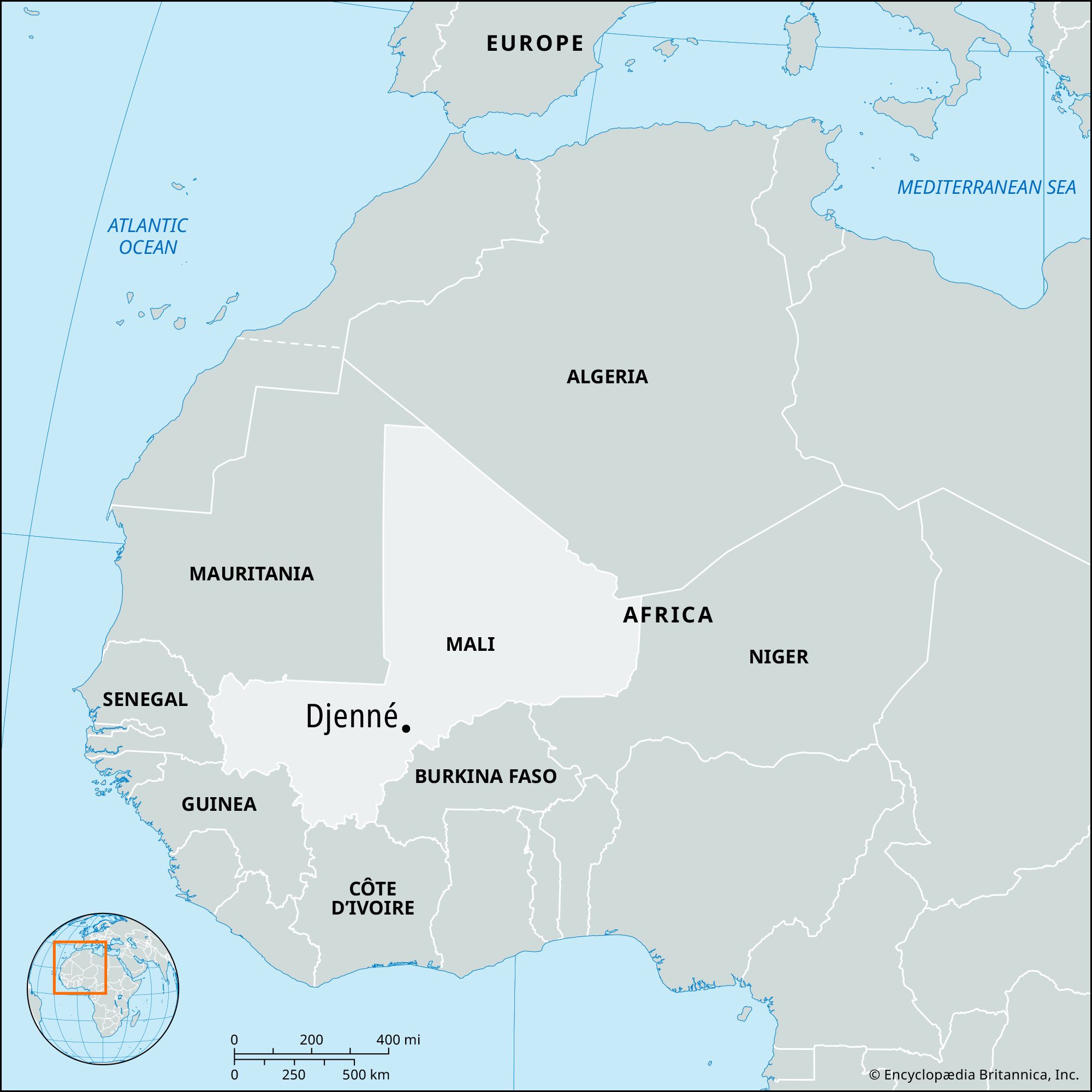
Djenné is an ancient trading city and center of Muslim scholarship in southern Mali. It is located on the Bani River, in the floodlands between the Bani and Niger rivers, approximately 220 miles (354 km) southwest of Timbuktu. The city is situated on small hills known as toguère, becoming an island during seasonal flooding. Djenné is traditionally known for its Sudanese architectural style, and the Djenné mosque is the largest mud building in the world.
2 Britannica SourcesCreated from Britannica articles using AI. AI can make mistakes, so verify using Britannica articles. -
Why is Djenné famous?
Djenné is famous as an ancient trading city, a center of Muslim learning, and for its Sudanese and Sahelian architecture. Likely founded between the 8th and 13th centuries, it grew as a trading hub between the central and western Sudan and Guinea’s tropical forests. By the mid-17th century, Djenné was renowned as a centre of Muslim learning. The most notable structure in the city is the Great Mosque, the largest mud construction in the world. Djenné, Djenné-Jeno, and other nearby archeological sites were collectively designated a UNESCO World Heritage site in 1988.
2 Britannica SourcesCreated from Britannica articles using AI. AI can make mistakes, so verify using Britannica articles. -
What is special about the Great Mosque of Djenné?
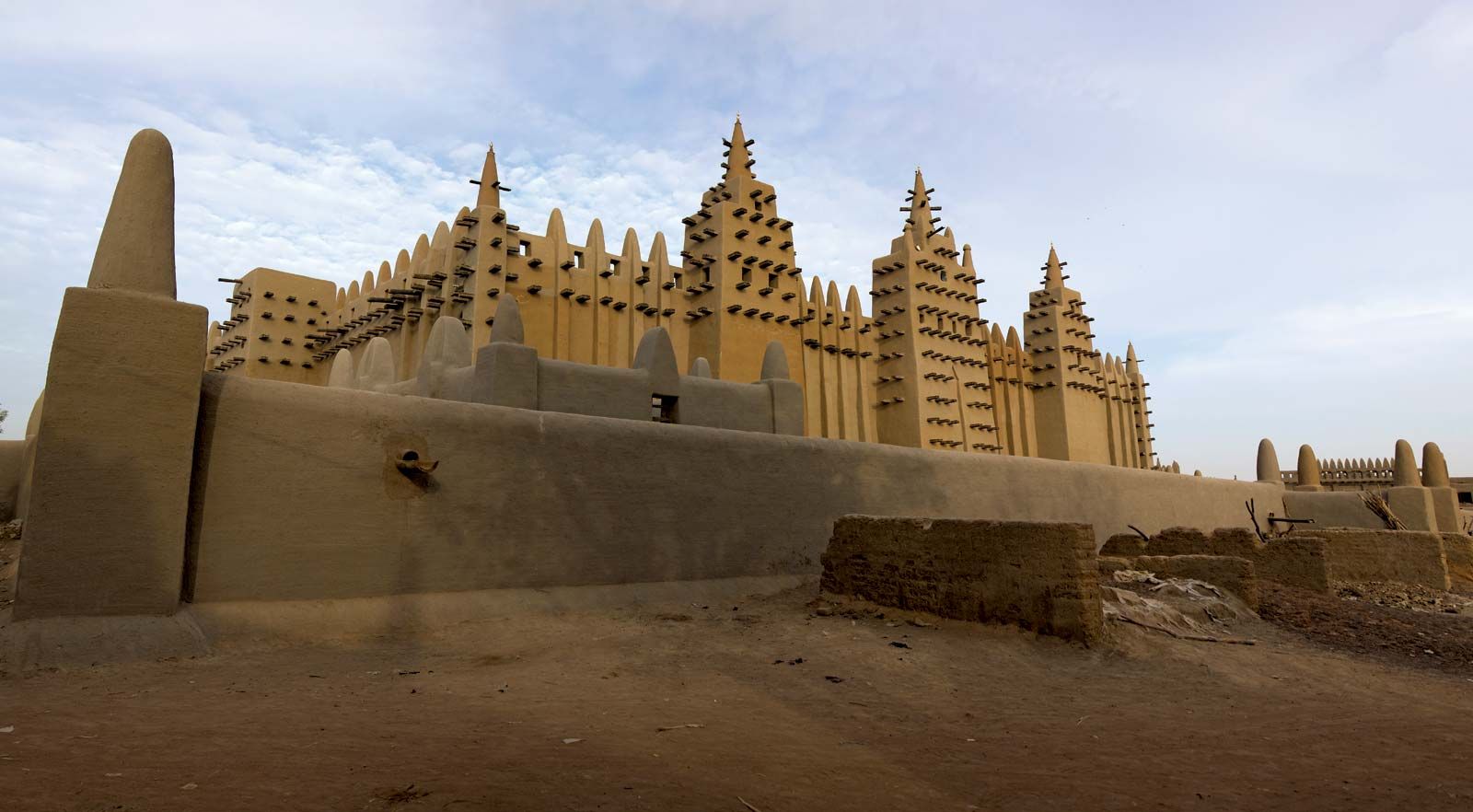
The Great Mosque of Djenné is the largest mud construction in the world and an outstanding example of Sudanese and Sahelian architecture. The mosque is well-known and is located in the ancient commercial town of Djenné, Mali. The structure is an example of Islamic structure and indigenous conical ancestral pillars and shrines. The mosque was greatly restored under French administration. The weekly Monday Market in front of the Great Mosque attracts people from throughout the region.
4 Britannica SourcesCreated from Britannica articles using AI. AI can make mistakes, so verify using Britannica articles. -
How did Djenné play a role in trade and learning in West Africa?
Djenné played a significant role in trade and learning in West Africa. It grew into a key trading center entrepôt between traders from the central and western Sudan and those from Guinea's tropical forests. The city particularly thrived due to its location at the head of trade routes to gold mines and its importance as a salt distribution center.
By the mid-17th century, Djenné was renowned as a center of Muslim learning. Under the Songhai kingdom, both Djenné and Timbuktu flourished as hubs for trade and Islamic scholarship.
2 Britannica SourcesCreated from Britannica articles using AI. AI can make mistakes, so verify using Britannica articles. -
How are traditional mud-brick buildings maintained in Djenné today?
Djenné, Mali, a UNESCO World Heritage site, is known for its traditional mud-brick architecture. Houses, like historic dwellings, were built on small hills to protect from seasonal flooding. The Great Mosque, rebuilt in 1906–07, stands as the largest mud construction globally, exemplifying Sudanese and Sahelian architectural styles. Traditional structures are made from round mud bricks known as djénné ferey. Today, Djenné serves as an agricultural trade center, hosting a weekly Monday Market in front of the Great Mosque.
2 Britannica SourcesCreated from Britannica articles using AI. AI can make mistakes, so verify using Britannica articles.
Djenné, ancient trading city and center of Muslim scholarship, southern Mali. It is situated on the Bani River and on floodlands between the Bani and Niger rivers, 220 miles (354 km) southwest of Timbuktu. The city, which sits on hillocks (small hills) known as toguère, becomes an island during the area’s seasonal flooding.
There is some uncertainty surrounding the establishment of Djenné. It was likely founded sometime between the 8th and the 13th century. It is near the site of Djenné-Jeno, an ancient city dating as far back as 250 bce—one of the oldest known cities in sub-Saharan Africa—that had fallen into decline near the time that Djenné was established. Djenné grew into an entrepôt between the traders of the central and western Sudan and those of Guinea’s tropical forests. The town was likely ruled by the Mali empire beginning in the 13th or 14th century until it was captured in 1468 (or 1473) by the Songhai emperor Sonni ʿAlī. The city benefited both from its direct connection by river with Timbuktu and from its situation at the head of the trade routes to the gold mines of Bitou (now in Côte d’Ivoire), to Lobé, and to Bouré. It was also an important entrepôt for salt. With the defeat of the Songhai empire by Moroccan forces in the 16th century, the town fell under Moroccan rule.
By the mid-17th century, Djenné was renowned as a centre of Muslim learning. The city was besieged after 1818 and subsequently subdued by the Fulani ruler of Macina, Shehu Aḥmadu Lobbo. He expelled those inhabitants practicing a form of Muslim worship that he disapproved of, and he allowed Djenné’s mosque to fall into ruin. Djenné was conquered by the Tukulor emperor ʿUmar Tal about 1861 and was occupied by the French in 1893. Thereafter its commercial functions were taken over by the town of Mopti, situated northeast of Djenné at the confluence of the Niger and Bani rivers. Under the French, Djenné’s large mud-walled Great Mosque was rebuilt in 1906–07. French administrators remained in Djenné until just prior to Mali’s independence in 1960.




Djenné and its environs host numerous ruins, remains, and buildings that are culturally and historically significant. As such, Djenné, Djenné-Jeno, and other nearby archaeological sites were collectively designated a UNESCO World Heritage site in 1988. The most notable structure in the city is the Great Mosque, which is the largest mud construction in the world and recognized as an outstanding example of Sudanese and Sahelian architecture. Also of note are tombs of saints and traditional structures made from round mud bricks known as djénné ferey.
Djenné is now an agricultural trade center. The weekly Monday Market in front of the Great Mosque attracts people from throughout the region. Pop. (2009) 26,267.