




Caen
-
Where is Caen located in France?
Caen is a city located in northwestern France, specifically in the Normandy region. It serves as the capital of the Calvados département. Situated on the Orne River, Caen is approximately 9 miles (14 km) from the English Channel, southwest of Le Havre. Historically, Caen gained importance under the Norman dukes during the 10th and 11th centuries and was once the capital of lower Normandy under William the Conqueror. Caen's accessibility to the English Channel is enhanced by a ship canal that extends to Ouistreham.
2 Britannica SourcesCreated from Britannica articles using AI. AI can make mistakes, so verify using Britannica articles. -
What is Caen known for historically?
Caen is known for its historical significance under the Norman dukes, especially William the Conqueror, who made it the capital of Lower Normandy. The city faced destruction during the Allied Normandy Invasion in 1944 but was later reconstructed.
Key historical facts:
* Captured twice by the English in 1346 and 1417, remaining under their control until 1450
* Served as a center for the Girondist movement during the French Revolution
* Site of the Caen Memorial, a museum dedicated to war and peace
* Home to architectural landmarks like Saint-\u00c9tienne and La Trinit\u00e9 churches, fine examples of Norman Romanesque styleCreated from Britannica articles using AI. AI can make mistakes, so verify using Britannica articles. -
Which famous events during World War II happened in Caen?
During World War II, Caen, France, was a crucial strategic point. The Germans used Caen as a central point of resistance against the British-Canadian advance following the Allied Normandy Invasion in 1944, which resulted in two-thirds of the city being destroyed.
Caen was a key city for transportation and maneuver for both the Allies and the Germans because all major roads in that sector of Normandy ran through it. The Allies' efforts to break out of the centre of the beachhead were met with fierce German resistance and counterattacks, especially around Caen in the British-Canadian sector.
3 Britannica SourcesCreated from Britannica articles using AI. AI can make mistakes, so verify using Britannica articles. -
What are some important landmarks or buildings to see in Caen?
Caen, France, boasts several significant landmarks reflecting its rich history:
-
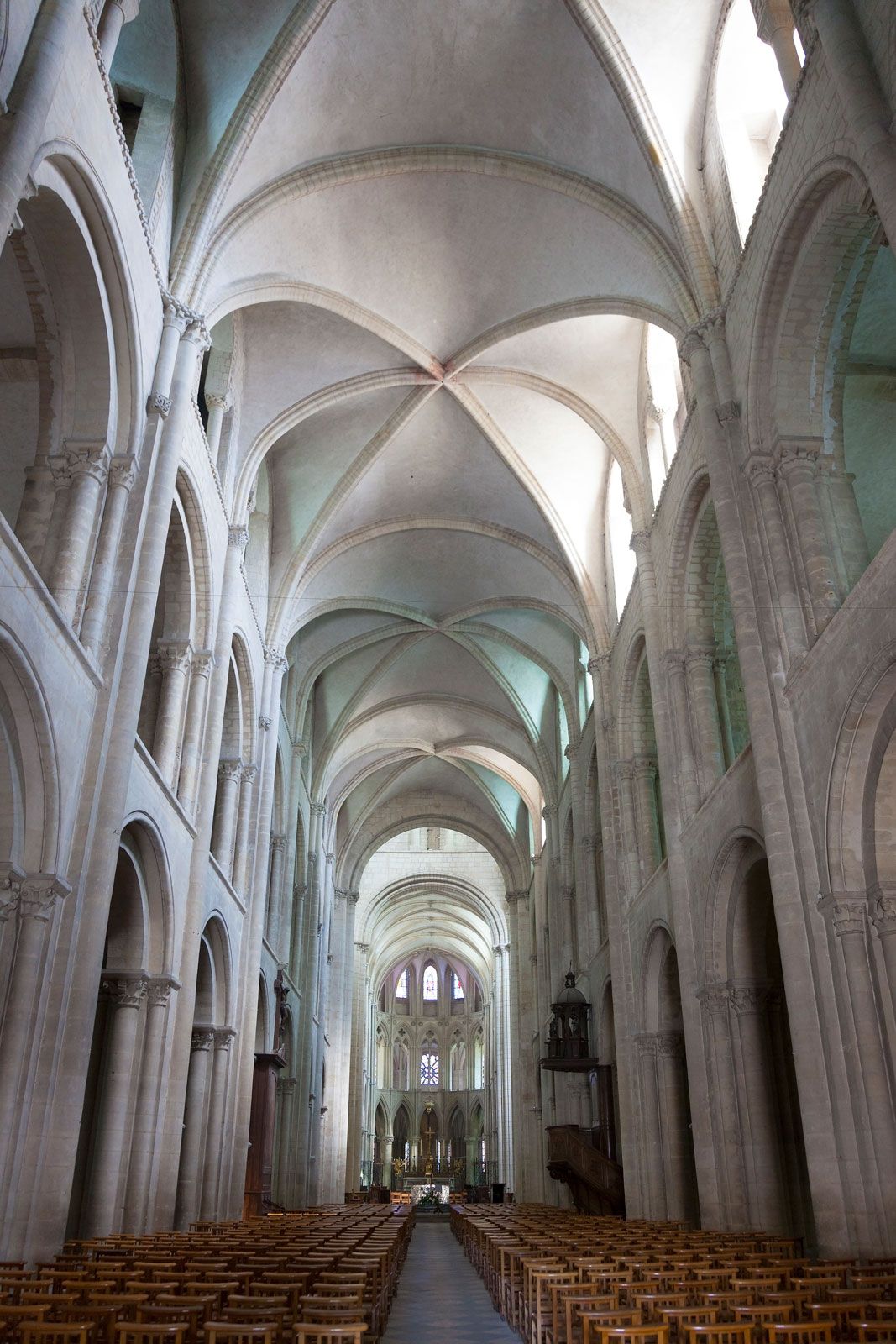
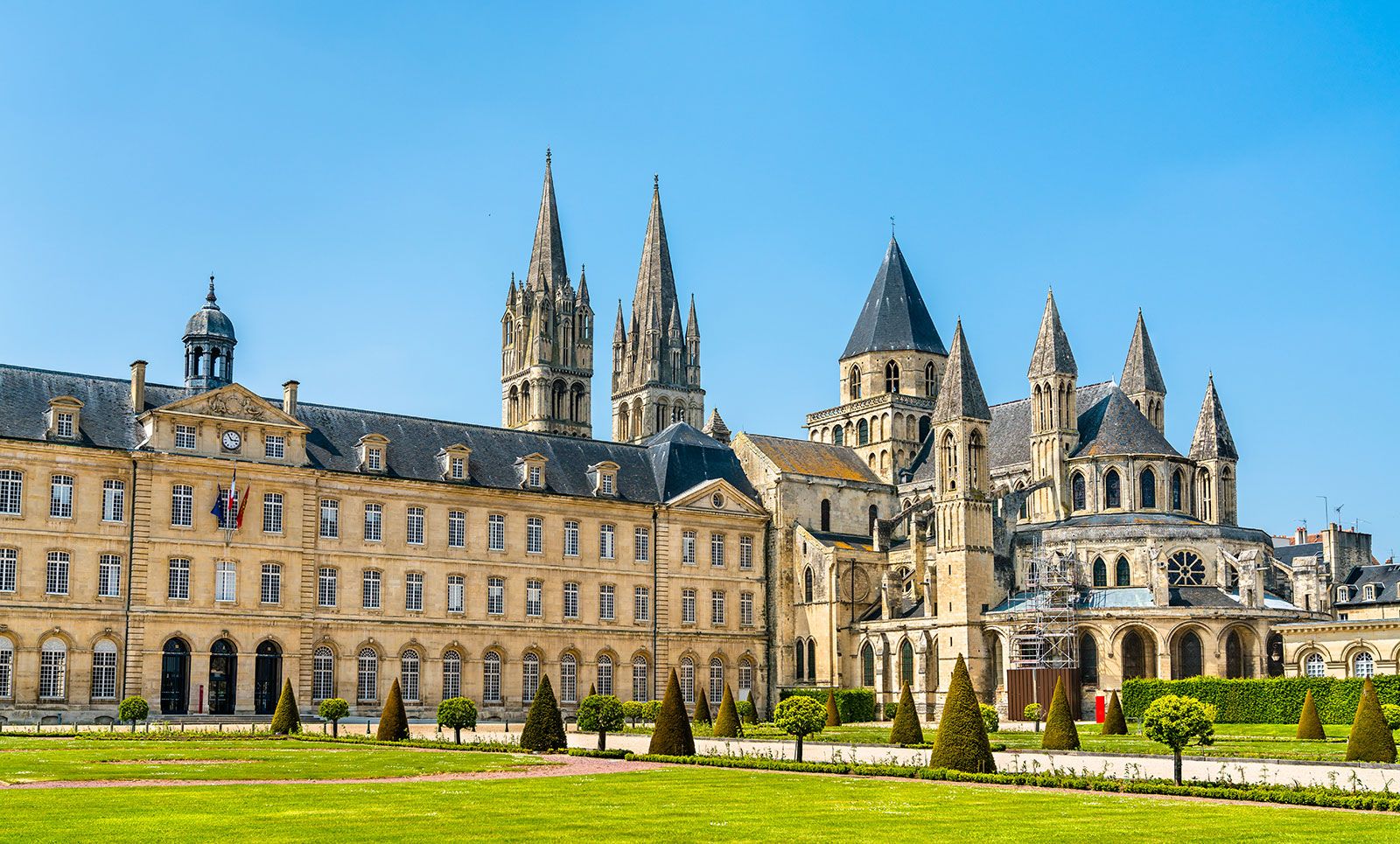
Saint-\u00c9tienne Church (the Abbaye-aux-Hommes): A fine example of Norman Romanesque architecture dating back to the 1060s, it houses William the Conqueror’s tomb.
-
La Trinit\u00e9 Church (the Abbaye-aux-Dames): Another Norman Romanesque masterpiece from the 1060s, it contains the tomb of William the Conqueror's wife, Matilda.
-
Saint-Pierre Church: This highly decorated church showcases restored Gothic and French Renaissance styles after wartime damage.
-
H\u00f4tel Le Valois d’Escoville: A restored Renaissance mansion dating back to 1538, located on Place Saint-Pierre.
-
Caen Memorial: Opened in 1988, this museum is dedicated to war and peace.
2 Britannica SourcesCreated from Britannica articles using AI. AI can make mistakes, so verify using Britannica articles. -
-
How did William the Conqueror influence the development of Caen?
William the Conqueror significantly influenced the development of Caen, France, in the 10th and 11th centuries, when the city rose to prominence under the Norman dukes and served as the capital of Lower Normandy. Two notable churches, Saint-\u00c9tienne (the Abbaye-aux-Hommes) and La Trinit\u00e9 (the Abbaye-aux-Dames), are fine examples of Norman Romanesque architecture dating from the 1060s. William's tomb is located in front of Saint-\u00c9tienne’s high altar, while his wife Matilda's tomb is in La Trinit\u00e9’s choir. William's support for monastic reform and improved episcopal organization earned him respect from church leaders and further strengthened his hand in the duchy.
3 Britannica SourcesCreated from Britannica articles using AI. AI can make mistakes, so verify using Britannica articles. -
What role does Caen play in the region of Normandy today?
Today, Caen serves as a principal administrative and commercial center within the Normandy region of France. Situated in the center of a fertile grain-growing region, Caen is a major service center for western Normandy. The city's industrial sector has expanded to include automobile, electrical appliance, and electronics plants.
Caen's importance as a port city dates back to the 19th century, with the construction of a ship canal that facilitates the import of coke and the export of steel. The city is home to the Caen Memorial (opened 1988), a museum dedicated to war and peace, and the University of Caen, founded in 1432.
5 Britannica SourcesCreated from Britannica articles using AI. AI can make mistakes, so verify using Britannica articles.
Caen, city, capital of Calvados département, Normandy région, northwestern France, on the Orne River, 9 miles (14 km) from the English Channel, southwest of Le Havre.
It first became important under the Norman dukes in the 10th and 11th centuries and was the capital of lower Normandy in the time of William the Conqueror. Captured by the English twice—in 1346 and in 1417—it was held by them until 1450. The revocation of the Edict of Nantes (1685) broke the prosperity of the city, which had become Protestant. During the French Revolution, it was a centre for the Girondist movement. Following the Allied Normandy Invasion in 1944, the Germans used Caen as the hinge of their resistance to the British–Canadian advance, and the city was two-thirds destroyed. It was reconstructed, with planned industrial zones between the Orne and the port canal. A green plain, the Prairie Saint-Gilles, faces the city’s southwest side, and public gardens were planted in the city centre. The university, founded in 1432 by Henry VI of England, was resited and reopened in 1957. The Caen Memorial (opened 1988) is a museum dedicated to both war and peace.
(Read Sir John Keegan’s Britannica entry on the Normandy Invasion.)




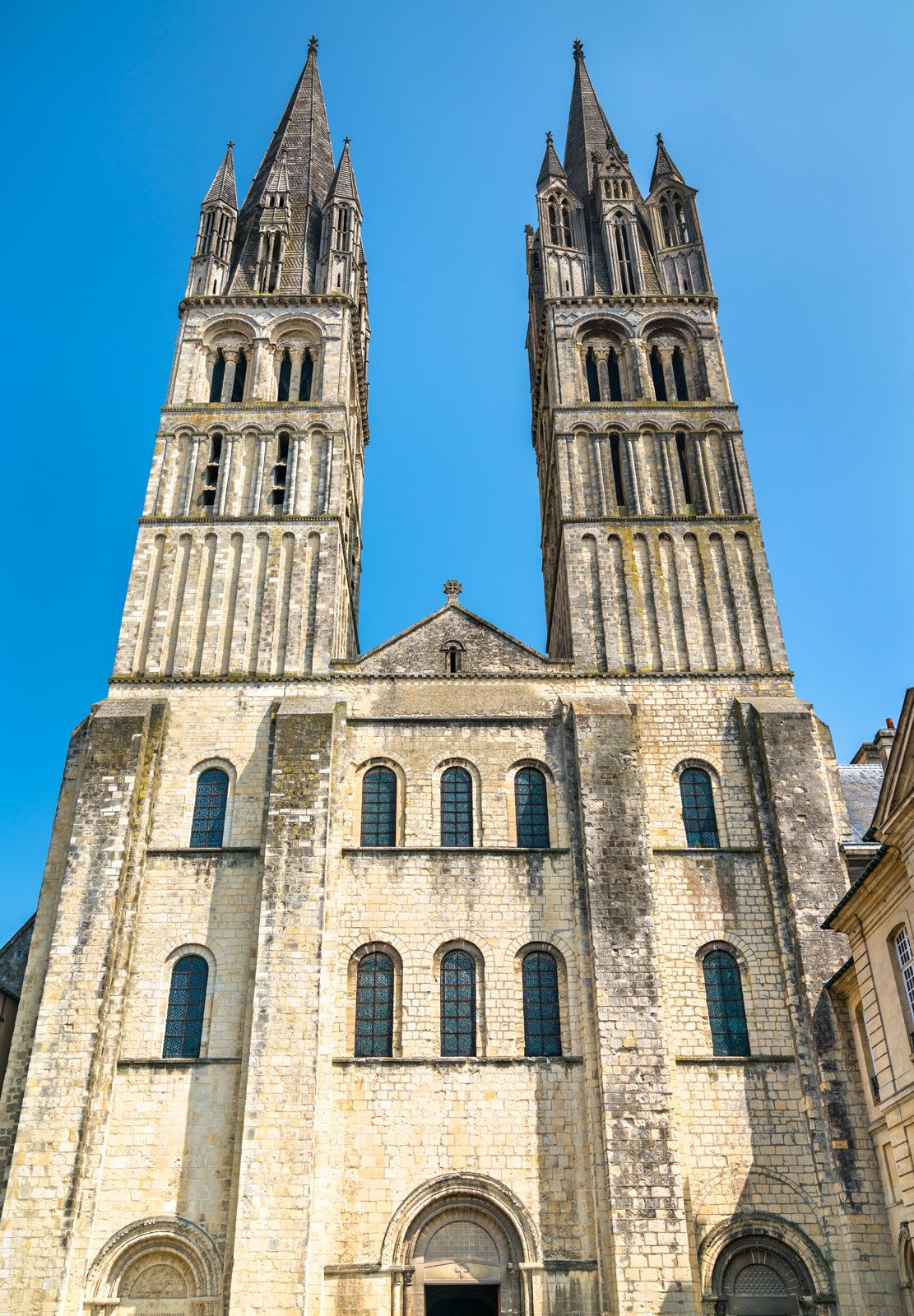
The churches of Saint-Étienne (the Abbaye-aux-Hommes) La Trinité (the Abbaye-aux-Dames) escaped war damage; both date from the 1060s and are fine specimens of Norman Romanesque. William the Conqueror’s tomb is in front of Saint-Étienne’s high altar, and the tomb of his wife, Matilda, stands in La Trinité’s choir. William’s remains were thrown out during the Revolution. Saint-Étienne has an austere facade bare of ornament. Its two towers, rising to 295 feet (90 m), are topped by 13th-century spires. The abbey buildings, redone in the 17th century, now house municipal offices. La Trinité’s Norman solidity is overburdened by later (especially 19th-century) restoration work. The nave serves as the parish church, the transept and choir as part of the city hospital (hôtel-dieu). Midway between these two churches is the highly decorated church of Saint-Pierre, its Gothic and French Renaissance beauties restored after wartime damage. On the Place Saint-Pierre stands the Hôtel Le Valois d’Escoville, a restored Renaissance mansion (1538). The house where the poet François de Malherbe was born (1555) is on the rue Saint-Pierre.
Caen’s importance as a port dates from the 19th-century construction of the ship canal (about 9 miles [14 km] long), which parallels the river and opens to the English Channel at Ouistreham. It serves largely to import coke and export steel. The city’s steel industry is fed by the iron ore mines of the Orne valley. The blast furnaces of Mondeville have been reconstructed, and the working population is housed in the new city of Hérouville. The industrial aspect of the city grew greatly with the location there of automobile, electrical appliance, and electronics plants. Situated in the centre of a fertile grain-growing region, within sight of the verdant bocage of Normandy, Caen is a major service centre for all of western Normandy. Pop. (1999) 113,987; (2020 est.) 107,250.