


Adding us as a Preferred Source tells Google you trust our content, so our articles show up more often in your Google Search, Discover feed, and AI Overviews.
verifiedCite
While every effort has been made to follow citation style rules, there may be some discrepancies.
Please refer to the appropriate style manual or other sources if you have any questions.
Select Citation Style
Baʿqūbah
town, Iraq
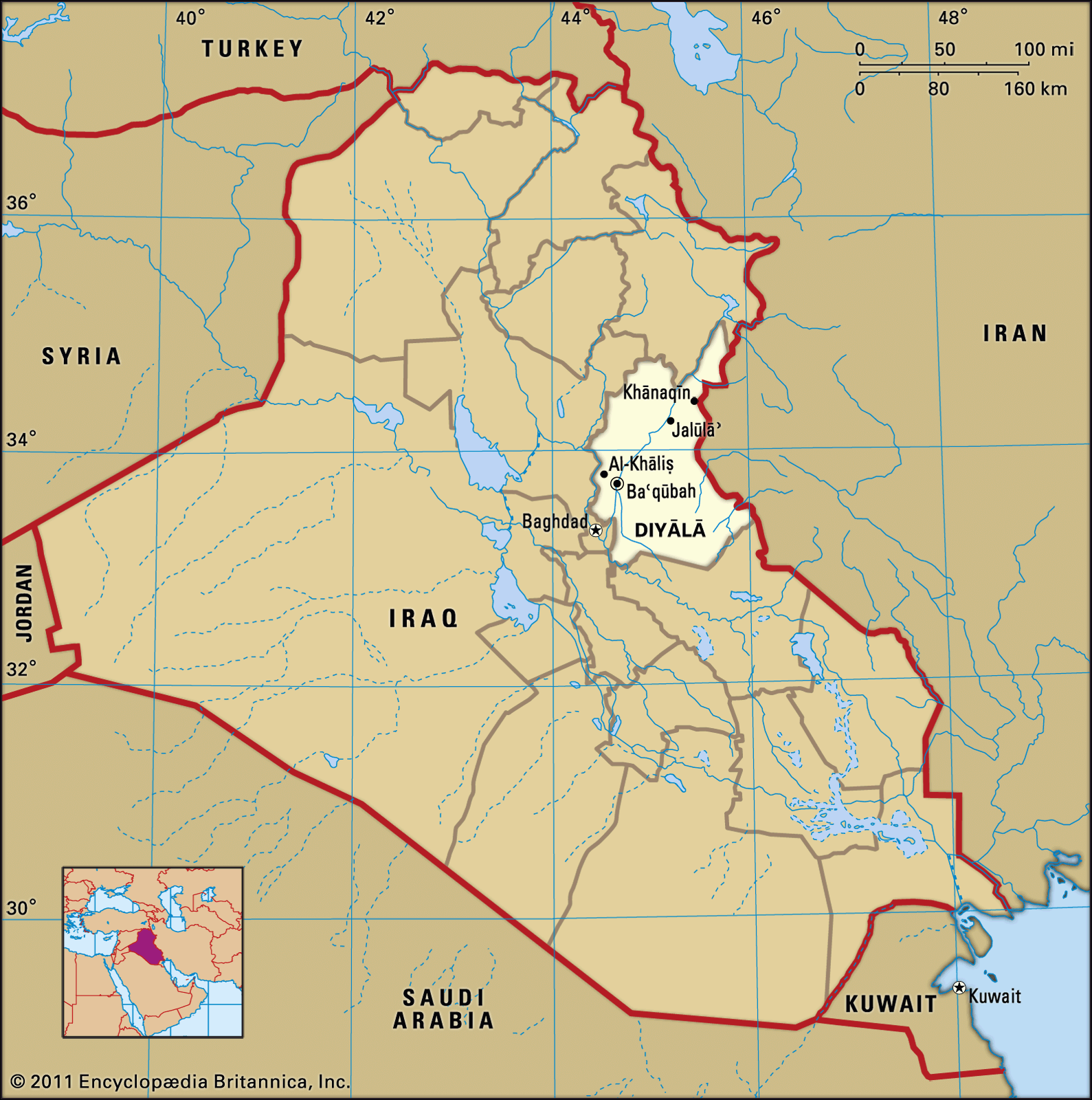
Baʿqūbah, city, capital of Diyālā muḥāfaẓah (governorate), east-central Iraq. Located on the Diyālā River and on a road and a rail line between Baghdad and Iran, it is a regional trade centre for agricultural produce and livestock. The name comes from the Aramaic Bāya ʿqūbā, meaning “Jacob’s house.” The city is located on the site of a settlement dating back to pre-Islamic times. Under the ʿAbbāsid caliphate, it was a prosperous town known for its date and fruit orchards, and the surrounding country was fertile and populous with many villages. It was an important stop on the Baghdad-Khorāsān road, part of the silk and spice route. Many Assyrian Christian refugees fled there during World War I. Pop. (2003 est.) 160,000.
This article was most recently revised and updated by Amy Tikkanen.


Discover the fascinating events that shaped the world, straight from our editors.

By clicking “Sign Up”, you consent to the Britannica
Privacy Policy
and
Terms of Use.