



- Also spelled:
- Baykonur, Baykonyr, or Bajkonur
- Also called:
- Tyuratam or Turatam


Baikonur Cosmodrome
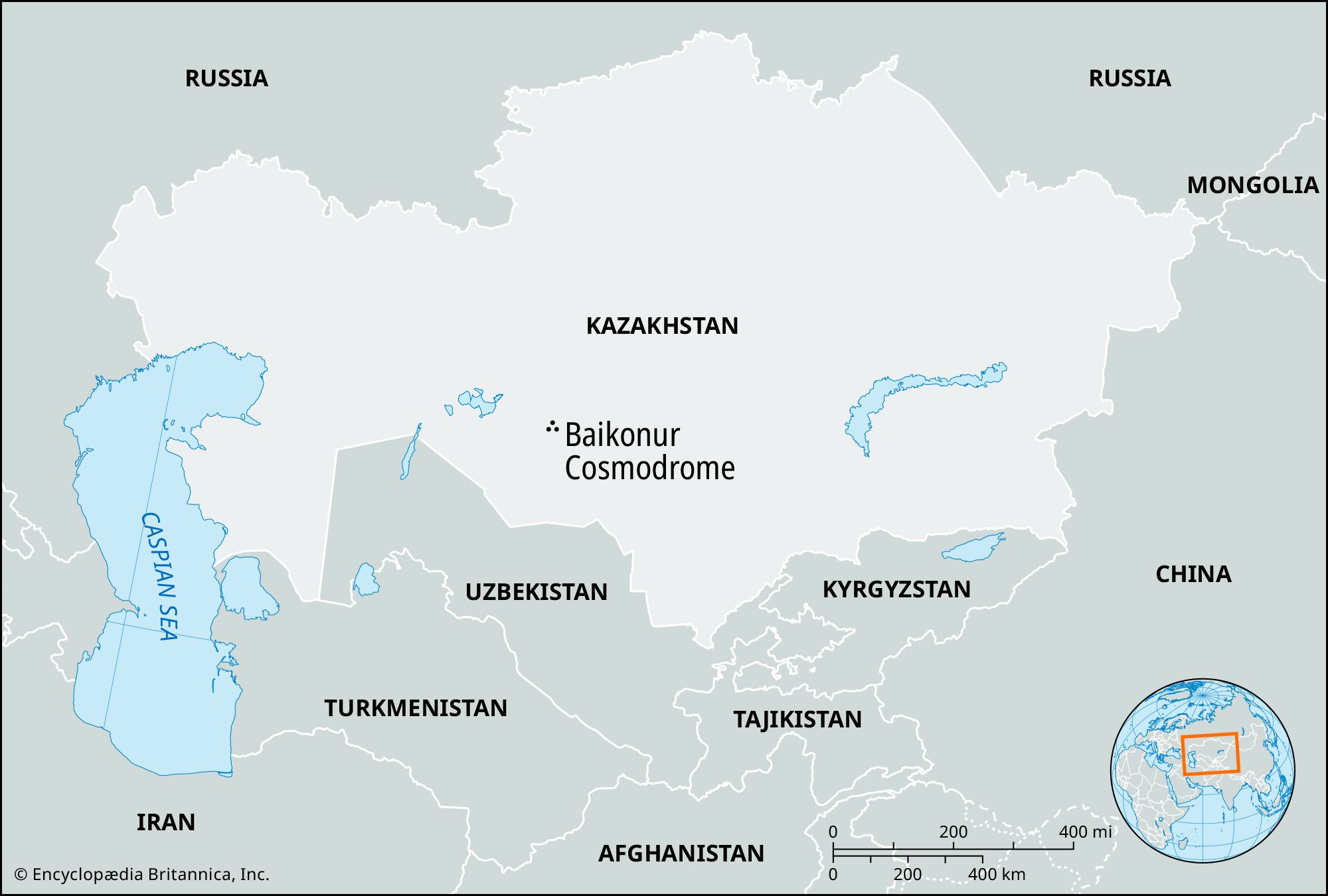
Baikonur Cosmodrome, former Soviet and current Russian space centre in south-central Kazakhstan. Baikonur was a Soviet code name for the centre, but American analysts often called it Tyuratam, after the railroad station at Tyuratam (Leninsk), the nearest large city. The Baikonur Cosmodrome lies on the north bank of the Syr Darya, about 100 miles (160 km) northwest of Qyzylorda. The Soviet Union’s secretiveness about its exact location led to confusion of the site with another Baikonur, a town about 200 miles (320 km) northeast of the space centre in the desert area near Zhezqazghan.
The Baikonur Cosmodrome was the chief operations centre of the Soviets’ ambitious space program from the 1960s through the ’80s and is equipped with complete facilities for launching both crewed and uncrewed space vehicles. The facility and supporting town were originally built in the mid-1950s as a long-range-missile centre, which was later expanded to include spaceflight facilities. Several historic flights originated there: that of the first artificial satellite (1957), the first crewed orbital flight (carrying Yuri Gagarin, the first man in space; 1961), and the flight of the first woman in space (Valentina Tereshkova; 1963). The town supporting the facility was raised to city status in 1966 and named Leninsk. The facility remained the base of the Soviet space program until the dissolution of the Soviet Union in 1991, after which it continued to function under Russian auspices.


