

Ak-Ink
Quick Summary
Ak-Ink, meaning "Abundant Water," was an ancient Celtic settlement near modern-day Budapest, Hungary. This site became known as Aquincum when the Romans established a military camp and civilian town there in the late 1st century CE. Aquincum grew into a significant urban center, serving as the capital of the Roman province of Pannonia Inferior and later Pannonia Valeria. It boasted public buildings, two amphitheaters, and an aqueduct. The city thrived due to its strategic location on the Danube River and its role in defending the Roman frontier. After Roman authority collapsed in the early 5th century, the inhabitants gradually left, and the site was deserted by the time the Huns arrived.12
Ask Britannica AI about this topic
Britannica doesn't have a full article on this topic, so we've curated a list of our relevant coverage.
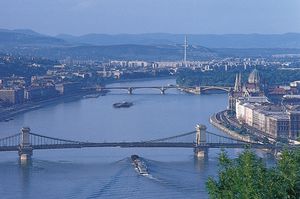 BudapestEarly settlement and the emergence of medieval Buda
…became Óbuda, a settlement named Ak-Ink (“Ample Water”) was established by the Celtic Eravisci. This became Aquincum when the Romans established a military camp and civilian town there at the end of the 1st century ce. Becoming the seat of the province Pannonia Inferior (c. 106) and then acquiring the…
Read More…became Óbuda, a settlement named Ak-Ink (“Ample Water”) was established by the Celtic Eravisci. This became Aquincum when the Romans established a military camp and civilian town there at the end of the 1st century ce. Becoming the seat of the province Pannonia Inferior (c. 106) and then acquiring the…
Read More Aquincum
…people and given the name Ak-ink (“Abundant Water”) because of the nearby thermal springs. A Roman military camp established there by Emperor Vespasian attracted a civilian population by the mid-1st century bce. Other factors contributing to the city’s growth included the fertile flatlands next to the river, the ease of…
Read More…people and given the name Ak-ink (“Abundant Water”) because of the nearby thermal springs. A Roman military camp established there by Emperor Vespasian attracted a civilian population by the mid-1st century bce. Other factors contributing to the city’s growth included the fertile flatlands next to the river, the ease of…
Read More