


Africville
-
What was Africville?
Africville, established in the mid-1700s, was a seaside village north of Halifax, Nova Scotia, populated by African Canadians. It was a haven from the racism they faced in Halifax. The community had a church, the Seaview African United Baptist Church, and later a school. Though residents paid taxes, Halifax failed to provide services such as paved roads and garbage collection. Instead, Halifax placed undesirable services such as a fertilizer plant and a prison in Africville.
Halifax City Council approved plans to redevelop Africville into an industrial area. Starting in 1964, the city bulldozed homes and displaced residents. By 1969, the last of Africville’s 400 residents were gone. In 2010, the mayor of Halifax apologized for the destruction of Africville. Today, Africville is a National Historic Site of Canada.
1 Britannica SourceCreated from Britannica articles using AI. AI can make mistakes, so verify using Britannica articles. -
Where was Africville located?
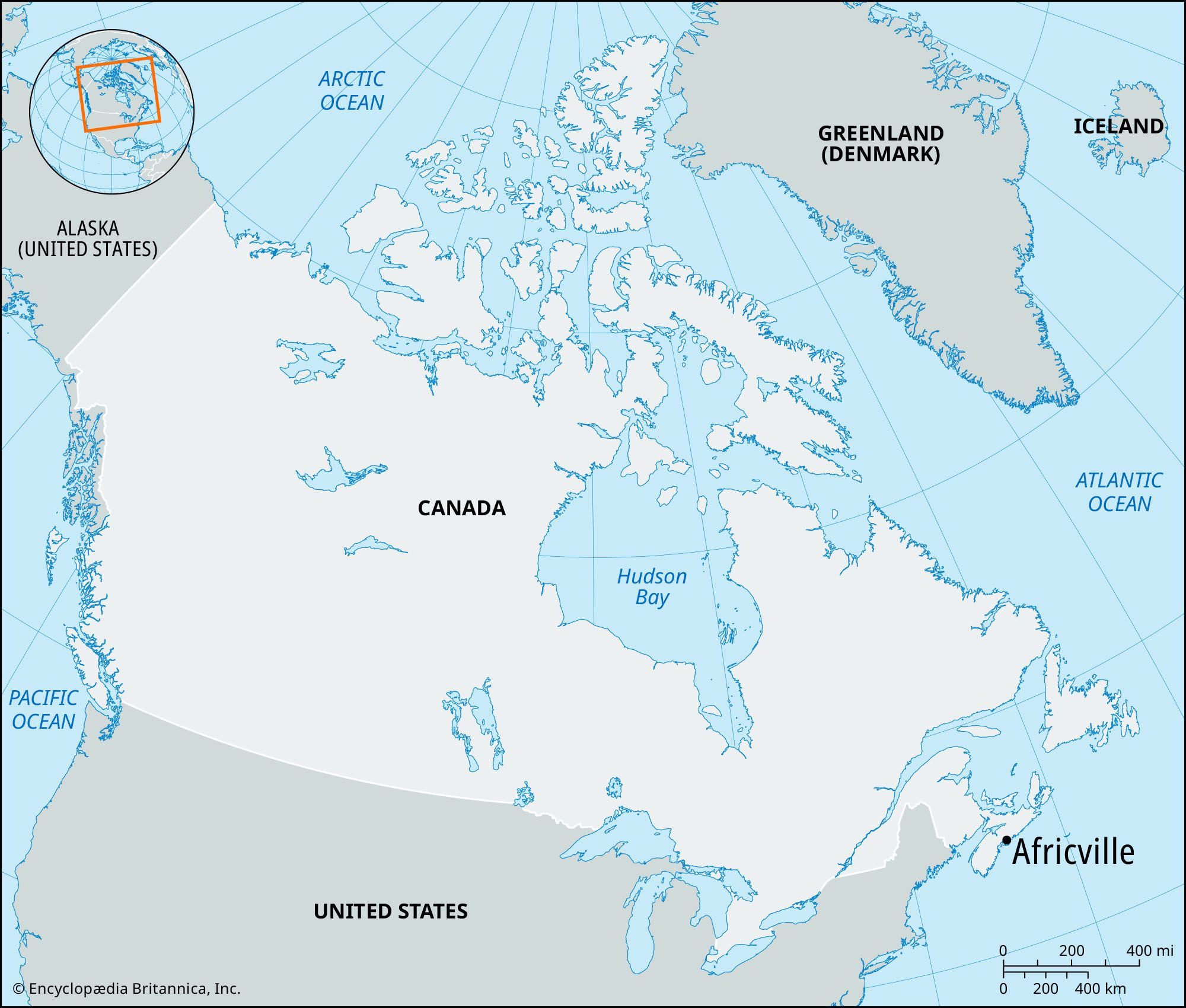
Africville, a historic African-Canadian village, was located just north of Halifax, Nova Scotia, Canada. Founded in the mid-18th century, it grew into a thriving seaside community. However, despite its prosperity, the City of Halifax demolished Africville in the 1960s, an act that has been widely condemned as racist. This occurred after decades of neglect and the deliberate placement of undesirable services in the area. In 2010, the Halifax Regional Municipality issued an apology for the destruction of Africville, acknowledging the oppression faced by Black Canadians and the need to address historical injustices.
1 Britannica SourceCreated from Britannica articles using AI. AI can make mistakes, so verify using Britannica articles. -
Who lived in Africville?
Africville was founded in the mid-18th century just north of Halifax, Nova Scotia. The area was first officially recorded in 1761 when the land was granted to white families. It is believed that the area was settled by formerly enslaved people, maroons, and Black refugees from the War of 1812, and was known as "African Village".
By 1849, 80 residents were being served by the Seaview African United Baptist Church, which became the heart of the village. Residents ran fishing businesses and farms, and some opened small stores. Despite paying taxes, they were denied municipal services. In 1969, the last of Africville’s 400 residents were displaced, and their community was destroyed.
1 Britannica SourceCreated from Britannica articles using AI. AI can make mistakes, so verify using Britannica articles. -
Why was Africville important to its residents?
Africville was important to its residents as a prosperous seaside community founded in the mid-18th century. In a 1962 interview, homeowner Joe Skinner highlighted Africville as a place where Black people lived freely without segregation, with the opportunity to develop their own property. The city of Halifax, however, allowed the demolition of Africville in the 1960s, which many considered an act of racism following decades of neglect. After the relocation, former residents formed committees and societies to seek redress and keep the community alive. Today, Africville is a symbol in the fight against racism.
1 Britannica SourceCreated from Britannica articles using AI. AI can make mistakes, so verify using Britannica articles. -
What challenges did the people of Africville face?
The residents of Africville, a Black community north of Halifax, Nova Scotia, faced many challenges. Though the city collected taxes, it failed to provide basic services like paved roads, running water, or garbage collection. Instead, Halifax located undesirable services in Africville, including a fertilizer plant and a prison. In the 1960s, Halifax demolished Africville, displacing its residents, in what many consider an act of racism. Displaced residents struggled to find work and housing, and the community dispersed. For many, Africville symbolizes the historic oppression and struggle against racism faced by Black Canadians.
1 Britannica SourceCreated from Britannica articles using AI. AI can make mistakes, so verify using Britannica articles. -
What happened to Africville and what is its legacy today?
Africville, a seaside village near Halifax, Nova Scotia, was home to a vibrant African-Canadian community founded in the mid-18th century. Despite its prosperity, Halifax neglected the community, placing undesirable services nearby, and then demolished it in the 1960s under the guise of "urban renewal." This displacement scattered residents, leaving many in derelict housing and poverty.
Today, Africville is a symbol of the racism and oppression faced by Black Canadians. The site was declared a National Historic Site in 1996, and in 2010, Halifax apologized and built a replica church, now a museum, renaming the area Africville Park. Former residents and their descendants organize reunions there, commemorating the community's legacy and the ongoing struggle against racism.
1 Britannica SourceCreated from Britannica articles using AI. AI can make mistakes, so verify using Britannica articles.
Africville, African-Canadian village formerly located just north of Halifax, Nova Scotia, Canada. Founded in the mid-18th century, Africville became a prosperous seaside community, but the City of Halifax demolished it in the 1960s in what many said was an act of racism after decades of neglect and the placement of undesirable services there. The mayor of the Halifax Regional Municipality apologized in 2010 for Africville’s destruction. For many people, Africville represents the oppression faced by Black Canadians and the efforts to right historic wrongs.
Origins
Halifax was founded in 1749, when enslaved Africans dug out roads and built much of the city. Some evidence indicates that this early Black community lived a few kilometres north of the city on the southern shore of the Bedford Basin—an area that became Africville. Other evidence suggests that some of the maroons of Jamaica (Africans who escaped enslavement), resettled to Nova Scotia by the British government, moved to the basin in 1796.
The first official record of Africville is from 1761, when the land was granted to several white families, including the families of men who imported and sold enslaved African men and women. In 1836, Campbell Road connected central Halifax to the Africville area. It is likely that several Black families lived in the area, earning it the nickname “African Village.” They were a mix of formerly enslaved people, maroons, and Black refugees from the War of 1812. Many of these refugees were once enslaved in the Chesapeake area of the United States.



In 1848, William Arnold and William Brown, both Black settlers, bought land in Africville. Other families followed, and in 1849 Seaview African United Baptist Church was opened to serve the village’s 80 residents. The church was called “the beating heart of Africville” and was the centre of the village to both church-goers and non-church-goers. It held the main civic events, including weddings, funerals, and baptisms. The church’s baptisms and Easter Sunrise Services were well-known. African–Nova Scotians, as well as white Nova Scotians, would line the banks of the Bedford Basin to watch the singing procession leave the church to baptize adults in the basin’s waters. After much petitioning by Africvillians, a school opened in 1883. A local resident had taught many of the children in Africville before the school opened.
Taxes, but no services
Africville residents ran fishing businesses from the Bedford Basin, selling their catch locally and in Halifax. Other residents ran farms, and several opened small stores toward the end of the 19th century. It was a haven from the anti-Black racism they faced in Halifax, where Black women were generally able to find work only as domestic servants and where men were limited to a few jobs such as sleeping-car porters on trains. Children swam in Tibby’s Pond and played baseball in Kildare’s Field. In the winter, residents played hockey when the pond froze.

The City of Halifax collected taxes in Africville but did not provide services such as paved roads, running water, or sewers. In 1854, a railway extension was cut through the village. Several homes were expropriated and destroyed. Some homeowners protested that they had not been paid for their land and that the speeding trains posed a danger and polluted the village. More land was expropriated for the railway in 1912 and in the 1940s. In the first half of the 20th century, such municipal services as public transportation, garbage collection, recreational facilities, and adequate police protection were nonexistent.
The City of Halifax continued to place undesirable services in Africville in the second half of the 19th century, including a fertilizer plant, slaughterhouses, Rockhead Prison (1854), the “night-soil disposal pits” (human waste), and the Infectious Diseases Hospital (1870s). In 1915, Halifax City Council declared that Africville “will always be an industrial district.” Many Africville residents believed anti-Black racism was behind these decisions.
The trusted destination for professionals, college students, and lifelong learners.
SUBSCRIBE


The Halifax explosion

The Halifax explosion of 1917 shelved plans to turn Africville into an industrial zone. The disaster occurred when a ship carrying munitions exploded in Halifax Harbour, killing some 2,000 people, levelling much of Halifax’s north end, and damaging Africville. A global relief effort brought in millions of dollars in donations to rebuild the city, but none of the money went to rebuilding Africville. Halifax did not survey Africville for damage, but oral history records that several homes were badly damaged and lost their roofs. About four Africvillians died, although it is thought that they were in the north end of Halifax when the explosion hit.
Throughout the 1930s, Africville residents petitioned the city to provide running water, sewage disposal, paved roads, garbage removal, electricity, street lights, police services, and a cemetery, but they were largely denied. In the 1950s, Halifax built an open-pit dump in Africville. The city considered several locations, but the council found it was unacceptable to residents in other locations in and near Halifax. The council voted to put the dump 350 metres from the western edge of Africville. There is no reference in the council minutes that states a concern for the health of Africville residents or of any consultation or protests from Africvillians. By the 1960s, many white Halifax residents referred to Africville as a slum built around the dump by scavengers. Seeing Africville as a “slum” formed an important part of the public acceptance of Africville’s destruction.
Africville’s school was closed in 1953 as Nova Scotia desegregated its education system. In practice, this meant closing many Black schools and busing pupils to the nearest white schools. Africville students went to schools in Halifax. Many faced discrimination and were channeled into “auxiliary” classes that had few resources.