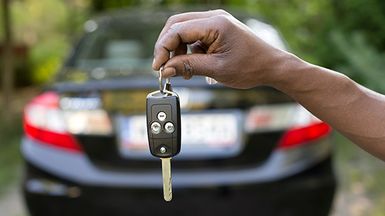
Offload that clunker (and maybe, get a tax break).
© photka/stock.adobe.com
Advertisements for donating that unused car you just happen to have sitting around seem to be everywhere. Whether it’s a public radio station or your favorite charity, lots of organizations have gotten into the “give us your unwanted car” game.
And there’s good reason to consider it. Donating an unused vehicle saves the expense of keeping it maintained, insured, and registered, relieves you of the hassle of selling it yourself, and, depending on the charity, benefits those in need. Plus, you may qualify for a tax deduction—if you can itemize on your return.
Key Points
- Donating a vehicle to charity can be simple, rewarding, and may even reap a tax benefit.
- Understanding how a charity uses your vehicle and how much it will benefit may influence which charity you select.
- Properly prepare your vehicle for donation to help ensure a smooth donation process.
Before the passage of the Tax Cuts and Jobs Act in 2017, many U.S. taxpayers itemized deductions that included cash and noncash charitable contributions. The law substantially increased the standard deduction, eliminated some deductions, and capped some state and local taxes, making itemizing less worthwhile for many taxpayers.
The law’s enactment makes donating a car—or any charitable donation—less straightforward. To take advantage of a vehicle donation deduction, you must itemize, and your anticipated itemized deductions should be greater than your standard deduction for itemizing to make sense.
One snag in estimating your itemized deductions is you won’t necessarily know the tax benefit until after you donate the car. The amount you can deduct for a vehicle contribution depends upon what the charity does with the vehicle. It might:
- Sell the car. Your charity may try to sell your car outright, or more likely, auction it off. Your deduction is limited to the gross proceeds of the sale, and you have no control over the final gavel price. If the car sells for $500 or less, you can deduct either the vehicle’s fair market value on the contribution date or $500, whichever is less.
- Use the car. The charity may use the car as part of its ongoing operations to make deliveries or run errands. In this case, you would be eligible to deduct your vehicle’s fair market value.
- Fix up the vehicle. Before selling or using it, the charity may choose to make repairs to your vehicle. Again, you can deduct its fair market value from your itemized return.
- Give it away. If your car is in good working order, the charity may give it or sell it at a discounted price to someone who needs a car. In this instance, you would be able to deduct the vehicle’s fair market value.
What’s fair market value?
Used car guides, such as Kelley Blue Book or Edmunds, can provide estimates for how much your vehicle is worth, including the dollar amount it might bring in a private sale (or as a trade-in). Fair market value is not determined by the charity you’re donating to.
Regardless of the scenario, the Internal Revenue Service (IRS) requires the amount of your deduction to be supported by documentation that notes the date of donation and the charity, as well as other information. If the value of the vehicle donation is over $500, the charity is required to supply you with Form 1098-C. If the amount is greater than $500, you must submit Form 8283 with your tax return, and if the deduction is over $5,000 (or if you donated more than one vehicle, with a combined total value of more than $5,000), a written appraisal must be attached. IRS Publication 4303 provides additional information.
Determining which charity gets your donation
Once you decide to donate your vehicle, it’s time to choose a charity to accept it. This is a personal decision that you’ll make based on the charity’s mission, the community it serves, or some other factor. But to receive a tax deduction, the charity must be a qualified organization in good standing with the IRS. You can verify a charity’s status by calling the IRS customer account services division for tax-exempt and government entities at (877) 829-5500.
Choosing the right charity also means understanding who will see a monetary benefit from your donation. To simplify the process, many charities contract with a third party that specializes in administering vehicle donations. The contractor assists with paperwork, picks up the vehicle at your convenience (including towing, if necessary), and sells it on the charity’s behalf.
That convenience comes with a cost. The third-party entities earn commissions or charge fees. These can be substantial, and will reduce the amount that goes to your chosen charity. Still, some charities insist that without these organizations the cost to self-administer a vehicle donation program would be too high, so getting something is better than nothing. Also, many vehicle donation program providers are themselves charities, so even if your money isn’t all going to the charity of your choice, it’s still going to a good cause.
Vehicle donation programs are typically more costly to administer than many other fundraising activities. So if you want as much as possible to go to your charity, selling the car yourself and donating the proceeds may make more sense.
The process of donating your vehicle
Most well-established, larger charities have instructions on their websites for donating a vehicle. This usually starts with filling out a simple form. Smaller or local charities may need to be contacted directly.
Either way, there are several steps to complete before you contact the charity or program provider:
- Have your title handy.
- Review the process your state requires for signing over a vehicle title. Some states require the document to be notarized.
- Ensure the car is clear of all liens; obtain a lien release if necessary.
- Remove all personal items.
- Have your keys and any necessary maintenance records ready to turn over.
- Determine your vehicle’s fair market value as of the date of your contribution. For help, see IRS Publication 561, Determining the Value of Donated Property.
- Make copies of all documents for your records, and take photos of the vehicle before it’s picked up to verify its condition.
- Optional: Clean the car and have it checked out to identify any possible maintenance or repairs needed. (Most charities accept cars in any condition, as long as they have a motor.)
- Arrange for your vehicle to be picked up, and remove the license plate(s). Note: Some states, such as California, require that standard-issue license plates remain with the car.
- Cancel the vehicle’s insurance coverage, but only after you’ve returned the plate(s) to your local state motor vehicle department office and the vehicle has been taken away.
Donor beware
If a charity asks you to leave the name of the buyer blank when signing over your title, walk away and find another charity. Leaving it blank may leave you liable should the vehicle be involved in a crash.
Be leery of for-profit vehicle donation programs that charge a fee. Such programs may also take a bigger cut of the sale than not-for-profit programs.
Charities will most likely take anything with wheels that they think they can sell, such as farm machinery, snowmobiles, and golf carts. The IRS stipulates that motor vehicles eligible for a tax deduction must be “manufactured primarily for use on public streets, roads, and highways; a boat or an airplane.” If your vehicle falls outside of this definition, it may still be deductible, but as a nonqualified vehicle, it’s subject to different rules and limits.
If you’re in the market for a new car, you may get more financial value by trading in your car than you would from the tax benefit. Review your car’s trade-in value and your state’s vehicle sales tax and how it’s computed (before or after your trade-in value is deducted). If the amount of your trade-in is deducted from the taxable amount of your new car purchase, you may be better off.
Noncash contributions are a common trigger for an IRS audit, so be sure you follow the rules for deducting your vehicle donation and have all the necessary documentation.
An Internet search may reveal some local charities that will accept your donation, along with some vehicle donation program providers that operate nationwide, including these organizations:
- Car Donation Foundation partners with the Make-A-Wish Foundation, various veterans’ charities like the Gary Sinise Foundation, and many animal rescue organizations, such as Muttville Senior Dog Rescue.
- Charity Cars provides vehicles to disadvantaged families and veterans, making it a fitting choice if your vehicle is in working condition.
- Charitable Adults Rides & Services (CARS) works with many charities, including familiar ones like St. Jude Children’s Research Hospital and the Sierra Club Foundation. If your charity of choice isn’t on its list, you can request CARS to add it.
- Advanced Remarketing Services partners with the American Cancer Society and Habitat for Humanity, among several others. Its vehicle donation program is part of a larger for-profit automobile remarketing and recycling operation.
- Vehicles for Change uses donated vehicles to train former inmates in auto repair. These paid interns often face barriers to employment for having served time in prison, and the program helps them to integrate back into society. The organization says 100% of graduates of its training program go on to jobs in the automotive industry.
The bottom line
Donating a vehicle can benefit both a charity and the donor, but determining if you get anything more than a warm feeling and more space in your garage depends on whether itemizing deductions on your tax return makes financial sense.
Charities value vehicle donation programs and often use outside firms to make the process easier. Understanding the rules, limits, and players involved can help you determine whether the decision to donate your vehicle is best for your financial situation and budget.
Specific organizations and companies are mentioned in this article for educational purposes only and not as an endorsement.
This article was most recently revised and updated by Vera WilsonThis article was most recently revised and updated by David Schepp