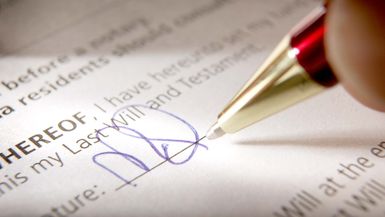
Taking control of your legacy.
© DNY59—E+/Getty Images
Estate planning is the process of deciding what you want to happen to your assets if you die or become incapacitated, and ensuring your final wishes are executed.
At its most basic level, estate planning consists of having documents in place, such as a will, and making sure other key documents list appropriate beneficiaries. But as your assets grow and the number of people who rely on you increases, you may want to consider more complex steps, such as developing a trust to protect your assets and loved ones. You may even wish to make sure your loved ones use your assets in a prescribed manner.
Key Points
- Estate planning is a way of deciding what happens to your assets after you die.
- One key part of estate planning is making sure your heirs receive what you want for them.
- Estate planning can be quite complex for people with large estates and multiple heirs.
- A few basic estate planning steps can make a big difference to your loved ones if something unfortunate happens.
Do I need an estate plan?
The short answer is yes. Even if you’re young and have no children and few assets, a basic estate plan can make things easier for your loved ones if something unforeseen occurs.
In the event of an accident, you may not have time to make sure your wishes are known. And the aftermath will be a stressful time for the people you leave behind. An estate plan is essentially a way of taking care of the people you care about.
Building a comfortable retirement typically involves combining Social Security with other sources of income.
Encyclopædia Britannica, Inc.
As you age, your finances will likely become more complex, and an estate plan becomes even more imperative. You don’t want any assets to slip through the cracks. And if you’ve planned your legacy, whatever it might be, you want to ensure your wishes are carried out according to your plans.
What kind of estate plan?
The kind of estate plan you need depends on a number of factors, such as the number of heirs you want to leave your money to, the assets you’ll be passing on, and the overall complexity of your estate.
If you have few assets and direct heirs, the basic approach involves filling out and updating the beneficiary forms on your bank accounts, investment accounts, and insurance. The next step is to fill out and notarize a legally binding will. You can find free templates online. In general, as long as you follow proper procedure—namely, to sign in the presence of two witnesses and an authorized notary public—the will is legally binding.
Most wealthy people will hire a financial advisor and/or a lawyer to create a formal estate plan that stipulates who gets what.
How to build an estate plan
Although estate plans can become quite complex, there are a few bases everyone should cover:
- Locate all your assets. It’s not uncommon to lose track of certain assets over time. You may have a 401(k) from an old job. Or you may have life insurance through a veterans’ association. Go through your papers and emails and identify all your assets.
- Make an inventory. Knowing what you have is only useful if your loved ones know, too. So make a list of everything—account numbers, where you store documents, a list of all your credit cards, and so on—and let your family know where and how to access that list.
- Choose your heirs. If you plan to pass your estate to a single beneficiary—a spouse, for example—the process is relatively straightforward. But be sure to have an alternate (“contingent beneficiary”) in case your beneficiary precedes you in death. For example, if you have a spouse and three children, you might name your spouse as the primary beneficiary and the children each as one-third contingent beneficiaries. If you have specific objects you want to give to specific people, write that down. You might consider letting them know ahead of time, too. No one wants their lasting legacy to be a family rift over material possessions.
- Make a will. The best way to do this is with a lawyer, who will typically charge a one-time fee to set up the document, walk you through the specifics, and make sure it meets the legal standards of the state you live in. If you have minor children, the will should also stipulate your preferred guardian in case something happens to you and your spouse.
- Set your directives for health care. You should create a living will and designate a health care proxy (also called a “health care power of attorney”) in case you become debilitated. A living will leaves instructions for the course of treatment you want, and the health care proxy dictates who will make medical decisions on your behalf if you’re incapable of making them yourself.
Key estate plan documents
An often-overlooked aspect of an estate plan involves your financial documents. This includes the documents tied to your investments, bank accounts, property deeds, insurance policies, and other financial assets. But it also includes debts, such as mortgages, credit card statements, and auto and other loans.
Your heir or the person you’ve named as your executor should know where to find these documents. And you should ensure your heirs are listed in the beneficiary sections of insurance and other financial documents. This can eliminate complications down the road.
An estate plan can protect your assets in the event of a debilitating injury or disease. But more important, it can protect your loved ones and save them from undue stress after you’re gone. It’s something you should consider taking care of even if you’re young, healthy, and have few assets.
This article was most recently revised and updated by Colin DoddsThis article was most recently revised and updated by Doug Ashburn