Doug is a Chartered Alternative Investment Analyst who spent more than 20 years as a derivatives market maker and asset manager before “reincarnating” as a financial media professional a decade ago.
Before joining Britannica, Doug spent nearly six years managing content marketing projects for a dozen clients, including The Ticker Tape, TD Ameritrade’s market news and financial education site for retail investors. He has been a CAIA charter holder since 2006, and also held a Series 3 license during his years as a derivatives specialist.
Doug previously served as Regional Director for the Chicago region of PRMIA, the Professional Risk Managers’ International Association, and he also served as editor of Intelligent Risk, PRMIA’s quarterly member newsletter. He holds a BS from the University of Illinois at Urbana-Champaign and an MBA from Illinois Institute of Technology, Stuart School of Business.
Encyclopaedia Britannica's editors oversee subject areas in which they have extensive knowledge, whether from years of experience gained by working on that content or via study for an advanced degree. They write new content and verify and edit content received from contributors.

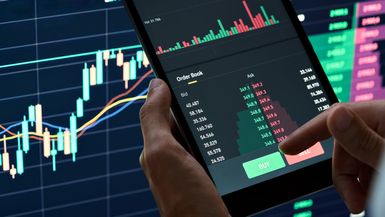
The bid is the highest price a potential investor is willing to pay for a stock, bond, commodity, or other asset. The ask is the lowest price a seller is prepared to accept for the same asset. The difference, or âspread,â between those two is called the bid-ask spread.
When the bid-ask spread is narrow, it may indicate:
The wider the bid-ask spread, the more a price might need to move (up or down) to entice a buyer and seller to agree on a transaction. For example, consider home prices. During and after the Great Recession of 2007â09, a glut of home foreclosures created a âbuyerâs market,â when the seller of a home needed to reduce the asking price by 10% to 20% or more in order to attract a buyer. In contrast, after the COVID-19 pandemic, a shortage of available homes led to bidding wars, resulting in buyers offering thousands of dollars above the listed asking price.
In the modern stock market, where retail brokerage firms offer zero-commission trading, the bid-ask spread is the cost of buying or selling, and represents payment to the market maker for providing a liquid and orderly market. In the U. S. and some other developed markets, market makers will ârebateâ part of their profit margin to the broker in whatâs called payment for order flow (PFOF). In other words, crossing the bid-ask spread helps keep the financial markets intact.
This article was most recently revised and updated by Doug Ashburn