




5 Famous Battle-Axes
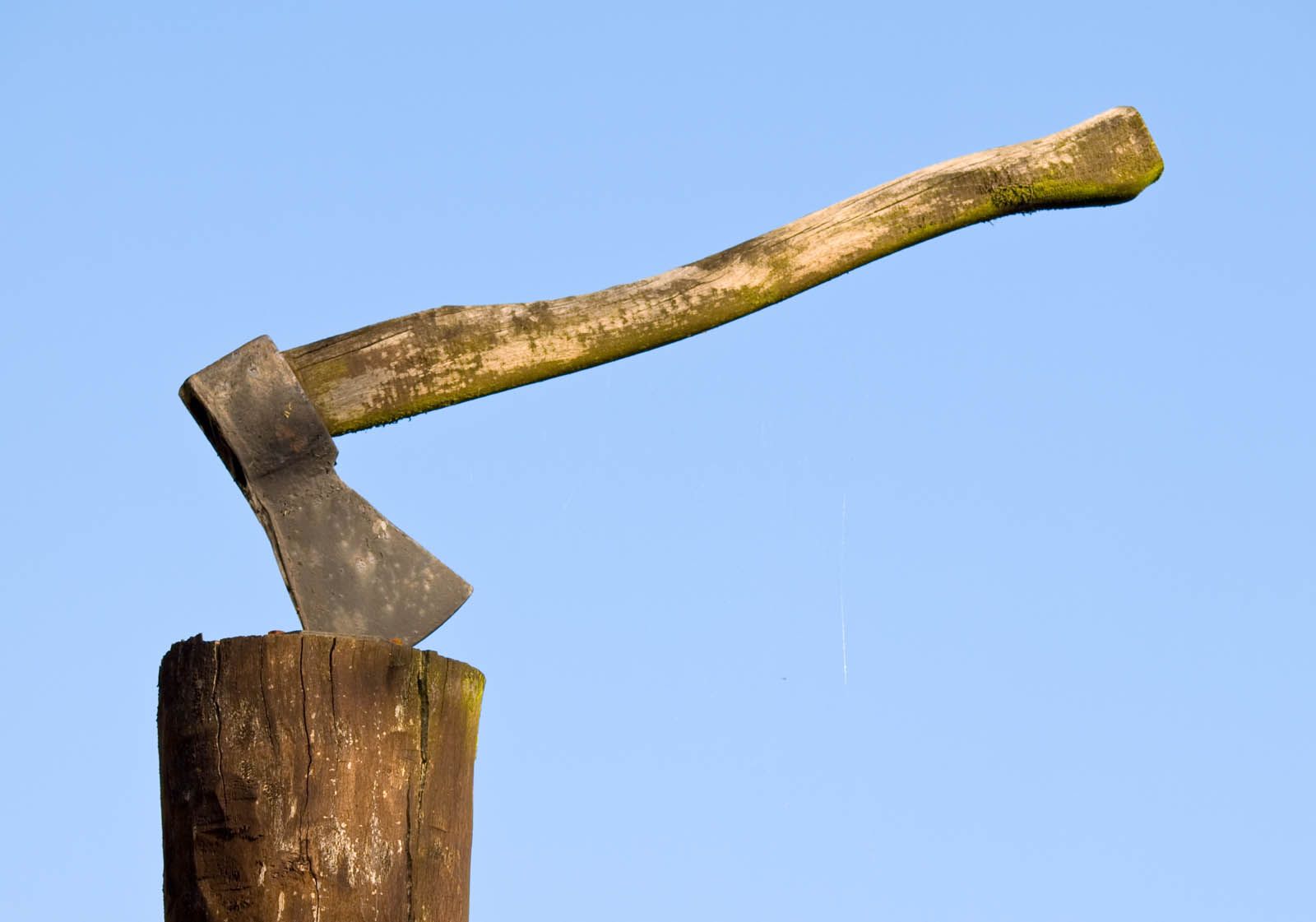
The weapon of choice for these historical women wasn’t beauty, grace, or charm. Instead, they choose to wield cold, hard steel. As in an axe. Or hatchet. Or tomahawk. Thanks in part to such unladylike weapons, these women captured the public’s imagination, inspiring films, books, plays, poems, ballets, bobbleheads, and, in this case, a list.
Frankie Silver
Frankie Silver was Lizzie Borden before there was a Lizzie Borden, though she was never immortalized in a catchy children’s rhyme. In 1831 Frankie allegedly murdered her husband, Charlie Silver, with an axe, dismembered his body, and hid the various parts in and around their North Carolina home; the pieces were buried as they were found, resulting in three different cemetery plots for poor Charlie. While there were questions about her motive—self-defense against an abusive husband or jealousy over an affair—and no solid evidence, Frankie was found guilty in 1832 and sentenced to death. She briefly escaped in 1833, but shortly after her capture, she was hung.
Carry Nation
American temperance activist Carry Nation once described herself as “a bulldog running along at the feet of Jesus, barking at what He doesn’t like.” At some point, however, she must have decided that a hatchet was more effective than barking. Alone or accompanied by hymn-singing women, the nearly-six-foot tall Nation would march into a saloon and proceed to sing, pray, and hurl biblical-sounding vituperations while smashing the bar with a hatchet. Although she brought much publicity to the temperance movement, prohibition wasn’t enacted until 1919, eight years after her death.
Jeanne Hachette (Jeanne the Hatchet)
In 1472 troops of Charles the Bold of Burgundy were driving across France, leaving destruction and death in their wake. The same fate seemed to await the small town of Beauvais. That is, until a teenaged girl named Jeanne decided to take action. Grabbing a hatchet, she attacked the enemy’s standard bearer and seized the flag. Her actions spurred on the locals, who repelled the invaders. Jeanne Hachette’s bravery is commemorated each year with the “Procession of the Assault” in Beauvais.
Lizzie Borden

One of the best-known murder suspects in U.S. history, Lizzie Borden was a popular 32-year-old churchgoer when her father and stepmother were brutally killed in 1892, victims of an axe-wielding assailant. Lizzie soon emerged as the main suspect—she allegedly had tried to buy poison the day before the murders—and her trial created a national sensation, garnering more newspaper coverage than the World’s Fair in Chicago. Given the circumstantial evidence, Borden was acquitted, and she lived a relatively quiet life until her death in 1927. Her story, however, has lived on, thanks in large part to that poem.
Hannah Emerson Duston

In 1697, less than a week after giving birth, Hannah Emerson Duston, along with her newborn daughter and her maid, was captured by Native Americans and forced to march some 100 miles from Haverhill, Massachusetts, to Boscawen, New Hampshire; along the way, the baby was allegedly murdered and a young captive boy was added to the group. On the night of March 30, Duston obtained a tomahawk, which she used to kill up to 10 Indians—a number of whom were reportedly children--and scalp them. After leading her party home, Duston was proclaimed a heroine, and she was thought to be the first American woman to have a statue erected (1874) in her honor. While some of her actions have been debated in recent years, her fortitude and determination have not.