




Operation Fortitude
-
What was Operation Fortitude?
Operation Fortitude was a World War II Allied deception intended to mislead the German high command into thinking that the Allied invasion in 1944 would not be at Normandy. Beginning in 1943, Allied military officials organized Fortitude as a suboperation of Bodyguard, which was meant to deceive by using a fake army. The goal of Fortitude was to direct German attention to Norway (Fortitude North) and to the Pas-de-Calais region of France (Fortitude South).
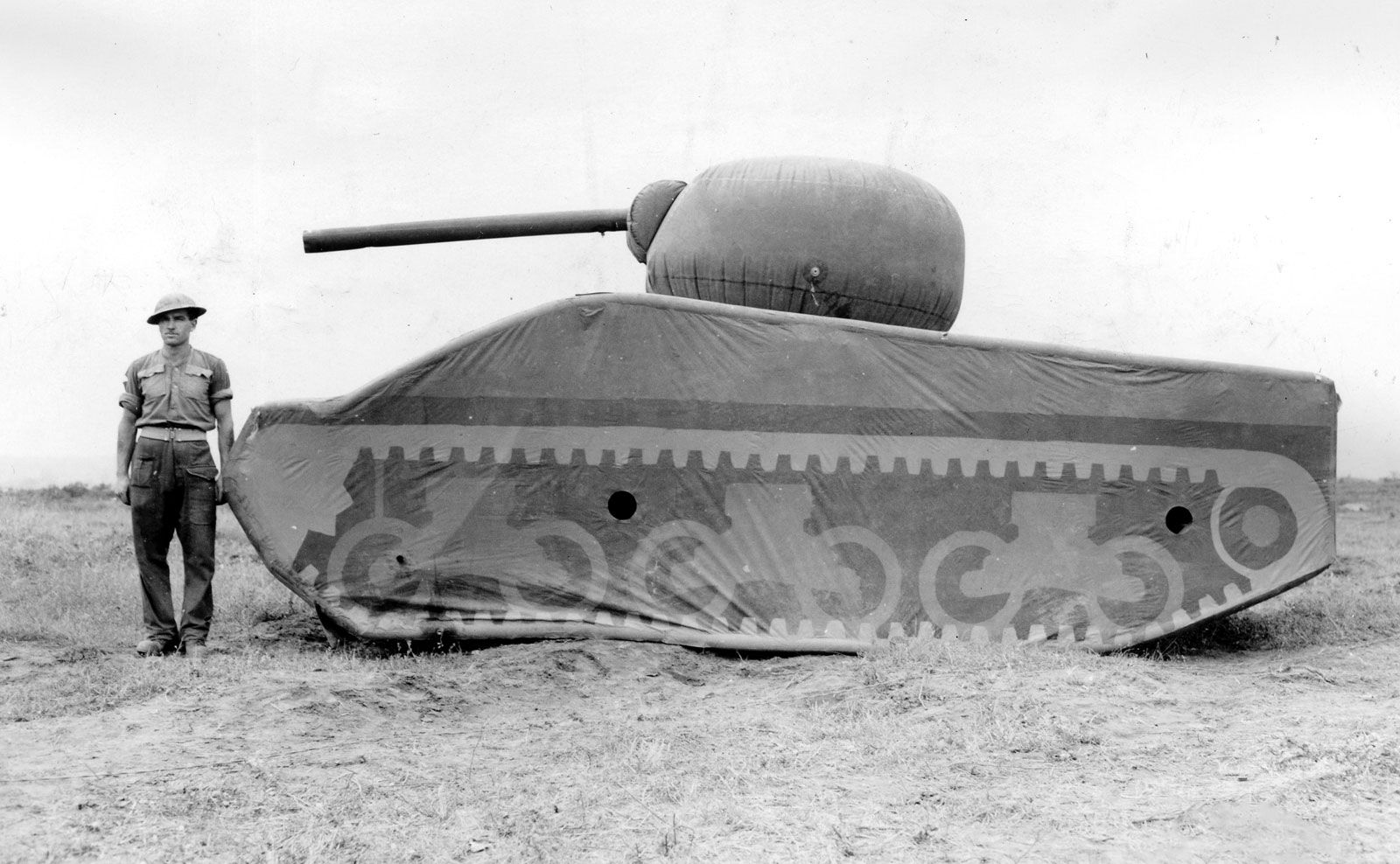
To make the deception believable, the Allies launched Operation Quicksilver, a suboperation of Fortitude, in January 1944. Quicksilver employed a fictitious army known as the First U.S. Army Group (FUSAG), which was made up of thousands of fake tanks and airplanes.
1 Britannica SourceCreated from Britannica articles using AI. AI can make mistakes, so verify using Britannica articles. -
Why did the Allies need Operation Fortitude during World War II?
During World War II, the Allies executed Operation Fortitude to mislead the German high command into thinking that the Allied invasion in 1944 would not target Normandy. This operation, initiated in 1943, was a key part of a broader Allied deception strategy that involved creating a fake army.
The goal of Fortitude was to divert German attention to both Norway (Fortitude North) and the Pas-de-Calais region in France (Fortitude South), thereby increasing the likelihood of success for the actual Normandy invasion, known as Operation Overlord. The Allies utilized tactics such as fake radio transmissions, double agents, and a fictitious army led by General George S. Patton to reinforce the illusion of an impending attack on Calais.
1 Britannica SourceCreated from Britannica articles using AI. AI can make mistakes, so verify using Britannica articles. -
How did Operation Fortitude try to trick the Germans?
Operation Fortitude, a World War II Allied deception, aimed to mislead Nazi Germany about the location of the 1944 invasion of Europe. The Allies wanted to reinforce the idea that the invasion would occur at Pas-de-Calais, France, instead of Normandy.
To make the deception believable, the Allies created the fictitious First U.S. Army Group (FUSAG), which included fake tanks, airplanes, and infrastructure. They also publicly announced that General George S. Patton, whom the German high command respected, was in command. The Allies used spurious radio transmissions and double agents to feed false information to the Germans. They also allowed German reconnaissance aircraft to photograph the fake army.
1 Britannica SourceCreated from Britannica articles using AI. AI can make mistakes, so verify using Britannica articles. -
What were some methods used in Operation Fortitude to make the deception believable?
Operation Fortitude employed several methods to deceive the German high command into believing that the Allied invasion of Europe would not be at Normandy.
To make the deception believable, the Allies launched Operation Quicksilver, a suboperation of Fortitude, in January 1944. Quicksilver employed a fictitious army known as the First U.S. Army Group (FUSAG), made up of thousands of fake tanks and airplanes as well as decoy buildings and other infrastructure on England’s southeast coast.
The Allies generated radio transmissions to deceive the Germans into thinking that an invasion would take place at Calais in mid-July 1944. These transmissions were supported by double agents and the Allies allowed German reconnaissance aircraft to photograph the site of their ghost army.
1 Britannica SourceCreated from Britannica articles using AI. AI can make mistakes, so verify using Britannica articles. -
How did Operation Fortitude help the success of D-Day (the Normandy landings)?
Operation Fortitude was an Allied deception operation during World War II intended to mislead the German high command regarding the location of the main Allied invasion in Europe in 1944.
The goal of Fortitude was to divert German attention to both Norway (Fortitude North) and the Pas-de-Calais region of France (Fortitude South), thereby increasing the chances of success for Operation Overlord, also known as the Normandy Invasion or D-Day.
Fortitude was successful in convincing many in the German high command that the main Allied invasion would occur in the Pas-de-Calais region. This belief may have influenced the Germans to withhold reinforcements from Normandy after the Allied invasion began on June 6, 1944.
2 Britannica SourcesCreated from Britannica articles using AI. AI can make mistakes, so verify using Britannica articles. -
Who were some of the key people involved in planning and carrying out Operation Fortitude?
Operation Fortitude was a World War II Allied deception to mislead Nazi Germany about the location of the 1944 Allied invasion of Europe.
Key people involved in planning and carrying out Operation Fortitude include:
- Allied military officers of the London Controlling Section
- George S. Patton, commander of the fictitious First U.S. Army Group (FUSAG)
- Juan Pujol Garc\u00eda, a double agent who fed information to Nazi Germany
2 Britannica SourcesCreated from Britannica articles using AI. AI can make mistakes, so verify using Britannica articles.
Operation Fortitude, during World War II, an Allied deception operation that was intended to make Nazi Germany’s high command believe that the main Allied invasion of Europe in 1944 would not be at Normandy. Organized by Allied military officials beginning in 1943, Operation Fortitude—which was one of many interlocking deception operations and suboperations devised by the Allies—aimed to deceive through the use of a fake army. Military historians disagree over whether Fortitude was a primary factor in Operation Overlord’s success, but it is a notable example of how the Allies used disinformation and decoys during World War II.
In order to give Overlord—better known today as the Normandy Invasion, or D-Day—the highest chance of success, the Allies believed that they needed to utilize deception. In December 1943 the London Controlling Section, a secret group of Allied military officers, began planning for decoy activities on a large scale. Their overarching operation was code-named Bodyguard; Fortitude was a suboperation. While the plan for Overlord was to invade mainland Europe via Normandy, Fortitude’s goal was to direct German attention to Norway (a part of the operation known as Fortitude North) and to the Pas-de-Calais region of France (Fortitude South). Military logic was already pushing Nazi commanders to believe that the Allies would invade Pas-de-Calais—the French region closest to the English coast—but Fortitude was a means of reinforcing that belief and thereby increasing the odds that Overlord would succeed, which in turn would enable Allied forces to establish a foothold in western Europe.
To make Fortitude’s deception more believable, the Allies launched Operation Quicksilver, a suboperation of Fortitude, in January 1944. Quicksilver employed a fictitious army known as the First U.S. Army Group (FUSAG), which was made up of thousands of fake tanks and airplanes as well as decoy buildings and other infrastructure on England’s southeast coast. In addition, U.S. senior officer and soon-to-be four-star general George S. Patton was declared publicly to be in command of this fictitious army in early 1944. Patton was the general who was possibly the most feared and respected by the German high command, and his involvement gave the decoy operation considerable credibility.




To deepen the deception, the Allies used a variety of tactics. They generated, for example, radio transmissions to deceive the Germans into thinking that an invasion would take place at Calais in mid-July 1944. These spurious radio transmissions were supported by the work of double agents working for the Allies who fed information to Nazi Germany. One of these double agents was Juan Pujol García, who the Germans were so impressed with that they awarded him an Iron Cross. The Allies also allowed German reconnaissance aircraft to photograph the site of their ghost army. By this point in World War II, the Allies had cracked the Enigma code as well as another German encryption system, which meant they could monitor the false information they were pushing into Germany and assess its effects.
Fortitude was a success insomuch as it confirmed the belief of many in the German high command that the Allies’ main invasion effort would probably occur in the Pas-de-Calais region. That belief may have also helped persuade the Germans to withhold reinforcements from Normandy after the actual Allied invasion had begun there on June 6, 1944. Fortitude was one of many complex overlapping operations and factors that contributed to Allied forces establishing themselves in France and eventually defeating Nazi Germany.