

- Date:
- September 10, 2023 - September 11, 2023
- Location:
- Libya

Libya flooding of 2023
-
What happened during the Libya flooding of 2023?
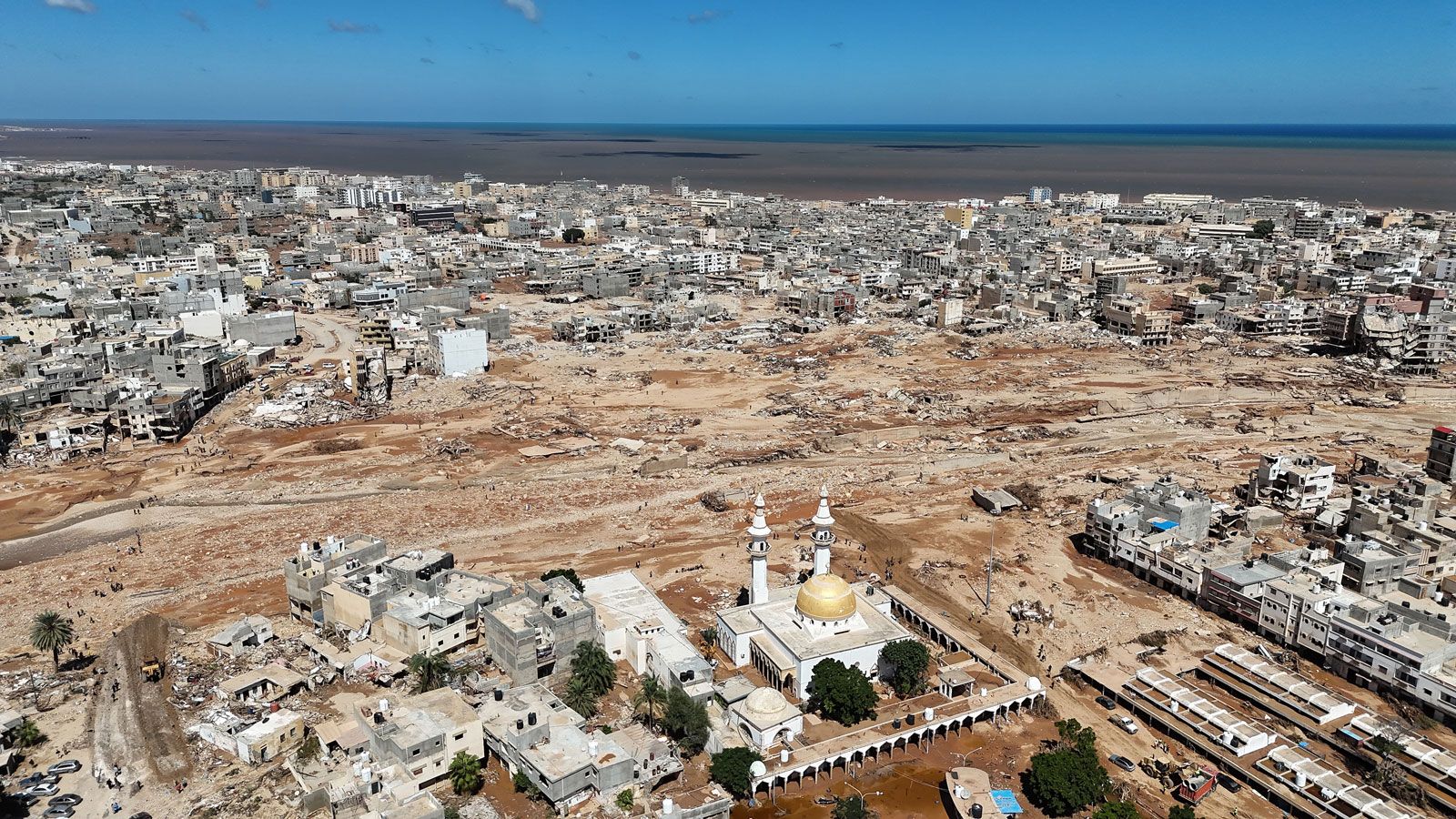
In September 2023, Storm Daniel caused catastrophic flooding in eastern Libya, particularly impacting the city of Derna. The collapse of two dams upstream from Derna sent approximately 7.9 billion gallons of water along the Wadi Derna river, resulting in a massive wave of mud that destroyed about 25% of the city.
The disaster resulted in thousands of fatalities and left many more missing. Initial reports indicated over 11,300 deaths, but the UN later revised the figures to 3,958 dead and 9,000 missing. Approximately 40,000 people were displaced, with Derna's infrastructure damage and governmental issues hindering rescue and aid efforts. The city faced shortages of medicine, food, and shelter, raising concerns about potential disease outbreaks.
1 Britannica SourceCreated from Britannica articles using AI. AI can make mistakes, so verify using Britannica articles. -
Where in Libya did the flooding cause the most damage?
The 2023 storm, Daniel, caused extensive damage across the southern Balkan Peninsula, western Turkey, and eastern Libya; however, the Libyan coastal city of Derna was hardest hit. The neglect of the Abu Mansour and Derna (Belad) dams led to their collapse, sending approximately 7.9 billion gallons of water along the Wadi Derna river, bisecting the city. The resulting 23-foot-high wave destroyed or heavily damaged at least one-quarter of Derna, leaving about 400 structures submerged in thick mud.
In the days following the disaster, the Libyan Red Crescent reported that 11,300 people had died and 10,100 were missing in Derna alone. The flooding forced an estimated 40,000 people out of their homes, with approximately 30,000 being displaced in Derna.
1 Britannica SourceCreated from Britannica articles using AI. AI can make mistakes, so verify using Britannica articles. -
What caused the major flooding in Libya in 2023?
The catastrophic flooding that struck eastern Libya in September 2023 was caused by Storm Daniel, a strong Mediterranean cyclone, which produced torrential rains. The city of Derna was especially hard hit when two dams upstream failed due to the extreme rainfall, sending approximately 7.9 billion gallons of water down the Wadi Derna river. This deluge resulted in a massive wave of mud that destroyed about 25% of Derna, causing thousands of fatalities and leaving thousands more missing. The storm's impact was amplified by the dams' state of disrepair and the region's infrastructure challenges, which complicated rescue and aid efforts.
1 Britannica SourceCreated from Britannica articles using AI. AI can make mistakes, so verify using Britannica articles. -
How did the flooding affect the people and communities in Libya?
The catastrophic flooding in eastern Libya in September 2023, caused by Storm Daniel and the subsequent collapse of two dams, had a devastating impact on people and communities, especially in the city of Derna.
The immediate effects included a high death toll, with thousands killed and thousands more missing. Approximately 25% of Derna was destroyed, leaving about 400 structures submerged in mud. An estimated 40,000 people were displaced from their homes, with 30,000 from Derna alone. The disaster damaged roads and bridges, which hampered the arrival of refugees, rescue crews, government services, and aid. Medicine, food, and shelter were in short supply, and there was concern about the spread of disease from mud-contaminated water. Protests erupted due to the slow government response.
1 Britannica SourceCreated from Britannica articles using AI. AI can make mistakes, so verify using Britannica articles. -
What role did the collapse of dams play in the disaster?
The collapse of the Abu Mansour and Derna (Belad) dams was a critical factor in the catastrophic Libya flooding of 2023. These dams, already weakened by years of neglect, failed under the pressure of heavy rains from Storm Daniel.
The collapse unleashed approximately 7.9 billion gallons (30 million cubic meters) of water along the Wadi Derna river, which runs through Derna. The resulting 23-foot (7-meter) high wave of mud struck the city at night, destroying or heavily damaging an estimated 25 percent of Derna. The deluge crushed buildings and washed people and debris into the sea.
1 Britannica SourceCreated from Britannica articles using AI. AI can make mistakes, so verify using Britannica articles. -
How did the Libyan government and international organizations respond to the flooding?
Following the Libya flooding of 2023, the Libyan government, along with international organizations, mobilized to provide aid; however, the pace of their combined efforts did not meet the needs of the affected residents. The first emergency deliveries were delayed, arriving approximately 36 hours after the disaster began. Organizations such as the International Federation of Red Cross and Red Crescent Societies (IFRC) assisted the Libyan government with relief and recovery. The United Nations relief officials voiced concerns about shortages of medicine, food, and shelter, as well as the risk of water contamination that could sicken survivors.
Frustrated residents protested the slow government response, prompting Libyan government officials and troops to divide the city into sections to control potential disease outbreaks.
1 Britannica SourceCreated from Britannica articles using AI. AI can make mistakes, so verify using Britannica articles.
Libya flooding of 2023, catastrophic flooding that struck eastern Libya on September 10 and 11, 2023. More than 4,000 people were killed and some 10,000 were missing after heavy rains generated by Storm Daniel (a strong Mediterranean cyclone) drenched the area and brought flooding to the region. About 25 percent of the Libyan port city of Derna was destroyed by a massive torrent of water and mud after two dams located upstream from the city collapsed from pressure brought on by the heavy rains. Roughly one week earlier, flash flooding caused by Daniel had damaged infrastructure and inundated villages in Greece, Bulgaria, and western Turkey.
Storm Daniel’s heavy rains
The weather system that brought unusually heavy rains to eastern and central Mediterranean was Storm Daniel, a strong mid-latitude cyclone that developed over the Ionian Sea and Greece in early September (see also climate: Cyclones and anticyclones). Daniel’s resemblance to a tropical storm in both shape and intensity prompted some meteorologists to refer to Daniel as a “medicane” (a portmanteau of Mediterranean hurricane). Daniel was held in place by a blocking high-pressure system over the Netherlands, whose movement was restricted by another low-pressure system to its west, which created a weather phenomena called an omega block (a configuration that resembles the Greek letter omega, Ω, on weather maps).
Fueled also by unusually warm sea-surface temperatures in the Mediterranean Sea, Daniel strengthened rapidly, delivering torrential rains and high winds to the southern Balkan peninsula and western Turkey starting on September 4. Parts of central Greece received as many as 29.5 inches (750 mm) of rain—almost the same amount the area typically receives in one year—in only 24 hours. Daniel also generated waterspouts (small-diameter columns of rapidly swirling air in contact with a water surface) in the Aegean and Tyrrhenian seas. The storm then tracked southwest over the Ionian Sea before bending southeast toward eastern Libya.



Daniel’s high winds and heavy rains peaked over eastern Libya during the morning of September 10. Bolstered by warm waters measuring 27.5 °C (81.5 °F) off the Libyan coast, Daniel generated tropical-storm-force winds ranging from 43.4 to 49.6 miles (70 to 80 km) per hour, which downed trees and electrical towers, and drenched coastal cities, producing flash floods. Across much of the region, cities and towns measured between 5.9 and 9.4 inches (150 and 240 mm) of rainfall; however, the highest 24-hour rainfall total, 16.3 inches (414 mm), occurred in Zāwiyat al-Bayḍāʾ, which is roughly 5 miles (8 km) from the coast in the Akhḍar Mountains.
Damage
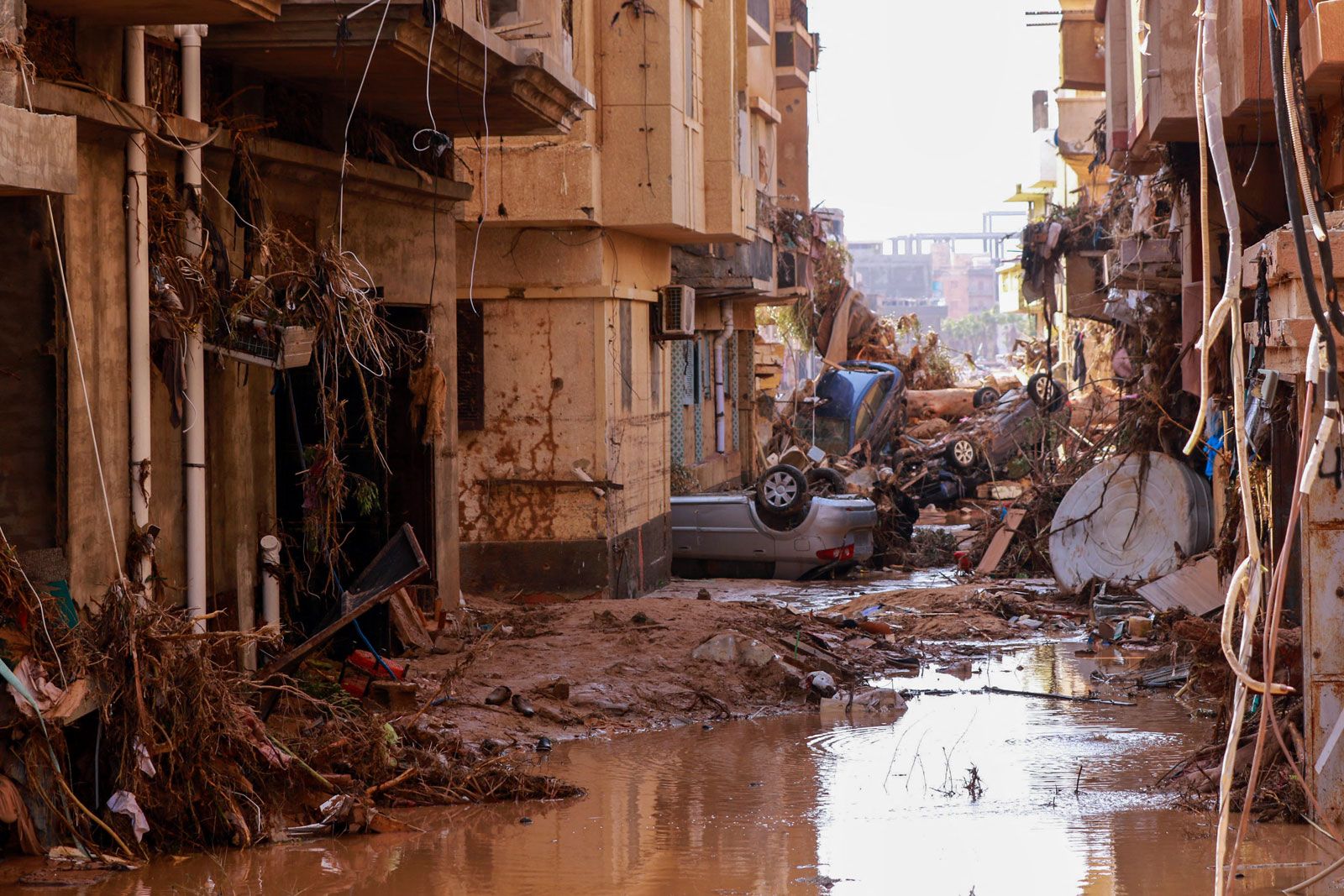
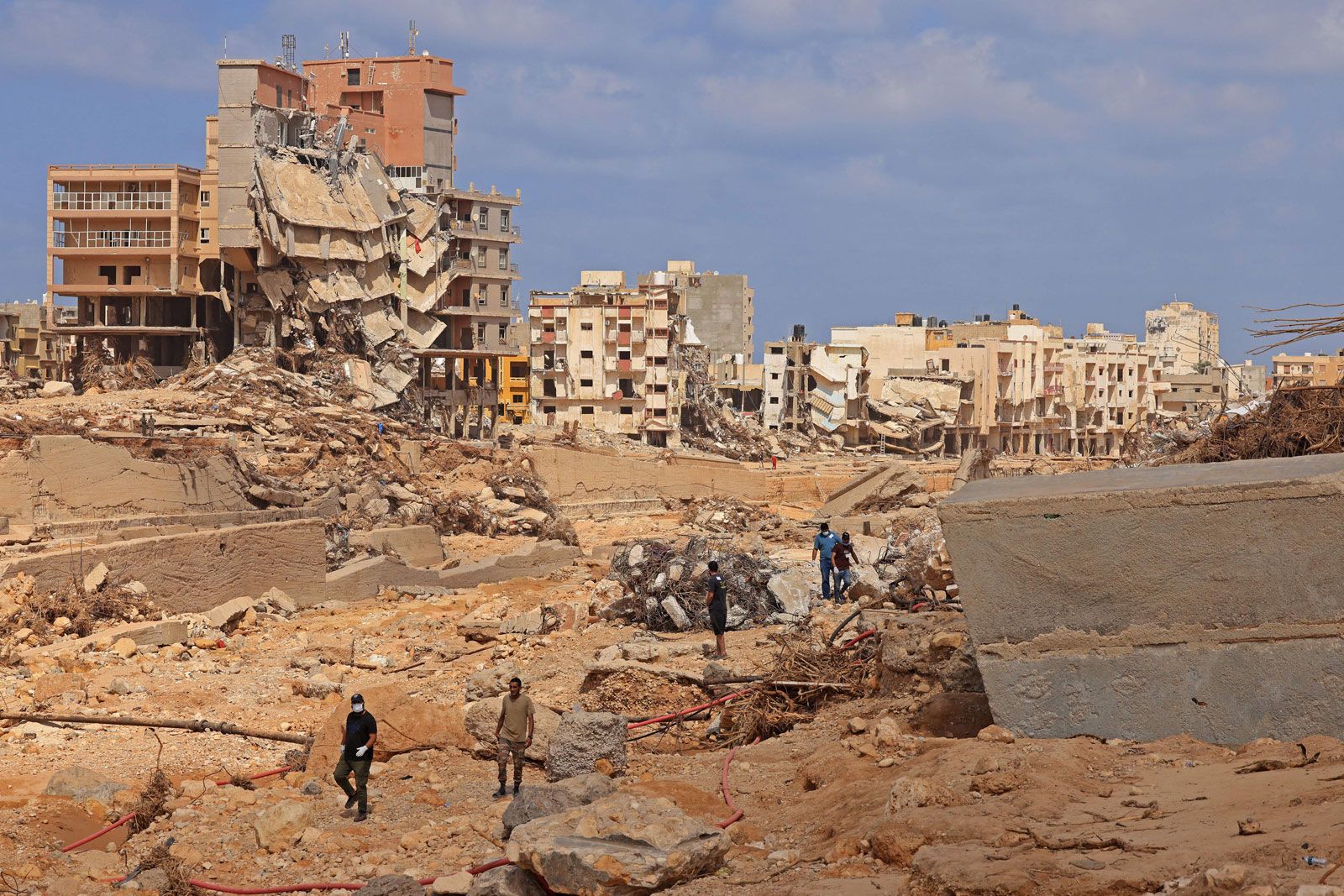
Daniel’s winds and rain produced extensive damage across the southern Balkan Peninsula, western Turkey, and eastern Libya. The Libyan coastal city of Derna and its population of more than 100,000 inhabitants, however, were hardest hit by the effects of the storm. Whereas rising waters claimed the lives of 4 people in Bulgaria, 7 people in Turkey, 17 people in Greece, and about 170 people in other cities in eastern Libya, thousands were killed in Derna after the Abu Mansour and Derna (Belad) dams, which had suffered from years of neglect, failed. The collapse of the dams sent nearly 7.9 billion gallons (30 million cubic meters) of water downstream along the Wadi Derna river, which bisects the city. A wave of reddish mud measuring about 23 feet (7 meters) high struck in the middle of the night—crushing houses, washing out the lower floors of high-rises, and sending people, vehicles, and debris into the sea. By some estimates, the deluge destroyed or heavily damaged at least one-quarter of the city, leaving about 400 structures submerged in thick mud.
In the days after the disaster, the Libyan Red Crescent reported that 11,300 people had been killed and 10,100 people were missing in Derna alone. On September 20, however, the UN Office for the Coordination of Humanitarian Affairs, citing World Health Organization estimates, revised its figures downward to 3,958 dead and 9,000 missing in Libya.
In Greece, Turkey, and Bulgaria, floodwaters also immersed villages and infrastructure. Damage was most pronounced in Greece’s Thessaly region, where some 280 square miles (720 square km) were flooded, with news reports noting that some villages were covered by 9.8 feet (3 meters) of water. The floods also cut or damaged roads, buildings, train lines, and other infrastructure within and near the cities of Larissa and Volos while also spreading a thick layer of flood-driven silt across croplands, effectively halting the year’s harvest of cotton, tobacco, and other crops and threatening future yields.
The trusted destination for professionals, college students, and lifelong learners.
SUBSCRIBE


Relief and recovery
Rescue efforts began in both of the affected regions almost immediately after Daniel’s passage. In Greece, civil authorities rescued some 1,700 people, with nearly 300 being taken to safety by helicopter. While no specific damage estimates were available following the storm, Greek government officials estimated that Greece’s recovery from the storm alone could cost billions of euros, whereas regional experts examining the financial impact of the storm across the Mediterranean expected that Daniel would become the costliest Mediterranean storm on record.
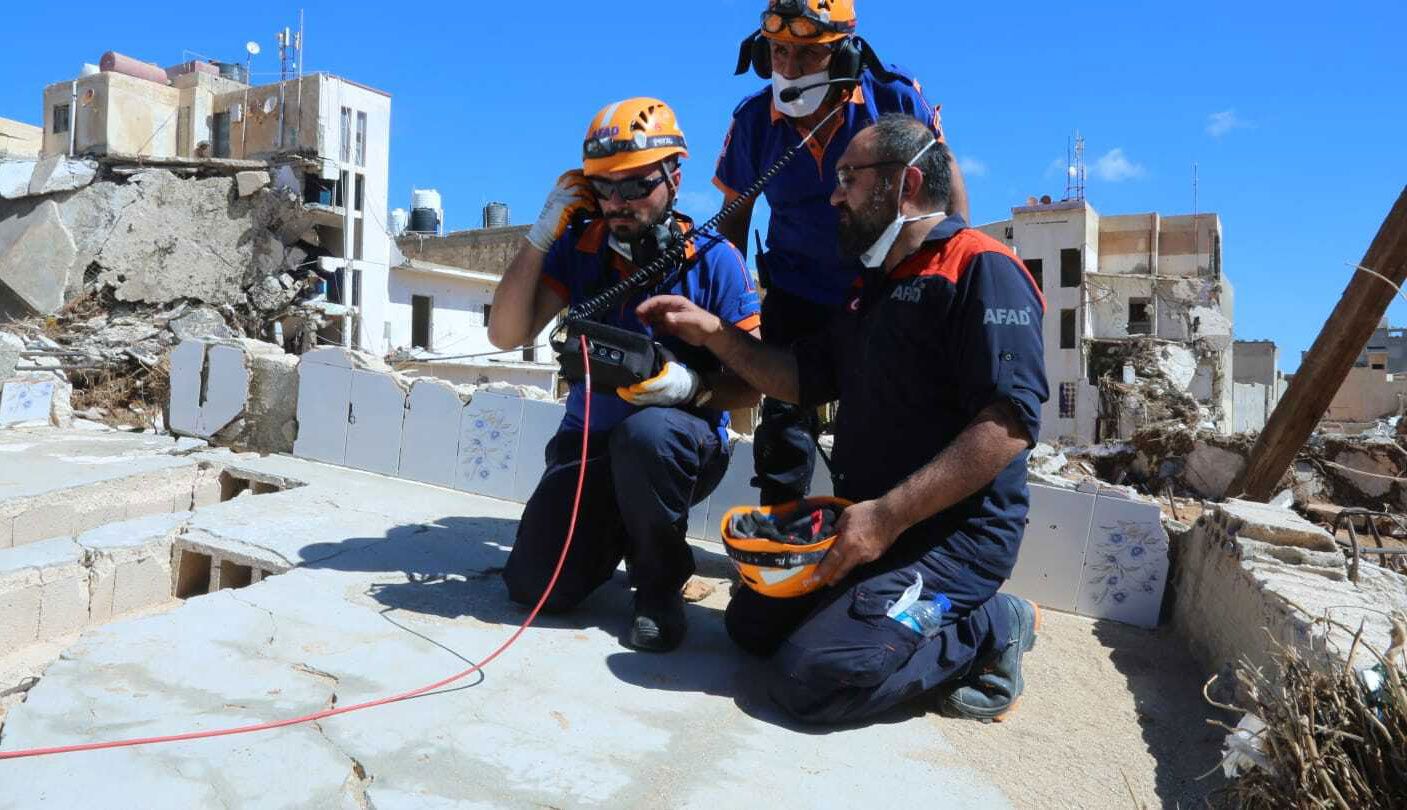
In eastern Libya, the flooding forced an estimated 40,000 people out of their homes, with some 30,000 being displaced in Derna alone. While many in damaged areas outside Derna were able to relocate to other cities, Daniel wreaked havoc on Derna’s road and bridge infrastructure—which, when combined with the country’s poorly run governmental bureaucracy—hampered the movement of refugees, rescue crews, government services, and aid. The first emergency deliveries were much delayed, arriving some 36 hours after the onset of the disaster. In the days after, additional aid and staffing arrived by plane, with the International Federation of Red Cross and Red Crescent Societies (IFRC) and other organizations assisting the Libyan government with relief and recovery; however, the pace of their collective efforts was not keeping up with the needs of residents. UN relief officials and others noted that the city was facing shortages of medicine, food, and shelter and were concerned that rising mud-contaminated water could sicken survivors in the coming weeks and months.
More than a week after the disaster, Derna remained a city in disarray, as relief groups continued to recover and bury bodies that had washed up on the shores and had been covered by the mud. By September 18, frustrated Derna residents had gathered to protest the slow government response, and Libyan government officials and troops deployed to Derna had begun to divide the city into sections, a measure put in place ostensibly to slow the spread of potential disease outbreaks. By September 19, Libyan government officials had reported that more than 3,300 bodies had been recovered and buried, many in mass graves.
The role of climatic change
A number of meteorologists and climate scientists noted that climate change very likely played a significant role in increasing Daniel’s intensity. A study by the World Weather Attribution group in the days that followed examined factors affecting the storm and determined that such a rainfall event occurring in eastern Libya would be expected to happen only once every 300 to 600 years. It suggested that factors related to climate change, such as the global average temperature being 1.2 °C (2.2 °F) warmer than that of pre-industrial times (that is, before 1750), made the Libyan rainfall event 50 percent more intense and 50 times more likely to occur and the rainfall events in Greece, Bulgaria, and Turkey 40 percent more intense and 10 times more likely to occur.