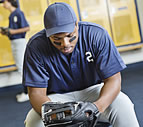


face
52 ENTRIES FOUND:
- face (noun)
- face (verb)
- face–lift (noun)
- face–off (noun)
- face–saving (adjective)
- face card (noun)
- face mask (noun)
- face time (noun)
- face value (noun)
- about–face (noun)
- bald–faced (adjective)
- bold–faced (adjective)
- -faced (combining form)
- fresh–faced (adjective)
- in–your–face (adjective)
- open–faced sandwich (noun)
- pasty–faced (adjective)
- po–faced (adjective)
- poker face (noun)
- red–faced (adjective)
- shit–faced (adjective)
- smiley face (noun)
- stone–faced (adjective)
- straight face (noun)
- two–faced (adjective)
- volte–face (noun)
- blue (adjective)
- cross (verb)
- cut (verb)
- egg (noun)
- feed (verb)
- fly (verb)
- human (adjective)
- laugh (verb)
- look (verb)
- lose (verb)
- make (verb)
- music (noun)
- nose (noun)
- pretty (adjective)
- save (verb)
- show (verb)
- shut (verb)
- slap (noun)
- smile (noun)
- spite (verb)
- stare (verb)
- stuff (verb)
- thunder (noun)
- what's–her–name (noun)
- what's–his–name (noun)
- wipe (verb)
plural
faces
plural
faces
Britannica Dictionary definition of FACE
[count]
1
:
the front part of the head that has the eyes, nose, and mouth on it
-
He has a round face.
-
He punched me (right) in the face.
-
His face is familiar but I can't remember his name.
-
I'll never forget the look on her face.
-
She slapped him in the face. = She slapped his face.
-
He fell flat on his face.
-
a bearded/freckled/tanned face
-
a fresh/youthful face
-
face cream
-
face powder
-
Her face lit up [=she looked pleased and happy] when she saw him.
-
Her face fell [=she looked unhappy] when I told her the bad news.
-
I don't know how he can show his face around here. [=how he can stand being seen here]
-
Why the long face? [=why do you look so unhappy?]
-
He was wearing a silly grin/smile on his face. [=he was grinning/smiling in a silly way]
-
She angrily told him to wipe that smile off his face. [=to stop smiling]
-
Her guilt was written all over her face. [=the expression on her face showed her guilt very clearly]
-
The answer to the problem was staring me in the face all along. [=the answer was obvious but I did not see it]
2
:
a facial expression
—
see also poker face
-
a happy/sad face
-
a friendly/smiling face
-
She tried to put on a brave face [=she tried to appear brave or calm] despite the pain of the injury.
-
It was hard to keep a straight face. [=it was hard not to laugh]
-
You should have seen his face when we shouted “Surprise!” [=he had a shocked, surprised, etc., look on his face]
3
:
person
-
I didn't recognize any of the faces around the table.
-
There are lots of new faces around the office.
-
It's good to see a familiar face. [=a person that I know]
4
a
:
the way something appears when it is first seen or thought about
— usually singular
-
On the face of it, her proposal seems ridiculous. [=when you first hear about her proposal it seems ridiculous, although it may not be ridiculous when you learn more about it]
-
Her proposal seems ridiculous on its face.
b
:
the way something is seen or thought of by people
— usually singular
-
If she wins the election it will change the face of American politics.
◊ To put a brave/good/positive face on something or to put the best face on something is to talk about it or describe it in a way that makes it seem as good as possible.
-
She can put a positive face on the worst situations.
-
He was disappointed by the results of the election, but tried to put the best face on the situation by saying he had come closer to winning than people expected.
5
a
:
a front or outer surface of something
-
the face of a cliff = a cliff face
-
the face of a building
-
the face of a golf club
-
a species that has vanished from the face of the earth [=a species that is no longer found anywhere in the world]
-
If you ask me, he's the biggest fool on the face of the earth. [=in the world]
b
:
a surface or side that is marked or prepared in some way
-
the face of a document
c
:
a side of a coin
-
Which face will the coin land on—heads or tails?
d
:
the part of a clock or watch that shows the time
e
mathematics
:
any one of the flat surfaces of a solid shape
-
A cube is a solid with six square faces.
a slap in the face
as plain as the nose on your face
blue in the face
cross someone's face
cut off your nose to spite your face
egg on your face
face to face
1
— used to describe a situation in which two people are together and looking at each other
— often + with
-
They were sitting face to face.
-
I've spoken with him on the phone but I've never met him face to face. [=I've never met him]
-
We've never had a face-to-face meeting.
-
I've never been face to face with him before.
2
:
very close to something dangerous, difficult, etc.
— + with
-
The actors were face to face with real flames.
-
She came face to face with death. [=she nearly died]
-
When she visited the school she was brought face to face with the problems encountered by teachers every day.
fly in the face of
game face
◊ In informal U.S. English, if you are wearing your game face or have your game face on, you have a serious look on your face which shows that you are ready to compete in a game, sport, competition, etc.
-
He was wearing his game face in the finals.
get out of someone's face
US, informal
:
to go away and stop bothering someone
:
to leave someone alone
-
Get out of my face!
-
Hey, get out of your sister's face and go play somewhere else!
in someone's face
1
:
in a direct way that shows anger or disrespect for someone
-
She laughed in his face.
-
He slammed the door in my face.
2
—
see also in-your-face
◊ In informal U.S. English, if you are/get in someone's face, you are criticizing or shouting at someone in a very direct and angry way.
-
The coach got in my face because I was late for practice.
in the face of
:
while in a situation in which you have to deal with (something or someone that is dangerous, difficult, etc.)
-
Their defeat seemed certain in the face of such a powerful opponent.
-
She showed great courage in the face of danger. [=she showed great courage when she was faced with danger]
-
She succeeded in the face of [=despite] great difficulties.
just another face in the crowd
laugh on the other side of your face
lose face
:
to cause other people to have less respect for you
:
to lose other people's respect
-
She was afraid that she would lose face if she admitted her mistake.
make a face
or chiefly British pull a face
1
:
to make a facial expression that shows dislike or disgust
-
He made a face when I mentioned her name.
2
:
to make a silly or amusing facial expression
-
She tried to get me to laugh by making a face when I looked at her.
-
He was entertaining the children by making (funny) faces.
pretty face
put a human face on
save face
:
to avoid having other people lose respect for you
-
He tried to save face by working overtime.
shut your face
stare (someone) in the face
stuff your face
to someone's face
:
directly to someone
-
If you have something to say about me, you should say it to my face. [=say it directly to me rather than to someone else]

2
face
/ˈfeɪs/
verb
faces;
faced;
facing
2
face
/ˈfeɪs/
verb
faces;
faced;
facing
Britannica Dictionary definition of FACE
1
a
:
to stand or sit with your face and body turned toward (something or someone)
[+ object]
-
The teacher faced the class.
-
She turned around to face the window.
-
He sat facing the wall.
[no object]
-
Turn and face to the east.
b
:
to have the front part toward (something)
[+ object]
-
The house faces the park.
-
The living room faces the afternoon sun.
[no object]
-
My shoe was lying in the corner with its sole facing upward.
-
The flower opens facing skyward.
c
:
to be on the page that is opposite to (another page)
[+ object]
-
Look at the illustration that faces page 132. = Look at the illustration facing page 132.
[no object]
-
Look at the illustration on the facing page.
2
[+ object]
a
:
to deal with (something bad or unpleasant) in a direct way
-
Only by facing your problems can you hope to overcome them.
-
You must stand and face the danger.
-
He'll have to face the consequences of his decision.
b
:
to admit that (something) is true or real
-
It was time to face the truth.
-
We have to face the possibility that the economy will get worse before it gets better.
-
We have to face reality.
3
[+ object]
a
:
to have (something bad or unpleasant) as a problem or possibility
:
to be confronted by (something)
-
This is not the first time she has faced adversity.
-
Because of the drought, thousands of people are now facing starvation.
-
He finds himself facing criminal charges for his role in the conspiracy.
-
She faced a difficult choice. [=she had to make a difficult choice]
b
:
to be a problem for (someone)
:
to require the attention of (someone)
-
There were many important questions facing them.
-
We can't ignore the problems that face us.
c
:
to force (someone) to see and deal with something in a direct way
— usually used as (be) faced
-
He couldn't deny his involvement when the police faced [=confronted] him with the evidence.
-
He was faced with the evidence.
-
We are faced with two unpleasant options.
-
We can't ignore the problems that we are faced with.
4
[+ object]
a
:
to meet with (someone) despite shame, fear, or embarrassment
-
I don't know if I can face him again after treating him so badly.
b
:
to meet (someone) in a competition
:
to compete or fight against (someone)
-
The team has to face a tough opponent in its next game.
-
It was the first time that these two fighters had faced each other in the ring.
-
The pitcher struck out the first three batters he faced.
5
[+ object]
:
to cover the front or the surface of (something)
-
They faced the building with marble.
-
a chimney faced with red brick
-
a brick-faced chimney
face facts
or face the fact(s)
:
to admit that something is true
-
The time has come to face the fact that the government's policies aren't working.
-
The time has come to face the facts and admit that the government's policies aren't working.
-
Let's face facts—our plan isn't working.
face off
[phrasal verb] chiefly US
:
to be involved or become involved in a conflict, dispute, or competition
—
see also face-off
-
The protesters were facing off with/against the police.
-
They faced off in a nationally televised debate.
-
two teams that faced off in the play-offs last year
face the music
:
to accept and deal with the unpleasant result of something you have said or done
-
He knows that he'll be criticized for making a bad decision, and he's ready to face the music.
face up to
[phrasal verb]
face up to (something)
:
to deal with (something bad or unpleasant) in a direct way
-
She has to face up to [=face] her problems now, or else they'll only get worse.
-
We need to face up to our fears.
(let's) face it
— used to say that something is true and cannot be denied
-
Face it, a lot of people don't even bother to vote.
-
Let's face it, most of us don't get enough exercise.