
- Born:
- August 24, 1950, Los Angeles, California, U.S. (age 76)
- Subjects Of Study:
- Ardipithecus ramidus
- Australopithecus afarensis
- Homo sapiens
- hominin


Tim D. White
-
Who is Tim D. White?
Tim D. White (born in Los Angeles, California, on August 24, 1950) is an American paleoanthropologist known for his influential contributions to understanding early human evolution through the discovery of ancient hominid remains in Africa. White's passion for ancient remains started when he was young. He studied anthropology and biology at the University of California, Riverside, and later earned a Ph.D. in biological anthropology from the University of Michigan in 1977.
White's significant discoveries include the 3.4-million-year-old remains of Australopithecus afarensis and the 4.4-million-year-old Ardipithecus ramidus. Although Ardi was not a direct human ancestor, it was still a significant piece of the puzzle of human evolution. Later, his team unearthed the oldest known fossils of Homo sapiens.
2 Britannica SourcesCreated from Britannica articles using AI. AI can make mistakes, so verify using Britannica articles. -
What is a paleoanthropologist?
A paleoanthropologist is an interdisciplinary anthropologist who studies the origins and development of early humans. They assess fossils using physical anthropology, comparative anatomy, and evolution theory. They also identify artifacts, such as bone and stone tools, using archaeology and ethnology to understand their significance for early human development.
Tim D. White (born in 1950) is an American paleoanthropologist known for his findings of ancient hominid remains in Africa, which have clarified the early stages of human evolution. Paleoanthropology requires not only physical anthropologists but also earth scientists, archaeologists, molecular biologists, primatologists, and cultural anthropologists.
5 Britannica SourcesCreated from Britannica articles using AI. AI can make mistakes, so verify using Britannica articles. -
What important discoveries is Tim D. White known for?
Tim D. White is an American paleoanthropologist known for his influential discoveries of ancient hominid remains in Africa, which have significantly contributed to the understanding of early human evolution.
White's notable discoveries include the 3.4-million-year-old remains of Australopithecus afarensis in the Awash River valley of northern Ethiopia. This discovery helped resolve debates about whether specimens discovered in Ethiopia and Tanzania belonged to the same species.
In 1994, White and his team discovered what they initially believed to be the oldest, most apelike hominin fossils yet found and named the 4.4-million-year-old bones Australopithecus ramidus. Later, he changed the classification to Ardipithecus ramidus, creating a new genus. Although Ardi was not a direct human ancestor, it was a significant piece of the puzzle of human evolution. In the early 21st century, White's team unearthed the oldest known fossils of Homo sapiens.
1 Britannica SourceCreated from Britannica articles using AI. AI can make mistakes, so verify using Britannica articles. -
What is Ardipithecus, and why is it significant to human evolution?
Ardipithecus is the earliest known genus on the human lineage and a likely ancestor of Australopithecus. They lived between 5.8 million and 4.4 million years ago. Ardipithecus is known largely from a partial female skeleton called "Ardi," found at the Aramis site in Ethiopia.
The discovery of Ardipithecus is significant because it shows that the last common ancestor of humans and chimpanzees was not chimpanzee-like and that the earliest hominids never went through a chimpanzee-like stage. Tim D. White, an American paleoanthropologist, discovered Ardipithecus near Aramis.
4 Britannica SourcesCreated from Britannica articles using AI. AI can make mistakes, so verify using Britannica articles. -
How has Tim D. White's research changed our understanding of early human ancestors?
Tim D. White's paleoanthropological work in Africa has significantly clarified the early stages of human evolution. White's discovery of 3.4-million-year-old Australopithecus afarensis remains in Ethiopia helped confirm that specimens found in Ethiopia and Tanzania belonged to the same species.
His team's unearthing of "Ardi" (Ardipithecus ramidus) fossils, dating back 4.4 million years, presented a significant piece of the human evolution puzzle, even though Ardi was not a direct human ancestor. Ardi's features, such as a small cranial cavity, long arms, and a pelvis and foot structure suited for bipedalism, suggest both upright walking and arboreal life. Additionally, White's team unearthed the oldest known Homo sapiens fossils in the Awash River valley.
2 Britannica SourcesCreated from Britannica articles using AI. AI can make mistakes, so verify using Britannica articles. -
In what regions of the world has Tim D. White conducted most of his fossil research?
Tim D. White is an American paleoanthropologist known for his work on ancient hominid remains in Africa. White developed an interest in Africa while a graduate student, participating in an expedition to Tanzania led by Richard Leakey.
White's most significant discoveries occurred in the early 1990s in the middle Awash River valley of northern Ethiopia. In Maka, near Aramis, he unearthed 3.4-million-year-old remains of Australopithecus afarensis. In 1994, also near Aramis, White's team discovered what they initially believed to be the oldest hominin fossils, later named Ardipithecus ramidus. In the early 21st century, White's team unearthed the oldest known fossils of Homo sapiens in the middle Awash River valley.
1 Britannica SourceCreated from Britannica articles using AI. AI can make mistakes, so verify using Britannica articles.
Tim D. White (born August 24, 1950, Los Angeles, California, U.S.) is an American paleoanthropologist whose findings of ancient hominid remains in Africa helped clarify the early stages of human evolution.
Career and discovery of Ardipithecus ramidus
The passion for hunting ancient remains came to White at a young age. He spent much time in his early years around Lake Arrowhead, California, scouring Native American campsites for artifacts. After studying anthropology and biology at the University of California, Riverside, he earned a Ph.D. in biological anthropology in 1977 from the University of Michigan and went on to become a professor at the University of California, Berkeley.
White developed his interest in Africa during his years as a graduate student, when he took part in an expedition to Tanzania headed by anthropologist Richard Leakey. He later worked with Leakey’s mother, Mary Douglas Leakey, studying fossilized hominin footprints. White continued his engagement with Africa, returning to the continent many times over the following decades. Some of his most significant finds were made in the early 1990s in the middle Awash River valley of northern Ethiopia; in Maka, a town to the west of the archaeological site of Aramis, he uncovered the 3.4-million-year-old remains of Australopithecus afarensis, a hominin species of which specimens (including the famous partial skeleton Lucy) had been discovered earlier in Ethiopia and Tanzania. White’s find helped quell the controversy over whether the specimens from the two countries were indeed of one species.



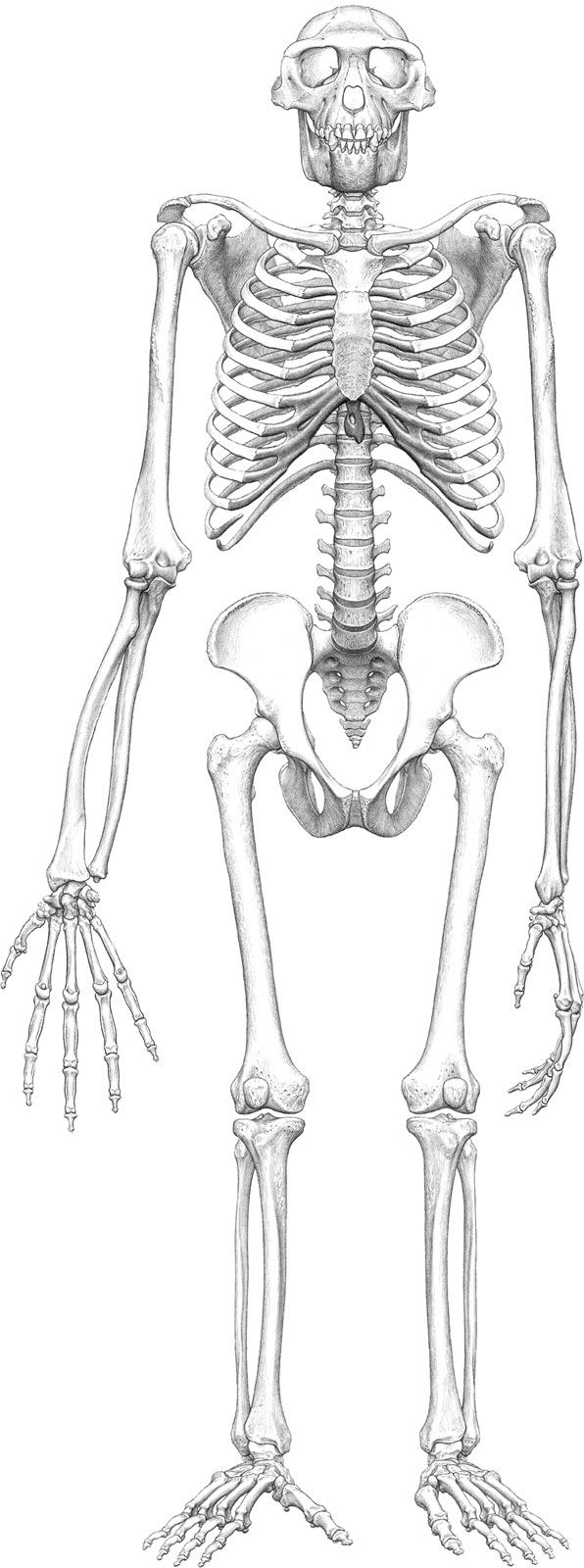
In 1994 White and his research team discovered—again near Aramis—what they initially believed to be the oldest, most apelike hominin fossils yet found. White named the 4.4-million-year-old bones Australopithecus ramidus, which classified the new primate among the australopithecine hominins and gave it the status of a potential root species for the human family. In May 1995, however, after finding more bones and hearing his colleagues’ criticisms, White appeared less sure and changed its name to Ardipithecus ramidus, thus creating a new genus for it. Although “Ardi” proved to not be a direct human ancestor, it presented a significant piece of the puzzle of human evolution. Working again in the middle Awash River valley in the early 21st century, White’s team unearthed the oldest known fossils of Homo sapiens.
Later career and controversy
In 1995 White changed departments at the University of California, Berkeley, leaving the department of anthropology, where he had worked as a professor since 1978, to become distinguished chair in life and physical sciences and professor of integrative biology. He also became a research paleoanthropologist and director for the Human Evolution Research Center. White was elected to the National Academy of Sciences in 2000.
In 2020 White disclosed to the university a collection of human remains he and previous professors had used for teaching. The disclosure came during a search for human remains for possible repatriation in compliance with the Native American Graves Protection and Repatriation Act (NAGPRA). The university’s analysis concluded that the decades-old teaching collection contained the remains of a number of individuals who were likely to have been Native American, leading some to criticize White for not disclosing the collection prior to the search. However, White contended that he acted correctly according to the law since the bones in the collection lacked the documentation necessary to confirm their origin.
White retired in 2022, holding the titles of distinguished professor in life and physical sciences and professor emeritus.
The trusted destination for professionals, college students, and lifelong learners.
SUBSCRIBE

