
- Original name:
- Philip N. Karlstein
- Born:
- July 2, 1908, Chicago, Illinois, U.S.
- Died:
- December 12, 1985, Los Angeles, California (aged 77)

Phil Karlson
-
Who was Phil Karlson?
Phil Karlson (1908–1985) was an American film director, most noted for his film noirs of the 1950s. His distinctive style began to materialize in Scandal Sheet (1952). Karlson directed other violent and brutal films noirs such as Kansas City Confidential (1952) and 99 River Street (1953).
Karlson also directed the western Gunman’s Walk (1958), the war film Hell to Eternity (1960), the Elvis Presley musical Kid Galahad (1962), and The Silencers (1966), the first of the Matt Helm spy spoofs starring Dean Martin. His movie Walking Tall (1973), based on the story of Sheriff Buford Pusser, was a box-office success. Karlson's last film was Framed (1975).
1 Britannica SourceCreated from Britannica articles using AI. AI can make mistakes, so verify using Britannica articles. -
What kind of movies did he direct?
Phil Karlson was a versatile American director, best known for his film noirs of the 1950s. However, he worked across genres, directing comedies, musicals, and Westerns early in his career.
His film noir work includes Scandal Sheet (1952), Kansas City Confidential (1952), and 99 River Street (1953). Karlson also directed The Phenix City Story (1955), a crime drama inspired by true events, and the Western Gunman’s Walk (1958). In the 1960s, he directed his first war film, Hell to Eternity (1960), the Elvis Presley musical Kid Galahad (1962), and The Silencers (1966), a spy spoof starring Dean Martin. Karlson's later films include the thriller Ben (1972) and the box-office success Walking Tall (1973).
2 Britannica SourcesCreated from Britannica articles using AI. AI can make mistakes, so verify using Britannica articles. -
When was Phil Karlson most active as a director?
Phil Karlson was most active as a director in the 1950s, particularly known for his film noirs during this time. In 1952, he directed Scandal Sheet, followed by other effective noirs like Kansas City Confidential (1952) and 99 River Street (1953). He briefly ventured into westerns before returning to crime dramas with Tight Spot and 5 Against the House in 1955. Arguably, 1955 was his finest year with the release of The Phenix City Story. Karlson continued directing crime dramas such as The Brothers Rico (1957) and westerns like Gunman’s Walk (1958).
In the 1960s, Karlson explored different genres, including war films, spy adventures, medical soap operas, and musicals. His success continued into the 1970s with Ben (1972) and Walking Tall (1973). His final film was Framed (1975), after which he retired.
1 Britannica SourceCreated from Britannica articles using AI. AI can make mistakes, so verify using Britannica articles. -
What are some famous films directed by Phil Karlson?
Phil Karlson (1908-1985) was an American director celebrated for his film noirs of the 1950s.
Some of his famous films include:
* Scandal Sheet (1952)
* Kansas City Confidential (1952)
* 99 River Street (1953)
* The Phenix City Story (1955)
* The Brothers Rico (1957)
* Gunman’s Walk (1958)
* Hell to Eternity (1960)
* The Silencers (1966)
* Walking Tall (1973)1 Britannica SourceCreated from Britannica articles using AI. AI can make mistakes, so verify using Britannica articles. -
What film genres did Karlson work in, and what made his style unique?
Phil Karlson was an American director known for his film noirs of the 1950s. His film noir Scandal Sheet (1952) was the first to showcase Karlson's signature style. Karlson worked in various genres, including westerns such as They Rode West (1954) and Gunman’s Walk (1958), war films like Hell to Eternity (1960), and medical dramas such as The Young Doctors (1961). He also directed The Silencers (1966), a spy spoof, and the thriller Ben (1972). Karlson achieved box-office success with Walking Tall (1973), a film based on the true story of Sheriff Buford Pusser.
1 Britannica SourceCreated from Britannica articles using AI. AI can make mistakes, so verify using Britannica articles.
Phil Karlson (born July 2, 1908, Chicago, Illinois, U.S.—died December 12, 1985, Los Angeles, California) was an American director who was best known for his film noirs of the 1950s.
Early films
While studying law at Loyola Marymount University in California, Karlson took a job at Universal in the props department. He soon focused on a career in Hollywood, and in the early 1930s he became an assistant director, eventually working on more than 35 films. In 1944 he helmed his first feature, the comedy A WAVE, a WAC, and a Marine. For the rest of the decade, Karlson displayed his versatility, making movies in a variety of genres: comedy (G.I. Honeymoon [1945]), musical (Swing Parade of 1946 [1946]), and western (Adventures in Silverado and Thunderhoof [both 1948]). He also made films for several series, including Behind the Mask (1946), which featured the superhero the Shadow, and Dark Alibi (1946), an entry in the Charlie Chan franchise. The musical Ladies of the Chorus (1948) is of historical interest for featuring Marilyn Monroe in her first major role.
Film noirs
In 1952 Karlson directed Scandal Sheet, a film noir based on Samuel Fuller’s novel The Dark Page. The taut thriller, which centres on a newspaper editor (played by Broderick Crawford) who accidentally kills his estranged wife, is the first in which Karlson’s signature style is fully realized. Kansas City Confidential (1952) was another effective noir, with John Payne well cast as an ex-convict seeking retribution after nearly being framed for an armed robbery. The film was known particularly for its brutality, and it later developed a cult following. Payne also starred in the violent 99 River Street (1953), this time portraying a former prizefighter who becomes the prime suspect in his wife’s murder. Karlson briefly took a break from noirs to make the western They Rode West (1954) and Hell’s Island (1955), an adventure starring Payne as a down-on-his-luck bouncer who is hired to find an elusive jewel.



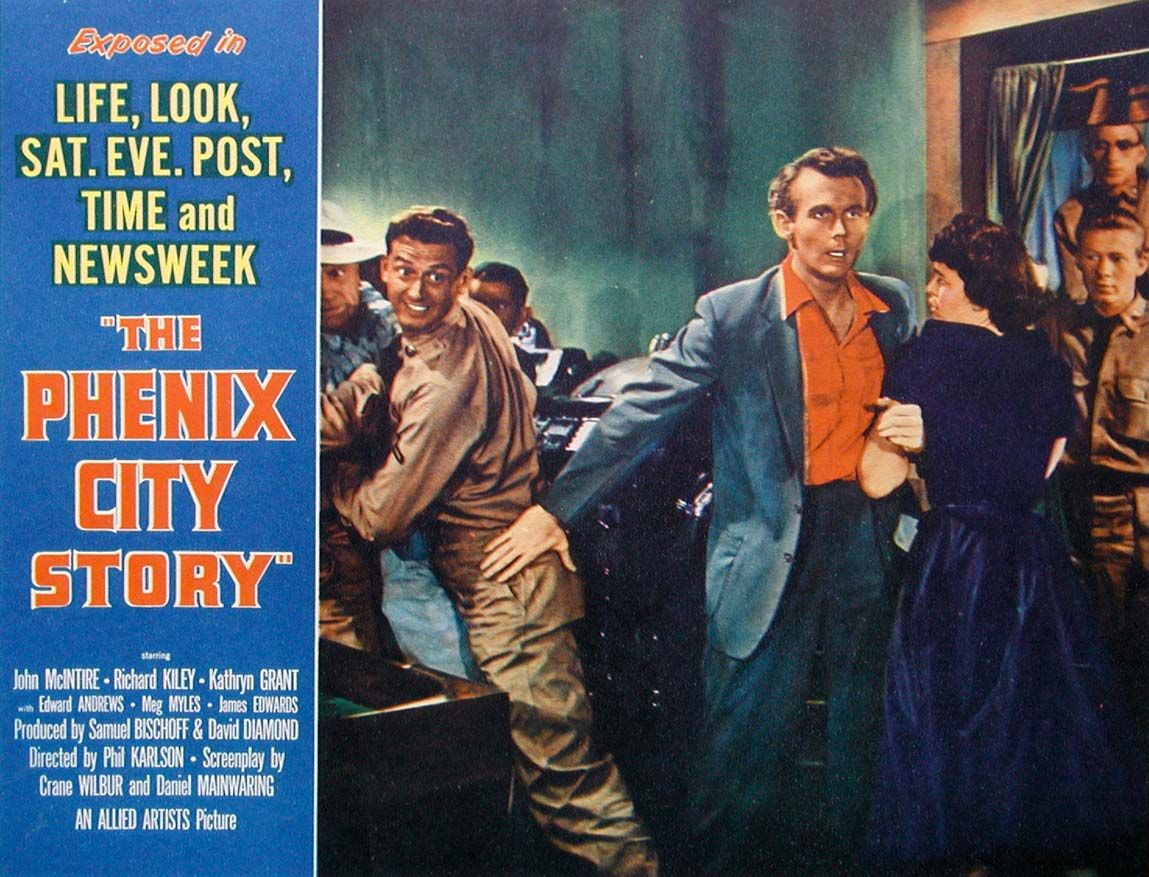
Karlson returned to crime dramas with Tight Spot (1955), which marked the first time the director had a top-name cast: Ginger Rogers portrayed a former moll serving a prison term, and Edward G. Robinson was the attorney offering her freedom in exchange for her testimony against a gangster. Even better was 5 Against the House (1955), a skillfully made heist picture (based on a novel by Jack Finney) about college students who try to rob a Reno nightclub. Karlson completed 1955, arguably his finest year for films, with The Phenix City Story, a two-fisted exposé of corruption in an Alabama town that was inspired by true events. The movie, which was shot on location, featured Richard Kiley as a crusading lawyer who seeks justice following his father’s murder. The Brothers Rico (1957), based on a story by Georges Simenon, was another superlative crime drama, with Richard Conte as an accountant trying to protect his gangster brothers who have been targeted for murder. Karlson ended the decade with Gunman’s Walk (1958), a western starring Van Heflin as a rancher having problems with his sons (played by James Darren and Tab Hunter).
Later films
In 1960 Karlson directed his first war film, the solid Hell to Eternity, which was based on the story of World War II hero Guy Gabaldon. The crime drama Key Witness (1960) featured Dennis Hopper as a gang leader, and the spy adventure The Secret Ways (1961) starred Richard Widmark as an American mercenary hired to smuggle a famous scholar out of Hungary following the country’s 1956 revolution. Karlson continued to explore new genres with The Young Doctors (1961), a medical soap opera based on a popular novel by Arthur Hailey; it starred Fredric March, Ben Gazzara, Dick Clark, and George Segal (in his screen debut). Next came Kid Galahad (1962), an Elvis Presley musical.
The adventure drama Rampage (1963) failed to find an audience, although Robert Mitchum gave a strong performance as a big-game hunter. Karlson had greater success with The Silencers (1966), the first—and arguably finest—of the Matt Helm spy spoofs. Dean Martin was at his self-assured best as the resourceful Helm. Although there were three sequels, Karlson made only The Wrecking Crew (1968), the final entry in the series. The rodent thriller Ben (1972) was a follow-up to the surprise hit Willard (1971), directed by Daniel Mann, though it is perhaps best remembered for the theme song by Michael Jackson. After a string of largely forgettable films, Karlson found box-office success with Walking Tall (1973). The sleeper hit was based on the crusade of real-life sheriff Buford Pusser (played by Joe Don Baker) to clean up his corrupt Tennessee town using any means necessary. Karlson reteamed with Baker on Framed (1975), in which a gambler seeks revenge against the crooked cops who sent him to prison on a trumped-up charge. It was Karlson’s last film, and he subsequently retired.