


- In full:
- Sir William Lawrence Bragg
- Born:
- March 31, 1890, Adelaide, S.Aus., Austl.
- Died:
- July 1, 1971, Ipswich, Suffolk, Eng. (aged 81)
- Title / Office:
- Royal Society (1921)
- Awards And Honors:
- Copley Medal (1966)
- Nobel Prize (1915)
- Notable Family Members:
- father Sir William Bragg
- Subjects Of Study:
- Bragg law


Sir Lawrence Bragg
-
Who was Sir Lawrence Bragg?
Sir Lawrence Bragg (1890–1971) was an Australian-born British physicist and X-ray crystallographer. In 1912, he discovered Bragg's law of X-ray diffraction, which is the basis for determining crystal structure.
Bragg shared the Nobel Prize for Physics in 1915 with his father, Sir William Bragg, for their work on X-ray diffraction. He was knighted in 1941. During World War I, Bragg served as a technical advisor, and after the war, he became a professor of physics at Victoria University of Manchester, where he studied metals, alloys, and silicates. From 1954, he served as director of the Royal Institution in London.
3 Britannica SourcesCreated from Britannica articles using AI. AI can make mistakes, so verify using Britannica articles. -
What field of science did Sir Lawrence Bragg work in?
Sir Lawrence Bragg was a British physicist and X-ray crystallographer. He is known for discovering Bragg's law of X-ray diffraction in 1912, a foundational principle for determining crystal structure. X-ray diffraction is a process used to analyze crystal structure by studying the patterns of X-rays that deviate from their original paths because of the closely spaced atoms in the crystal. Bragg's work in crystallography allowed scientists to discern the arrangement and bonding of atoms within crystalline solids through the analysis of X-ray diffraction.
4 Britannica SourcesCreated from Britannica articles using AI. AI can make mistakes, so verify using Britannica articles. -
What is Sir Lawrence Bragg famous for discovering?
Sir Lawrence Bragg is famous for discovering Bragg's law of X-ray diffraction in 1912, a foundational principle for determining crystal structure using X-ray crystallography. The Bragg equation explains the angles at which X-rays are most efficiently diffracted by a crystal, based on the X-ray wavelength and the distance between the crystal's atoms.
In 1915, Lawrence Bragg and his father, Sir William Bragg, jointly received the Nobel Prize for Physics for their work using X-rays to study crystal structures. Lawrence Bragg also demonstrated that sodium and chlorine atoms in rock salt are arranged alternately.
3 Britannica SourcesCreated from Britannica articles using AI. AI can make mistakes, so verify using Britannica articles. -
How did Bragg's work help scientists study the structure of crystals?
Sir Lawrence Bragg's work significantly advanced the study of crystal structures. In 1912, he formulated Bragg's law of X-ray diffraction, a cornerstone for determining crystal structure. This law explains the angles at which X-rays diffract most efficiently through a crystal, based on the X-ray wavelength and the distance between the crystal's atoms.
Bragg's equation is fundamental to X-ray diffraction, a technique used to analyze crystal structure by examining the patterns of X-rays that deviate from their original paths due to the crystal's closely spaced atoms. His work, along with his father's invention of the X-ray spectrometer, enabled scientists to determine the atomic arrangements of various substances, including rock salt and diamond.
4 Britannica SourcesCreated from Britannica articles using AI. AI can make mistakes, so verify using Britannica articles. -
What is Bragg's Law, and why is it important?
Bragg's law, formulated by Lawrence Bragg, explains how electromagnetic radiation or particle waves reflect off crystal atomic planes. Maximum reflection intensity occurs when waves stay in phase, creating constructive interference.
The law is expressed as (n\lambda = 2d \sin \theta), where (n) is an integer, (\lambda) is the wavelength, (d) is the spacing between crystal planes, and (\theta) is the angle of incidence.
Bragg's Law is useful for two purposes: measuring wavelengths and determining the lattice spacings of crystals. By adjusting the angle until a strong signal is received, the Bragg angle directly gives the wavelength. Precise energy measurements of X-rays, low-energy gamma rays, and neutron energies are made this way.
3 Britannica SourcesCreated from Britannica articles using AI. AI can make mistakes, so verify using Britannica articles. -
How did Sir Lawrence Bragg's discoveries impact medicine and other sciences?
Sir Lawrence Bragg's discovery of the Bragg law of X-ray diffraction revolutionized the determination of crystal structure. This law is fundamental to X-ray diffraction, a technique used to analyze the arrangement of atoms within crystals by examining how X-rays scatter when passing through them.
Bragg's work had a profound impact on medicine and other sciences because it allowed scientists to visualize the structure of complex molecules, including proteins. This understanding paved the way for advancements in radiological diagnosis and treatments, as well as a deeper understanding of enzyme mechanisms and other critical biological processes.
4 Britannica SourcesCreated from Britannica articles using AI. AI can make mistakes, so verify using Britannica articles.
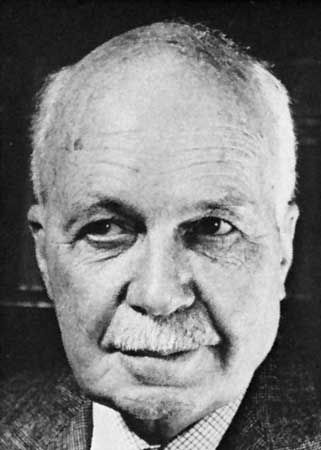
Sir Lawrence Bragg (born March 31, 1890, Adelaide, S.Aus., Austl.—died July 1, 1971, Ipswich, Suffolk, Eng.) was an Australian-born British physicist and X-ray crystallographer, discoverer (1912) of the Bragg law of X-ray diffraction, which is basic for the determination of crystal structure. He was joint winner (with his father, Sir William Bragg) of the Nobel Prize for Physics in 1915. He was knighted in 1941.
Bragg was the eldest child of Sir William Bragg. His maternal grandfather, Sir Charles Todd, was postmaster general and government astronomer of South Australia. Educated at St. Peter’s College, Adelaide, and then at Adelaide University, Bragg gained high honours in mathematics at an age when most boys were still in secondary school.
In 1909 he went to England to enter Trinity College, Cambridge. He began the study of physics, which he had not studied earlier, although he had taken some chemistry. During the summer vacation of 1912, his father discussed with him a recent book on the work of the German physicist Max von Laue, who asserted that X-rays could be diffracted by passing them through crystals. Upon his return to Cambridge, young Bragg, believing that Laue’s explanation was incorrect in detail, carried out a series of ingenious original experiments, as a result of which he published the Bragg equation, which tells at what angles X-rays will be most efficiently diffracted by a crystal when the X-ray wavelength and the distance between the crystal atoms are known (see Bragg law). This equation is basic to X-ray diffraction, a process used to analyze crystal structure by studying the characteristic patterns of X-rays that deviate from their original paths because of the closely spaced atoms in the crystal. He also showed that in rock salt the two kinds of atoms, sodium and chlorine, are arranged alternately, so that atoms of the same element never touch each other. Meanwhile, his father had designed the X-ray spectrometer, a device to make exact measurements of X-ray wavelengths. The two scientists spent vacations using the Bragg spectrometer to determine many other atomic arrangements, including that of diamond.



In 1914 Bragg became a fellow and lecturer in natural sciences at Trinity College. Later that year he and his father were jointly awarded the Barnard Gold Medal of the U.S. Academy of Sciences, the first of many such honours and awards. From 1915 to 1919, in World War I, Bragg served as technical adviser on sound ranging (determining the distance of enemies’ artillery from the sound of their guns) in the map section of British army headquarters in France, and he was there in 1915 when the Nobel Prize for Physics was awarded jointly to his father and him for demonstrating the use of X-rays for revealing the structure of crystals.
After the war Bragg succeeded Ernest Rutherford as professor of physics at Victoria University of Manchester, and there he built his first research school, for the study of metals and alloys and silicates. His work on silicates transformed a chemical riddle into a system of simple and elegant architecture. In 1921 he married Alice Hopkinson, a doctor’s daughter, by whom he had two sons and two daughters. His wife’s charm and character greatly helped him throughout his professional career. In the same year, he was elected a fellow of the Royal Society.
From 1937 to 1938 Bragg was director of the National Physical Laboratory, but he was impatient with committee work. About this period of his life he often used to remark that he found the engagement book, the in-tray, and the list of matters requiring urgent attention to be the deadly enemies of scientific work.
So he gladly left pure administration to succeed Rutherford again, this time as Cavendish Professor of Experimental Physics at Cambridge. Here he founded a second flourishing research school to study metals and alloys, silicates, and proteins, but he was also deeply concerned that science students have time to enjoy a full education and come to understand something of the meaning and purpose of life.
The trusted destination for professionals, college students, and lifelong learners.
SUBSCRIBE


In January 1954 Bragg became director of the Royal Institution, London, as his father had been before 1940. He introduced several successful innovations: year-round lectures for schoolchildren, illustrated by demonstrations requiring apparatus too large or too costly for school resources (some 20,000 children attended each year); courses for science teachers; and lectures for civil servants whose early training had not included science. Popular and successful as a lecturer, Bragg was also in great demand for radio and television appearances. At an age at which many scientists lose interest in research, he built up a third research team, some of whose members successfully tackled the structures of complex organic crystals. Bragg retired from active scientific work in 1965.