
- Born:
- January 15, 1940, Flathead Reservation, Montana, U.S.
- Died:
- January 24, 2025, Corrales, New Mexico (aged 85)

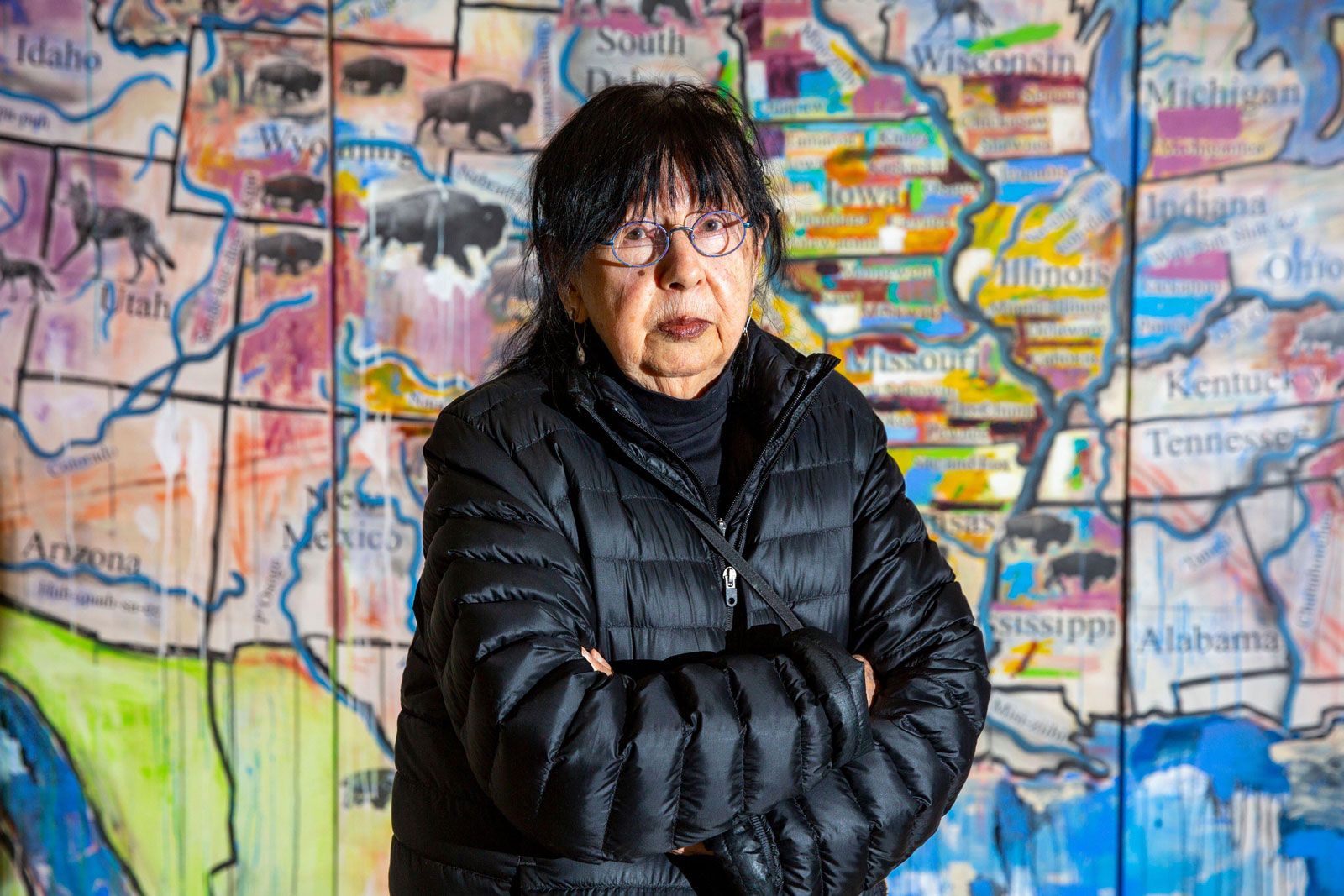
Jaune Quick-to-See Smith
-
Who is Jaune Quick-to-See Smith?
Jaune Quick-to-See Smith (1940-2025) was a Native American artist known for her Modernist drawings, paintings, sculptures, and prints that explore Native American history, identity, and sociopolitical issues in the United States.
While in graduate school, Smith began creating abstract landscapes, or what she often called "maps," using pastels, charcoal, or paint. She incorporated Native American petroglyphs, glyphs, and pictographs into these landscapes to address environmentalism and document tribal history.
Smith formed the Grey Canyon Group in 1977 with other Native artists to promote contemporary Native American art. Over her 50-year career, Smith's work gained recognition and was featured in major institutions such as the Smithsonian American Art Museum and the Museum of Modern Art.
1 Britannica SourceCreated from Britannica articles using AI. AI can make mistakes, so verify using Britannica articles. -
What kind of art does Jaune Quick-to-See Smith create?
Jaune Quick-to-See Smith (1940-2025) was a Native American artist known for her diverse artistic creations, including drawings, paintings, sculptures, and prints. Her art builds on Modernist vocabularies to explore Native American history, identity, and sociopolitical relationships with the United States.
Smith is known for her abstract landscapes, which she often called "maps," using pastels, charcoal, or paint. She incorporated blocks of color, marks suggesting the movement of animals and humans, and ancient petroglyphs, glyphs, and pictographs of Native tribes. In the early 1990s, Smith shifted toward layered canvases, pasting newspaper clippings and found objects onto her canvases and painting outlines of items or animals often associated with Native Americans.
1 Britannica SourceCreated from Britannica articles using AI. AI can make mistakes, so verify using Britannica articles. -
Which Native American tribe is Jaune Quick-to-See Smith a member of?
Jaune Quick-to-See Smith, born on the Flathead Reservation in Montana, was a Native American artist known for her Modernist-inspired works exploring Native American history and identity. She was an enrolled member of the Confederated Salish and Kootenai Nation. Smith's art often incorporates layers of meaning, using newspaper clippings, found objects, and outlines of Native American symbols like teepees and bison.
Throughout her career, Smith faced challenges as a Native American woman in the art world. In 1977, she co-founded the Grey Canyon Group to promote contemporary Native American artists and challenge stereotypes. Her work has since gained recognition and is featured in major institutions such as the Smithsonian American Art Museum and the Museum of Modern Art.
1 Britannica SourceCreated from Britannica articles using AI. AI can make mistakes, so verify using Britannica articles. -
How does her artwork reflect Native American culture and experiences?
Jaune Quick-to-See Smith, a Native American artist, explores Native American history, identity, and sociopolitical issues through her art. Her work incorporates modern techniques while conveying pro-Indigenous, environmentalist, and anticapitalist messages.
Smith's art often includes items and images associated with Native Americans, such as bison and teepees. In Trade (Gifts for Trading Land with White People), she collages newspaper clippings, historical photos, and stereotypical images of Native Americans, commenting on the commodification of Native life and culture.
Throughout her career, Smith has strived to promote contemporary Native American artists, challenging stereotypes and advocating for greater recognition in the art world.
1 Britannica SourceCreated from Britannica articles using AI. AI can make mistakes, so verify using Britannica articles. -
What materials and techniques does she often use in her art?
Jaune Quick-to-See Smith (1940–2025) was a Native American artist who explored Native American history, identity, and sociopolitical relationships with the U.S. in her art. Smith is known for layered canvases that incorporate newspaper clippings and found objects. She often applies a translucent layer of paint over and around the objects, and paints outlines of items or animals associated with Native Americans, such as a teepee or bison.
Smith began making abstract landscapes, or "maps," using pastels, charcoal, or paint. She flattened the space, foregoing a horizon line, and added blocks of color symbolizing fields, flowers, grasslands, and water. Smith included marks suggesting the movement of animals and humans and incorporated ancient petroglyphs, glyphs, and pictographs of Native tribes that she had researched.
1 Britannica SourceCreated from Britannica articles using AI. AI can make mistakes, so verify using Britannica articles. -
How has Jaune Quick-to-See Smith influenced the world of contemporary art and Native American representation?
Jaune Quick-to-See Smith (1940–2025) was a Native American artist whose work utilized Modernist vocabularies to explore Native American history, identity, and sociopolitical relationships with the United States. Smith's art considers the tension between Eurocentric, modernist methods and pro-Indigenous, environmentalist, anticapitalist messages.
Smith formed the Grey Canyon Group in 1977 to spread awareness of contemporary Native American artists. Smith organized over 30 exhibitions, including two in 1992 that challenged celebrations surrounding the 500-year anniversary of Christopher Columbus’s arrival in the Americas. Her work gained notice over the years and is part of major institutions such as the Smithsonian American Art Museum and the Museum of Modern Art. Smith's work often incorporates maps to address environmentalism and document tribal history.
1 Britannica SourceCreated from Britannica articles using AI. AI can make mistakes, so verify using Britannica articles.
Jaune Quick-to-See Smith (born January 15, 1940, Flathead Reservation, Montana, U.S.—died January 24, 2025, Corrales, New Mexico) was a Native American artist whose drawings, paintings, sculptures, and prints build on Modernist vocabularies to explore Native American history, identity, and sociopolitical relationship with the United States. Art critic Jillian Steinhauer wrote in The New York Times in 2023, “Part of what makes Smith’s practice fascinating is the tension it carries between her embrace of more Eurocentric, modernist methods and her pro-Indigenous, environmentalist, anticapitalist messages.”
Early life and education
Smith was born in the St. Ignatius Indian Mission on Montana’s Flathead Reservation. She was an enrolled member of the Confederated Salish and Kootenai Nation. When they were young, Smith and her sister were raised primarily by their father, Arthur, a horse trader, and often accompanied him on his trips throughout the Pacific Northwest and California. Smith attended Puyallup High School, near Tacoma, Washington, where she was told by a white adviser that Native Americans did not attend college. She ignored the advice and went on to Olympic College in Bremerton, Washington, where she took art classes and was told by her art teacher that, though she drew better than the men in the class, she couldn’t be an artist because she was a woman. Nevertheless, Smith went on to earn an Associate of Arts degree in 1960. She later attended the University of Washington, Seattle, and then Framingham State College (now Framingham State University) in Massachusetts, where she received a B.A. degree (1976) in art education. Smith also obtained a master’s degree (1980) in art from the University of New Mexico, Albuquerque.
Maps
While in graduate school, Smith began making abstract landscapes, or what she often called “maps.” Working with pastels, charcoal, or paint and building on 19th-century American landscape painting and the formal qualities of Expressionism, Smith created an entirely new way of representing a place. She flattened the space, forgoing a horizon line, and added blocks of color symbolizing fields, flowers, grasslands, and water. Smith populated these landscapes with marks suggesting the movement of animals and humans and incorporated the ancient petroglyphs, glyphs, and pictographs of Native tribes that she had researched. These maps became a frequent feature in Smith’s work and a key vehicle for addressing issues of environmentalism and documenting tribal history and memories.



Trade (Gifts for Trading Land with White People)
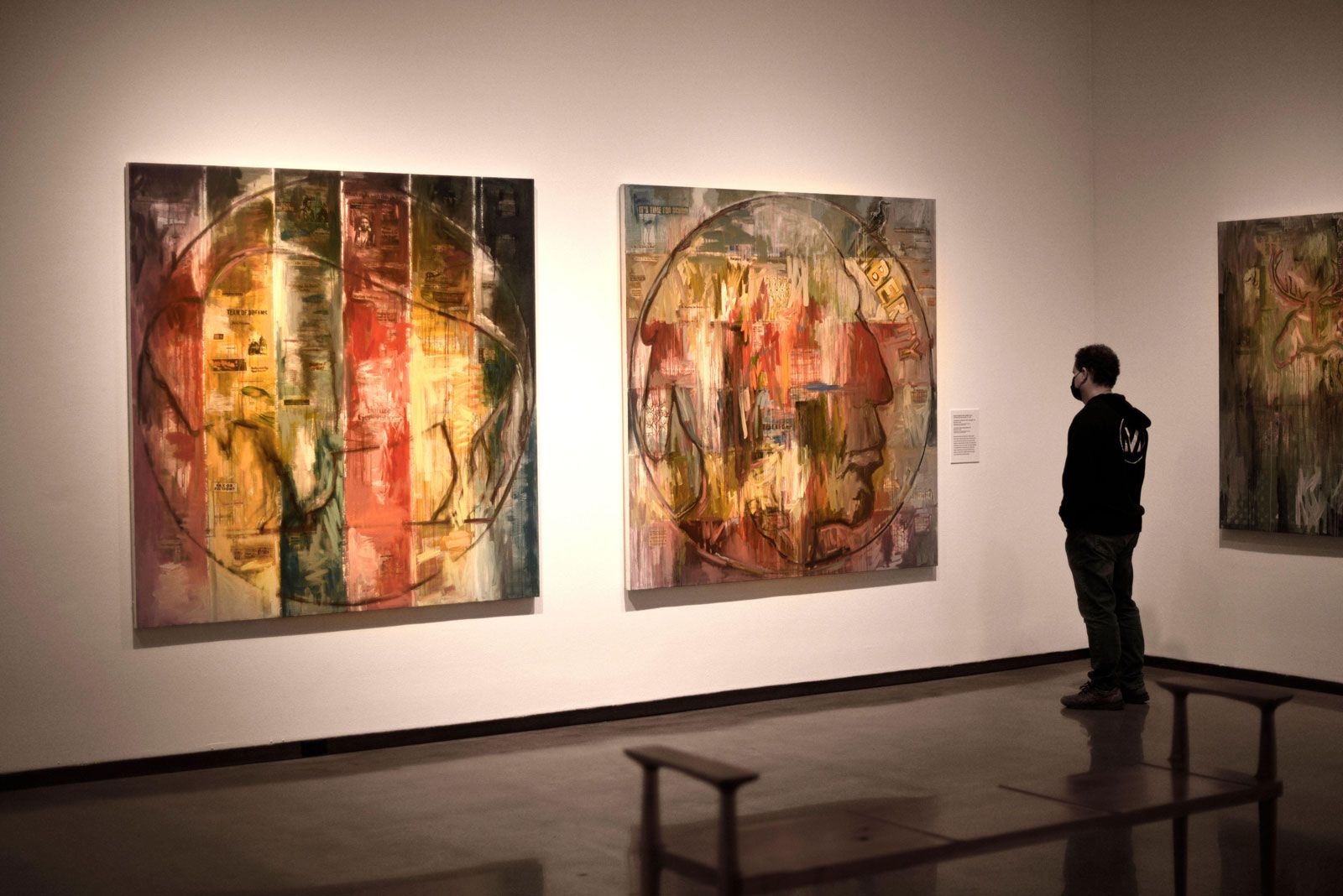
In the early 1990s Smith’s art shifted toward the layered canvases for which she is best known. Thinking about the art of American artists Robert Rauschenberg and Jasper Johns, she began pasting newspaper clippings and found objects onto her canvases, applying a translucent layer of paint over and around the objects, and painting an outline of items or animals often associated with Native Americans, such as a teepee or a bison. One such work, Trade (Gifts for Trading Land with White People) (1992), is collaged with articles from the Flathead Reservation’s Char-Koosta News, historical photos, and pages from comics, gum wrappers, and other objects featuring stereotypical images of Native Americans. Using expressive brush strokes, she applied blocks of paint over the collage in white, yellow, green, and red. Over these layers, Smith painted the outline of an almost life-sized canoe. She then strung a clothesline above the canvas and hung an assortment of toys and souvenirs, including a plastic tomahawk, Red Man chewing tobacco, a Washington Redskins cap, a Cleveland Indians pennant, and a beaded belt. In an essay on the piece, art historian Suzanne Fricke posits that “Smith offers these cheap goods in exchange for the lands that were lost, reversing the historic sale of land for trinkets. These items also serve as reminders of how Native life has been commodified, turning Native cultural objects into cheap items sold without a true understanding of what the original meanings were.”
The Grey Canyon Group and exhibitions
For decades, as both a woman and a Native American artist, Smith found little acceptance in the traditional art world. In 1977 she formed the Grey Canyon Group with Native artists Emmi Whitehorse, Conrad House, Larry Emerson, Paul Little, Felice Lucero, and Ed Singer. The collective worked together to find galleries that would show their work and to spread awareness of contemporary Native American artists. Their first shows were held in such institutions as the American Indian Community House (1979), New York, and the Wheelwright Museum of the American Indian (1980), Santa Fe, New Mexico, where audiences were perplexed that their art comprised abstract painting and sculpture, not the stereotypical pottery, beadwork, and textiles they were expecting. Nonetheless, Smith’s tireless efforts ultimately gained traction, and over the years she organized over 30 exhibitions, two of which were shows in 1992 that challenged the celebrations surrounding the 500-year anniversary of Christopher Columbus’s arrival in the Americas.
Over the years, Smith’s work continued to gain notice. It entered the collections of such major institutions as the Smithsonian American Art Museum, Washington, D.C.; the Museum of Modern Art, New York City; and the Victoria and Albert Museum, London. During her 50-year career, Smith exhibited her work in over 100 shows, and in 2023 the Whitney Museum of American Art in New York City organized a major exhibition of her work, “Jaune Quick-to-See Smith: Memory Map.” It was the first major retrospective for a Native American artist at the museum.