
How did the method of exhaustion help Archimedes find areas and volumes?
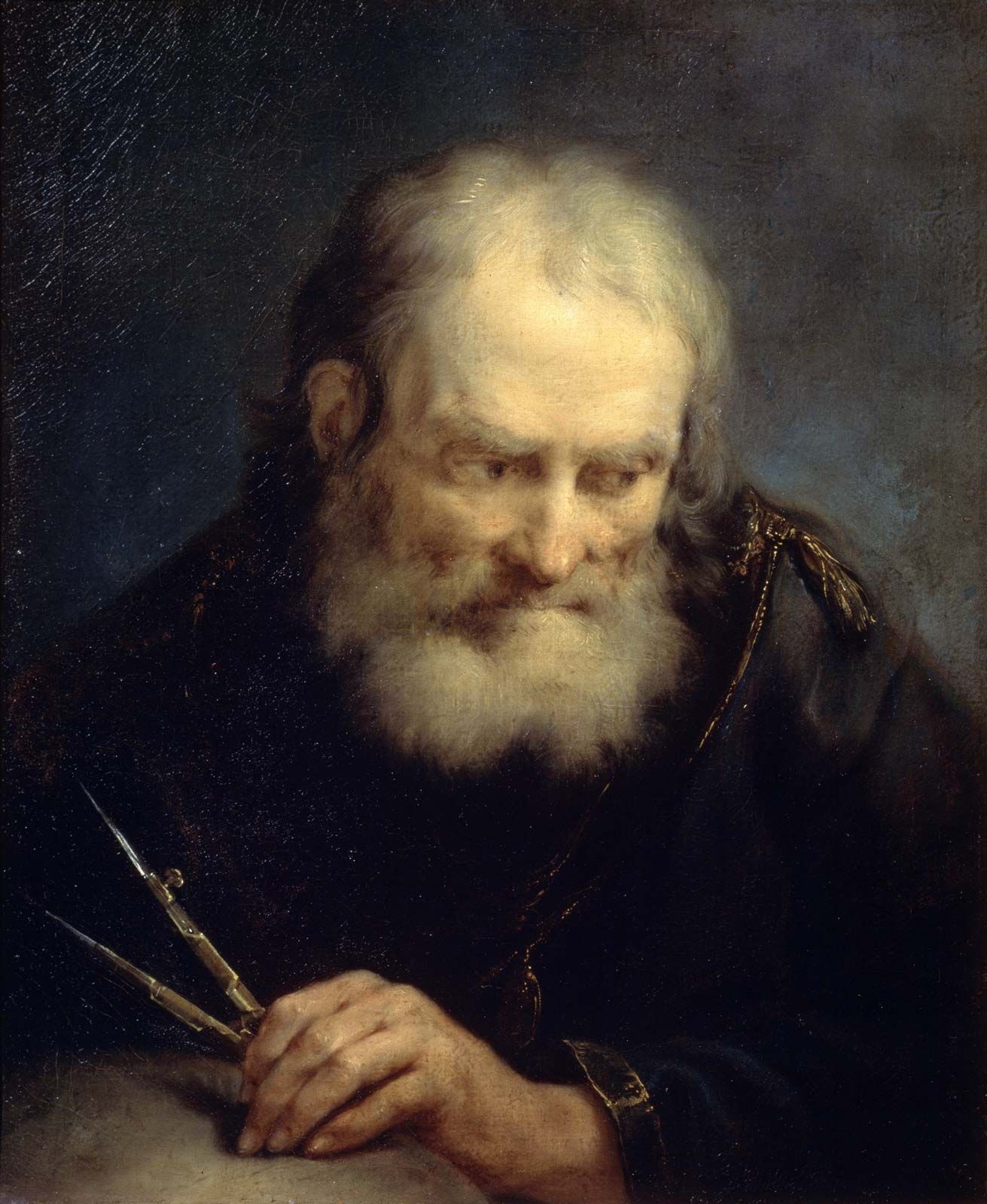
Archimedes was the most prominent practitioner of the method of exhaustion, a rigorous logical procedure used to determine the areas and volumes of geometric figures by "exhausting" them with successive approximations of known shapes, such as polygons or prisms.123
Rather than using modern limits or infinitesimals, Archimedes relied on the axiom that a quantity can be made smaller than any given value through successive halving. By inscribing and circumscribing shapes around a target figure, he established upper and lower bounds that converged on the exact value. For example, in calculating the area of a parabolic segment, he utilized an infinite geometric series by adding triangles of decreasing size until the area was exhausted, proving the sum was exactly 4/3 of the initial triangle.123
While the method of exhaustion provided the formal, rigorous proofs for his findings—such as the volume of a sphere being two-thirds that of its circumscribing cylinder—Archimedes often discovered these results using a separate, heuristic approach involving Cavalieri’s principle and the law of the lever to "balance" cross-sectional slices of solids.43