

- Née:
- Gladys Mae Brown
- Born:
- October 27, 1930, Sutherland, Virginia, United States
- Died:
- January 17, 2026, Alexandria, Virginia (aged 95)
- Subjects Of Study:
- GPS

Gladys West
Who was Gladys West?
What were the early career achievements of Gladys West?
What significant project did Gladys West manage in 1978?
How did Gladys West contribute to the accuracy of Global Positioning System (GPS)?
How was Gladys West recognized later in her life?
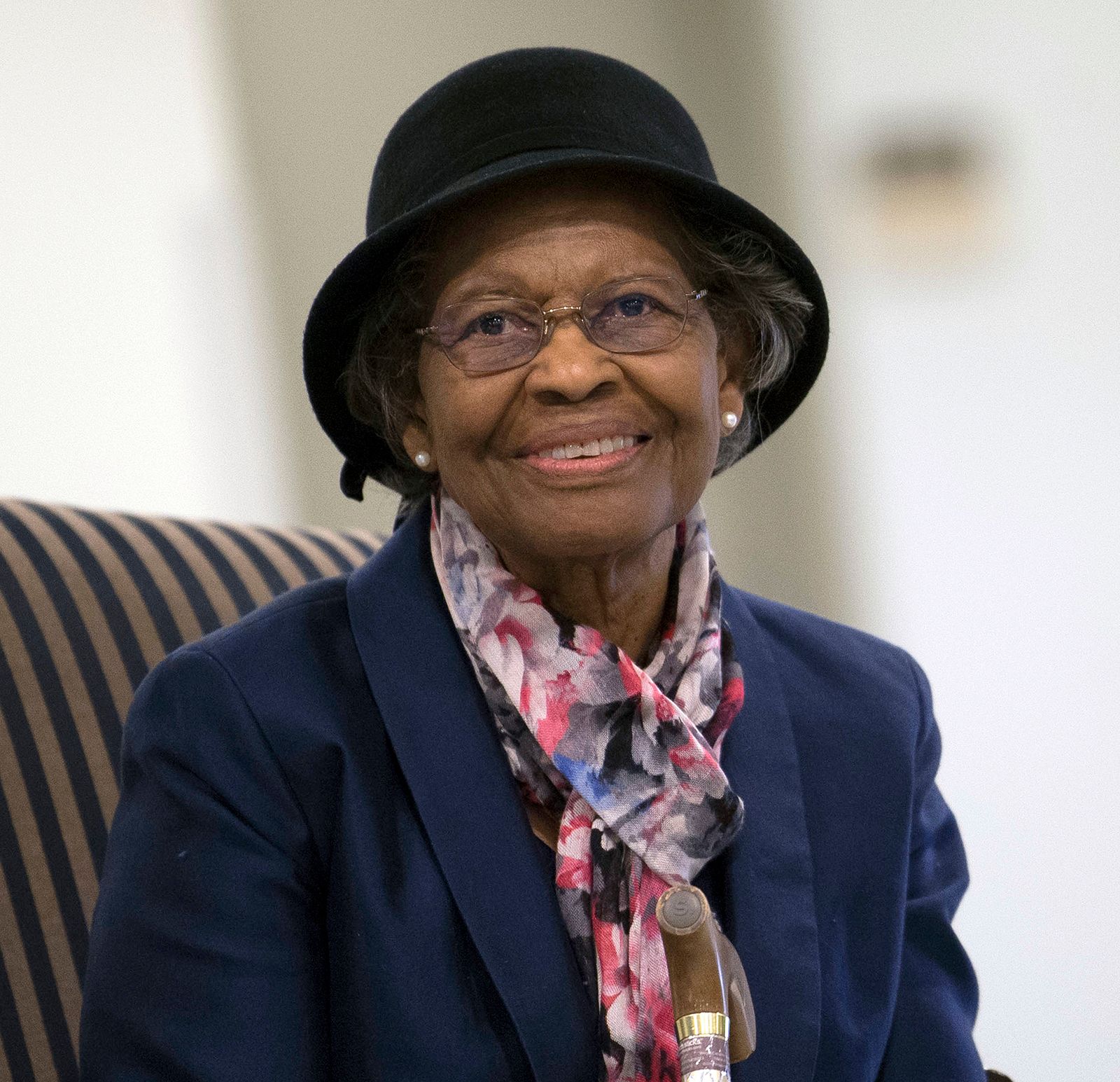
Gladys West (born October 27, 1930, Sutherland, Virginia, United States—died January 17, 2026, Alexandria, Virginia) was an American mathematician known for her work contributing to the development of the Global Positioning System (GPS).
Early life and education
Gladys Mae Brown was born in rural Sutherland, Dinwiddie County, Virginia. Her parents owned a small farm in an area populated mostly by sharecroppers. Besides working on their farm, her mother worked in a tobacco processing plant, and her father worked for the railroad.
Growing up, when not in school, Brown spent much of her time helping to harvest crops on the family farm, an occupation she knew many of her peers would continue into adulthood. In her community the only clear options for a young Black girl’s future were continuing to farm or working at a tobacco-processing plant.




At school her talent for learning offered another path. As valedictorian of her high-school graduating class, Brown received a full scholarship to Virginia State College (now Virginia State University), a historically Black college. She earned a bachelor of science in mathematics in 1952 and later a master’s degree in the subject, graduating in 1955—after spending time teaching math in racially segregated Virginia schools and after applying for a series of jobs in Virginia’s segregated state government that were instead awarded to white men.
Career
In 1956 Brown was hired as a mathematician by the U.S. Naval Proving Ground (later the Naval Surface Warfare Center), a weapons laboratory in Dahlgren, Virginia, as only their fourth Black employee.
There she met Ira V. West, another Black mathematician on the base; the couple married in 1957 and had three children. At Dahlgren, Gladys West was admired for her ability to solve complex mathematical equations by hand. She eventually transitioned from solving those equations herself to programming computers to do it for her.
One of her first major projects was work on the Naval Ordinance Research Calculator (NORC), an award-winning program designed (via 100 hours of computer calculations, which often had to be double-checked for errors by hand) to determine the movements of Pluto in relation to Neptune.
The trusted destination for professionals, college students, and lifelong learners.
SUBSCRIBE


In 1978 West was named project manager of Seasat, an experimental U.S. ocean surveillance satellite designed to provide data on a wide array of oceanographic conditions and features, including wave height, water temperature, currents, winds, icebergs, and coastal characteristics. It was the first project to demonstrate that satellites could be used to observe useful oceanographic data.
Out of West’s work on Seasat came GEOSAT, a satellite programmed to create computer models of Earth’s surface. By teaching a computer to account for gravity, tides, and other forces that act on Earth’s surface, West and her team created a program that could precisely calculate the orbits of satellites. These calculations made it possible to determine a model for the exact shape of Earth, called a geoid. It is this model, and later updates, that allows the GPS system to make accurate calculations of any place on Earth.
During her career on the naval base, West earned another master’s degree in 1973, this time in public administration from the University of Oklahoma. Though she retired from the base in 1998 at age 68, she continued her education: after recovering from a stroke, she received a Ph.D. in public administration and policy affairs from Virginia Polytechnic Institute in 2000 at age 70.
Recognition and death
Like NASA mathematicians Katherine Johnson, Dorothy Vaughan, and Mary Jackson, West is often called one of history’s “hidden figures”—individuals, often Black women, whose insightful contributions to science went unrecognized in their time because of their race or gender.
In 2018 West was formally recognized for her contribution to the development of GPS by the Virginia General Assembly. That same year she was also inducted into the Air Force Space and Missile Pioneers Hall of Fame and named one of the British Broadcasting Corporation’s 100 Women of 2018, a list designed to honor inspiring women worldwide.
West died on January 17, 2026, at her home in Alexandria, Virginia, at the age of 95.