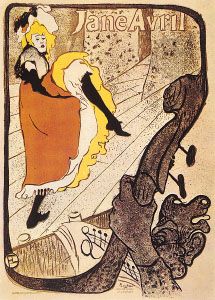
transfer lithography
Quick Summary
Transfer lithography is a method within the broader category of lithography, a planographic printing process that relies on the principle that grease and water do not mix. In transfer lithography, the artist creates the image on paper using greasy materials like tusche or crayon, rather than directly on the lithographic stone or plate. This drawing is then transferred to the lithographic surface.1
This technique offers convenience and allows the texture of the paper to be retained in the final print. Lithography itself was discovered in 1798 by Alois Senefelder and involves drawing on a stone or plate with greasy ink. The surface is then treated with an etch, typically a mixture of gum arabic and nitric acid, which protects the drawing and repels water in the undrawn areas. When an ink-charged roller passes over the dampened surface, ink adheres only to the greasy image, which is then transferred to paper using a press.12
Ask Britannica AI about this topic
Britannica doesn't have a full article on this topic, so we've curated a list of our relevant coverage.