
lion-taming
Quick Summary

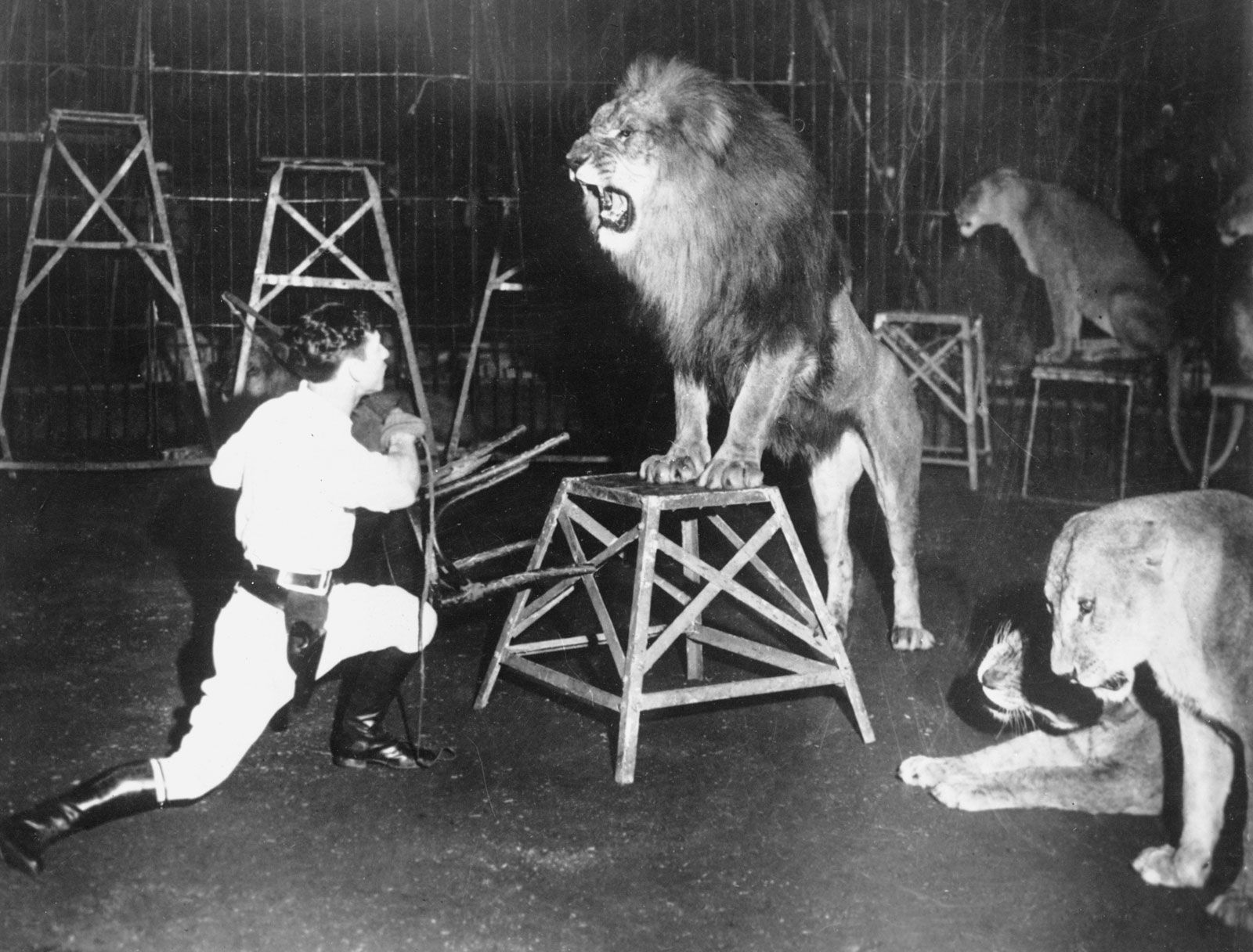
Lion-taming, as a circus act, emerged around 1831 with Henri Martin, who is believed to have been the first to enter a cage with a tiger. Isaac A. Van Amburgh, an American trainer, gained fame in 1838 for reportedly being the first to put his head into a lion's mouth. These early acts often featured in melodramas in both circuses and regular theatres, showcasing not only lions and tigers but also elephants, bears, and monkeys.1
In the United States, elephants became a symbol of the circus, with numbers reaching over 40 by the early 20th century. While early training methods, particularly in America, involved dominance and punishment, European styles, developed by the Hagenbecks, focused on demonstrating the animals' natural abilities and their harmony with trainers.12
By the late 20th century, animal-rights activists challenged circus practices, leading to debates about animal welfare. Many circuses claimed to adopt humane training techniques. However, public concern and protests contributed to bans on wild-animal acts in some areas and the rise of animal-free circuses, ultimately impacting traditional circuses like Ringling Bros. and Barnum & Bailey, which ceased operations in 2017.2
Ask Britannica AI about this topic
Britannica doesn't have a full article on this topic, so we've curated a list of our relevant coverage.