

Romanesque revival
Quick Summary
The Romanesque revival was a stylistic return to pre-Gothic architectural forms that occurred in the late 19th century. This architectural style emerged in the United States following the work of architects like Henry Hobson Richardson, who specialized in a rock-faced Romanesque style. Romanesque architecture itself, which flourished in Europe between approximately 1000 and 1150 CE, is characterized by the use of semicircular arches, barrel vaults, and massive piers and walls. This style evolved from a fusion of Roman, Byzantine, and local Germanic traditions, driven in part by the expansion of monasticism and the need for larger churches to accommodate increased congregations and pilgrims.123
Ask Britannica AI about this topic
Britannica doesn't have a full article on this topic, so we've curated a list of our relevant coverage.
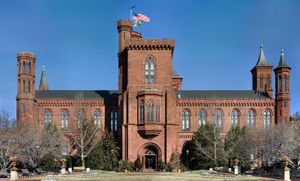
- H.H. Richardson
…architect, the initiator of the Romanesque revival in the United States and a pioneer figure in the development of an indigenous, modern American style of architecture.
Read More…architect, the initiator of the Romanesque revival in the United States and a pioneer figure in the development of an indigenous, modern American style of architecture.
Read More  Western architectureUnited States
…he specialized in a rock-faced Romanesque style probably inspired by the work of Eugène-Emmanuel Viollet-le-Duc’s rationalist follower, Émile Vaudremer. Richardson’s most celebrated buildings in this vein are the Allegheny County Court House and Jail, Pittsburgh (1883–88), and the Marshall Field & Co. Wholesale Store, Chicago (1885–87; demolished in 1930).
Read More…he specialized in a rock-faced Romanesque style probably inspired by the work of Eugène-Emmanuel Viollet-le-Duc’s rationalist follower, Émile Vaudremer. Richardson’s most celebrated buildings in this vein are the Allegheny County Court House and Jail, Pittsburgh (1883–88), and the Marshall Field & Co. Wholesale Store, Chicago (1885–87; demolished in 1930).
Read More