






- Also called:
- gharial or Indian gharial
- Related Topics:
- 10 Critically Endangered Animals of India


gavial
-
What is a gavial?
The gavial, Gavialis gangeticus, is a large crocodile species recognized for its long, narrow snout. It is one of two living species in the family Gavialidae and is sometimes mistaken for the false gavial because of their strong resemblance.
Adult gavials are among the largest crocodiles, growing to 13.1 to 21.3 feet long and weighing 353 to 400 pounds. They are aquatic ambush predators that use sensory organs in their scales to detect vibrations in the water.
Since 2007, the International Union for Conservation of Nature and Natural Resources (IUCN) has listed the gavial as a critically endangered species. Fewer than 1,000 adults remain worldwide.
1 Britannica SourceCreated from Britannica articles using AI. AI can make mistakes, so verify using Britannica articles. -
Where do gavials live?
Gavials, also known as gharials, are large crocodiles recognized by their long, narrow snouts. They once populated river areas throughout South Asia, from Pakistan to Myanmar. Today, they inhabit only a few isolated habitats in northern India, Nepal, and Bangladesh. The largest population of gavials is currently found in the Ganges River system.
Gavials are critically endangered due to habitat loss from dams, hunting, entanglement in fishing gear, water pollution, and modification of sandbars and riverbanks.
3 Britannica SourcesCreated from Britannica articles using AI. AI can make mistakes, so verify using Britannica articles. -
How does a gavial look different from other crocodiles?
The most distinctive feature of the gavial, or gharial, compared to other crocodilians is its exceptionally long and narrow snout. Gavials can grow to be up to 20 feet long and weigh up to 350 pounds. The gavial's snout is very slender and has approximately 110 sharp teeth, more than other crocodiles, which it uses to catch fish. The scales of gavials are smoother than those of other crocodilians, and they have webbed feet. Male gavials are significantly larger than females and possess a bulbous structure called a ghara on the end of their snouts. The false gavial is often mistaken for the gavial; however, the false gavial has a thicker snout with fewer teeth.
2 Britannica SourcesCreated from Britannica articles using AI. AI can make mistakes, so verify using Britannica articles. -
What does a gavial eat?
Gavials are aquatic ambush predators. Young gavials consume insects, amphibians, and crustaceans, while adults prefer fish. They use sensory organs in their scales to detect vibrations in the water, which helps them to locate prey before using their sharp-toothed jaws to snap sideways and catch their food. Though they do not typically attack people, gavials have been known to feed on corpses in the Ganges River after funeral ceremonies. Other reptiles, wild pigs, mongooses, and humans sometimes prey on gavials.
1 Britannica SourceCreated from Britannica articles using AI. AI can make mistakes, so verify using Britannica articles. -
How do gavials care for their eggs and young?
Female gavials lay their hard-shelled eggs in nests on riverbanks, typically depositing 30–60 eggs. After laying their eggs, breeding females will visit and incubate them periodically for 60–80 days until they hatch. The young become independent roughly three weeks after hatching. Females reach sexual maturity at around 8 years old, while males mature at about 15 years old.
1 Britannica SourceCreated from Britannica articles using AI. AI can make mistakes, so verify using Britannica articles. -
Why are gavials endangered and what is being done to protect them?
The gavial (Gavialis gangeticus) is listed as a critically endangered species by the IUCN since 2007 and has been considered one of the rarest crocodilians since the 1940s. Fewer than 1,000 adults are estimated to remain worldwide.
The decline in gavial populations is attributed to habitat loss from dams, entanglement in fishing gear, and historical hunting. Though hunting has decreased, their eggs are still collected for traditional medicine. Additionally, human modification of sandbars and riverbanks and pollution from mining continue to disrupt their habitat.
Conservation efforts include habitat conservation, national protection, and international trade regulations. Some communities are also paid to protect eggs from collectors.
2 Britannica SourcesCreated from Britannica articles using AI. AI can make mistakes, so verify using Britannica articles.
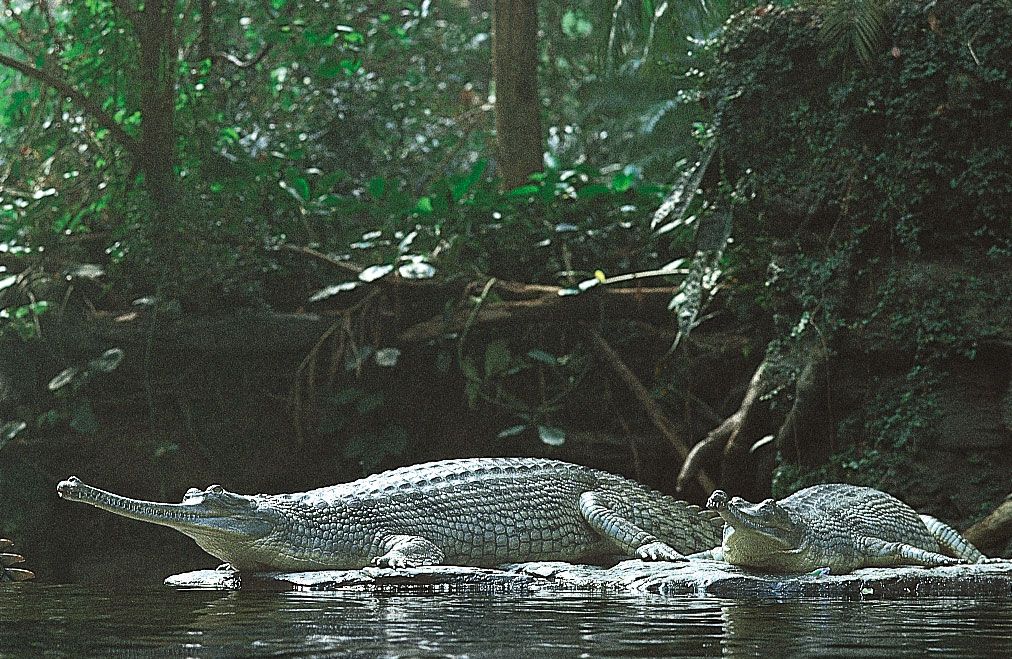
gavial, (Gavialis gangeticus), large species of crocodile known for its exceptionally long and narrow snout. The gavial, or gharial, is one of only two living species classified in the family Gavialidae (order Crocodilia), the other being the false gavial, or false gharial (or tomistoma; Tomistoma schlegelii), which it strongly resembles. Gavials once occurred in riverine environments throughout South Asia from Pakistan to Myanmar (Burma). However, their present-day geographic range is limited to several widely separated pockets of habitat in northern India, Nepal, and Bangladesh. The species is distinguished from other crocodilians by its long, very slender snout and its sharp-toothed jaws, which it sweeps sideways in order to catch fish, its main prey. The species is named for the hollow bulbous structure called a ghara (which resembles an Indian mud pot of the same name) that occurs on the end of the male’s snout. The term gavial is thought to have been the result of a European misspelling of the Hindi word ghara.
Form and function
Adult gavials rank among the world’s largest crocodiles, normally growing to a length of 4 to 6.5 meters (13.1 to 21.3 feet) and a weight of about 160 to 180 kg (roughly 353 to 400 pounds), males being significantly larger than females (see also sexual dimorphism). Males are also known by the presence of a ghara, which likely plays a role in attracting mates, possibly as a resonator that amplifies the male’s vocalizations or as part of a visual display. The gavial’s dorsal side ranges in color from brown to green, with the underside colored beige to yellow. The scales of gavials are smoother than those of other crocodilians, and they have webbed feet. Although they spend much of their time in the water, they also rest on logs or riverbanks to bask in the sun.
- Kingdom: Animalia
- Class: Reptilia
- Order: Crocodilia
- Family: Gavialidae
- Genus: Gavialis
Critically Endangered Species
Gavials are aquatic ambush predators that often lurk below the water surface. They possess sensory organs in their scales that can detect vibrations in the water, giving them the ability to gauge the position of their prey before suddenly snapping out with their jaws. Younger gavials feed on insects, amphibians, and crustaceans, whereas adults prefer fishes. The gavial does not attack people, but it has been observed feeding on corpses set afloat in funeral ceremonies on the Ganges River. Gavials are in turn preyed upon by other reptiles (including snakes and monitor lizards), wild pigs, and mongooses. They are sometimes hunted by people, who harvest their skin, meat, gharas, and eggs.


 " height="20" alt="HEW Logo">

Like other crocodilians, the gavial is an egg-laying species, females depositing hard-shelled eggs in nests on the banks of rivers. Mating occurs primarily between November and February. Breeding females deposit 30–60 eggs on average, which they visit and incubate periodically for 60–80 days before the eggs hatch. Young gavials become independent about three weeks later. However, they will not become sexually mature until several years later, females reaching sexual maturity at about age 8 and males at about age 15. The gavial’s maximum life span is unknown, but it is thought to be as long as 60 years in the wild. Gavials have lived as long as 29 years in captivity.
The gavial and the false gavial are sometimes mistaken for one another. However, differences in the shape of the snout set the species apart. The gavial’s snout is narrow with 110 teeth that interlock with one another. In contrast, the snout of the false gavial is thicker, tapering more gradually from its connection with the animal’s head, and it has fewer interlocking teeth.
Conservation status
The International Union for Conservation of Nature and Natural Resources (IUCN) has considered the gavial as a critically endangered species since 2007. In addition, the gavial has been known to be one of the rarest crocodilians since the 1940s. Population studies report that fewer than 1,000 adults remain worldwide, some studies suggesting that this number may be as low as 200. The gavial’s long decline during the 20th century has been attributed to habitat loss (specifically, the development of dams), hunting, and entanglement in fishing gear. Although hunting has largely ceased, people collect gavials’ eggs for use in traditional medicine. In addition, disruptions to the gavial’s habitat continue, as sandbars and riverbanks have been modified by human activity and pollution stemming from mining wastes contaminates the water and nesting sites.