Naja
Quick Summary
The genus Naja encompasses several species of highly venomous snakes, commonly known as cobras. These snakes are found across Africa and Asia and are characterized by their ability to expand the neck ribs to form a distinctive hood when threatened.1
Cobras possess short, grooved fangs at the front of their mouths that deliver venom, which typically contains neurotoxins targeting the nervous system of their prey, primarily small vertebrates and other snakes. Bites can be fatal if not treated promptly with antivenin.12
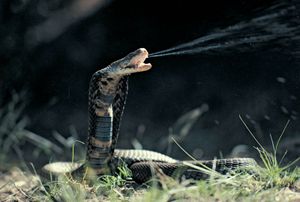
Notable species include the king cobra (Ophiophagus hannah), the world's largest venomous snake, and the Egyptian cobra (Naja haje), historically significant in ancient Egypt. Some cobra species, like the ringhals and black-necked cobra, are known as "spitting cobras" and can project venom at an attacker's eyes. Recent research suggests the forest cobra (Naja melanoleuca) may comprise multiple distinct species.123
Ask Britannica AI about this topic
Britannica doesn't have a full article on this topic, so we've curated a list of our relevant coverage.