
How the McCormick reaper changed farming forever
Learn more about Cyrus McCormick's mechanical reaper.
Encyclopædia Britannica, Inc.
-
Contunico © ZDF Studios GmbH, MainzHow do the waxy coating on some fruits helps them survive different climates?
-
Contunico © ZDF Studios GmbH, MainzLearn about the production of ethanol as a biofuel in Brazil.
-
© American Chemical Society (A Britannica Publishing Partner)Learn about the development and applications of glass paint, which is made of silica glass and formulated to reflect sunlight, protecting surfaces from heat and damage.
-
Contunico © ZDF Studios GmbH, MainzLearn about urban farming in Japan, which relies on LED lighting and hydroponics.
-
Encyclopædia Britannica, Inc.An overview of the nitrogen and phosphorus cycles in the biosphere.
-
© American Chemical Society (A Britannica Publishing Partner)Learn about vertical farming.
-
Contunico © ZDF Studios GmbH, Mainz; Thumbnail © Rudmer Zwerver/Dreamstime.comLearn how tractors equipped with GPS navigation systems are being used in farming.







News •
New cacao variety could help protect global chocolate supply from disease
• Oct. 27, 2026, 5:50 PM ET (Phys.org)
Archaeologists recreated 8,000-year-old stone sickles to learn what early farmers were growing
• Oct. 21, 2026, 10:37 AM ET (Earth.com)
Natural, Man-Made Crises Impacting Global Food Production
• Oct. 20, 2026, 6:55 AM ET (Newsweek)
Transcript
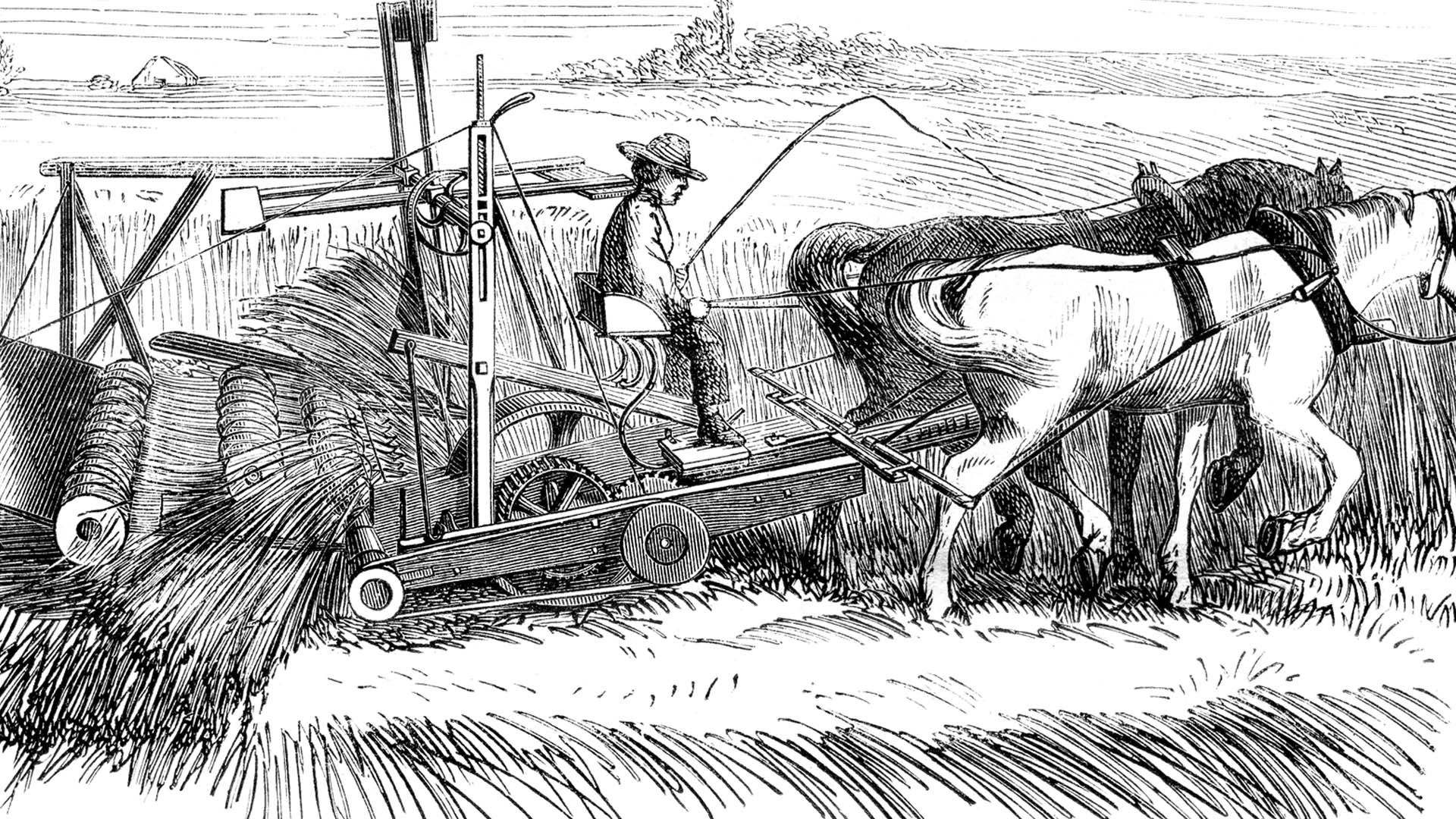
In 1831, 22-year-old Cyrus McCormick tried his hand at building a mechanical reaper—a farm machine that cuts grain—that his father, farmer-slash-blacksmith-slash-inventor Robert McCormick, had tried and failed to develop a few years earlier.
The younger McCormick tried something new. His reaper, resembling a two-wheeled horse-drawn chariot, consisted of a vibrating cutting blade, a reel to bring the grain within its reach, and a platform to receive the falling grain.
McCormick’s machine would be the model for all other reapers that followed.
A reaper was a tool many 19th-century farmers desperately needed.
When grain was harvested by hand, a huge number of laborers were required. A farmer who didn’t have enough people to complete the harvest had to either accept crop loss or pay exorbitant wages to hire peak-season workers.
The McCormick reaper offered hope to farmers that the yield of their fields might no longer be limited by the number of available farmhands.
Over the next few decades, news of the invention spread to every part of the United States—and even across the pond to England and France.
By 1856 McCormick was selling more than 4,000 mechanical reapers to farmers each year.
Last Modification: