
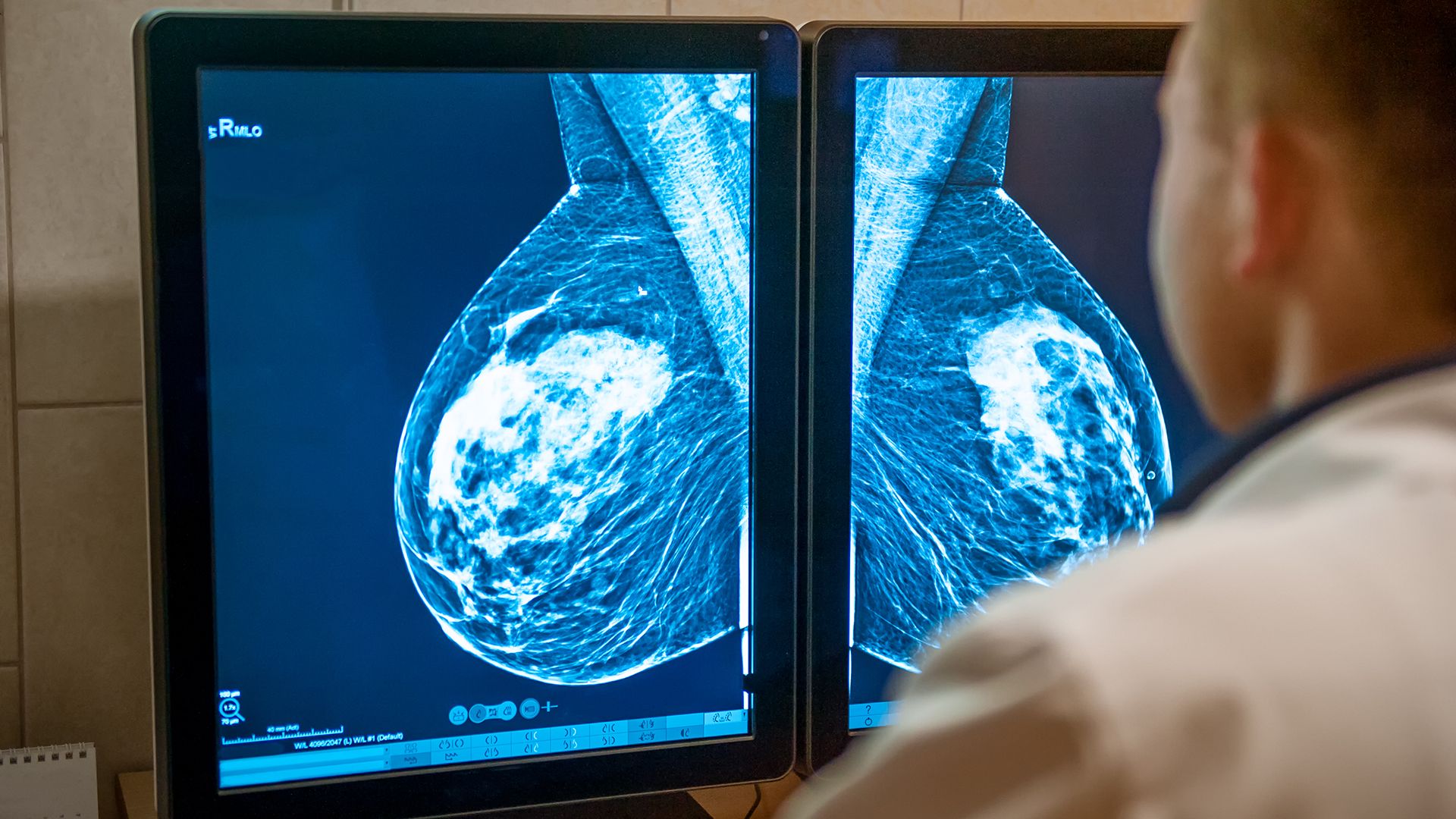
Learn how breast cancer is detected using Magnetic resonance mammography
The use of magnetic resonance mammographies to detect breast cancer.
Contunico © ZDF Studios GmbH, Mainz; Thumbnail © Oksana Krasiuk/Dreamstime.com
-
Encyclopædia Britannica, Inc.And how much do you really need?
-
Encyclopædia Britannica, Inc.Resist the urge to grab a cotton swab.
-
Encyclopædia Britannica, Inc.An MIT study compared brain connectivity between people writing essays using Chat GPT, a search engine, or only their own brain.Media Editor: Casey Mendoza
-
Encyclopædia Britannica, Inc.Melanocytes produce the protective skin-darkening pigment melanin.
-
AbbVie (A Britannica Publishing Partner)Learn about what cancer research and treatment options might look like in 2050.
-
Encyclopædia Britannica, Inc.Overview of the use of radioactive isotopes in medicine to diagnose certain ailments.
-
© Massachusetts Institute of Technology (A Britannica Publishing Partner)Using sound waves to detect rare cancer cells in the blood.




News •
Mammograms can do more than detect breast cancer—they also offer important clues on heart health
• Nov. 5, 2026, 12:00 PM ET (Medical Xpress)
Scientists pinpoint hundreds of genetic variants that offer new insights into inherited breast cancer risk
• Nov. 5, 2026, 9:40 AM ET (Medical Xpress)
Vanderbilt researchers create massive transcriptomic atlas of breast cancer
• Nov. 3, 2026, 3:03 PM ET (News-Medical)
Eating sugary foods more than twice a week was linked to 28% higher breast cancer risk
• Nov. 2, 2026, 9:33 PM ET (News-Medical)
Early Detection Saves Lives: NHO Revive Joins Breast Cancer Awareness Month
• Oct. 30, 2026, 11:09 AM ET (Des Moines Register)
Transcript
NARRATOR: One in 10 women in western Europe gets breast cancer. Because tumors grow so slowly, they are often detected too late. A fatal risk, although technology for more precise screening methods has already been developed. Magnetic resonance mammography could make it possible to detect breast cancer earlier and more reliably in the future. This highly sensitive procedure supplements traditional ultrasound and X-ray exams, as in many cases it delivers more precise images and it doesn't expose the patient to radiation. The examination requires only the application of a contrast agent to the patient's body. To date, insurance companies pay the cost of the exam, but only if a tumor has already been detected. This is because the procedure is expensive and doctors have yet to agree upon a standard examination method.
Magnetic resonance mammography uses a strong magnetic field to create cross-sectional images of the body. As of now, only specially trained experts can perform the screenings. Each breast is imaged over 1,000 times. These images provide much more exact information than conventional X-ray mammography. This is especially relevant for patients who are under 50. The breast tissue of these younger women is very dense. The problem with X-ray images is that they depict dense tissues only as a white area.
WERNER A. KAISER: "The tumor is depicted as a thicker area within dense tissue. You could say it's like looking for a white hare in snow, or like finding something in fog. This method provides contrast, so you see the tumor as a white image on a black background and it's easily recognizable. For example, in this image you can see that this patient has a malignant tumor here. You can also see that the tumor has metastasized and it's formed a bridge-like connection through the chest muscle which has a metastasis behind it. This is something you wouldn't see with any other method."
NARRATOR: Because it makes tumors and metastases of only a few millimeters visible, this procedure allows for new therapies. Small tumors could then be immediately treated with high or low-temperature treatments.
KAISER: "Ideally the patient leaves without being operated on and without being put under anaesthesia. We still have some work to do, but initial steps have been made. A half an hour, and then they can walk out of the hospital. They get bad news, the news of having breast cancer - but, the good news is it's already being treated."
NARRATOR: This precise diagnostic method could be an important milestone for breast cancer patients. For the earlier a tumor is discovered, the better the chances of treating it successfully.
Last Modification: