
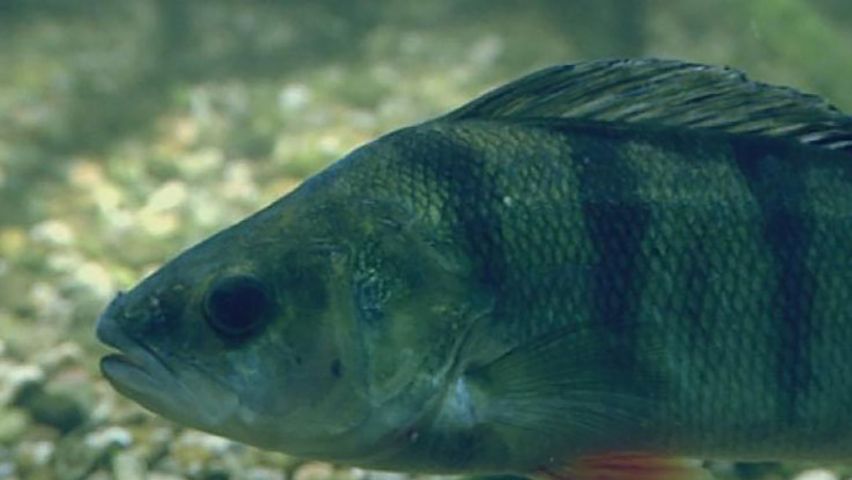
How do fish survive under icy lakes in winter?
Learn how fish survive winter in lakes that are covered in ice.
Contunico © ZDF Studios GmbH, Mainz
-
Encyclopædia Britannica, Inc.Learn about wolves that were spotted in Denmark in 2017, the first time the species had been seen in the country since 1813.
-
Encyclopædia Britannica, Inc.An overview of biodiversity in East Africa's Lake Nyasa (also called Lake Malawi or Lago Niassa), particularly with respect to cichlid fishes.
-
Encyclopædia Britannica, Inc.Love can be a dangerous game.
-
Encyclopædia Britannica, Inc.The embryological development of the rice-paddy fish, from fertilization to hatching, is followed in the laboratory.
-
© American Chemical Society (A Britannica Publishing Partner)Meet nature's simplest hydrogen bond crystal.
-
Encyclopædia Britannica, Inc.Ray-finned fishes are found in freshwater and saltwater habitats around the world and have evolved a wide variety of body plans.
-
Encyclopædia Britannica, Inc.Learn how snowflakes, also called snow crystals, form.





News •
Sunlight makes biodegradable plastic particles more harmful to fish
• Oct. 21, 2026, 1:46 PM ET (Earth.com)
Fish missing for decades return as China’s Yangtze River recovers
• Oct. 20, 2026, 10:47 AM ET (Earth.com)
Transcript
The lake is still and solid. It's winter in Austria. The surface of Lake Lunz is frozen solid. We want to know: Will the fish in the lake die?
A diving expedition - at first glance there seems no trace of trout nor roache. But the thermometer shows three degrees, so it's significantly warmer under the ice than it is above it. And that means fish must be able to survive down here. This is due to a special property of water: the elasticity of H2O. We know that when the temperature sinks below freezing, water first contracts and then expands as it begins to turn to ice. Ice, being lighter than water, floats. This means the surface of the lake is the first section to freeze.
Fish can seek out warmer water by swimming ever deeper. The deeper you go, the denser the water becomes. As the density of the water rises, so does its temperature. At its deepest point the water in Lake Lunz remains constant at four Celsius. A lake more than one meter deep will never freeze completely, meaning there's plenty of space for animal and plant life to survive the winter. Added to which, the dense water in the deeper sections of the lake has a much higher oxygen content. This allows fish and other life to make it through to the spring alive.
In winter a fish's metabolism slows down. Its body temperature sinks to four Celsius and its breathing and heart rates also fall. The cells of most fish contain polyunsaturated fatty acids called omega-3s. These fatty acids contribute to the elasticity of cell membranes, making them more resistant to cold temperatures.
So why are fish able to survive a winter under the ice? They take advantage of the special characteristics in their cellular structure and of the special property of water, elasticity.
Last Modification: