
How the location of an electron affects its energy
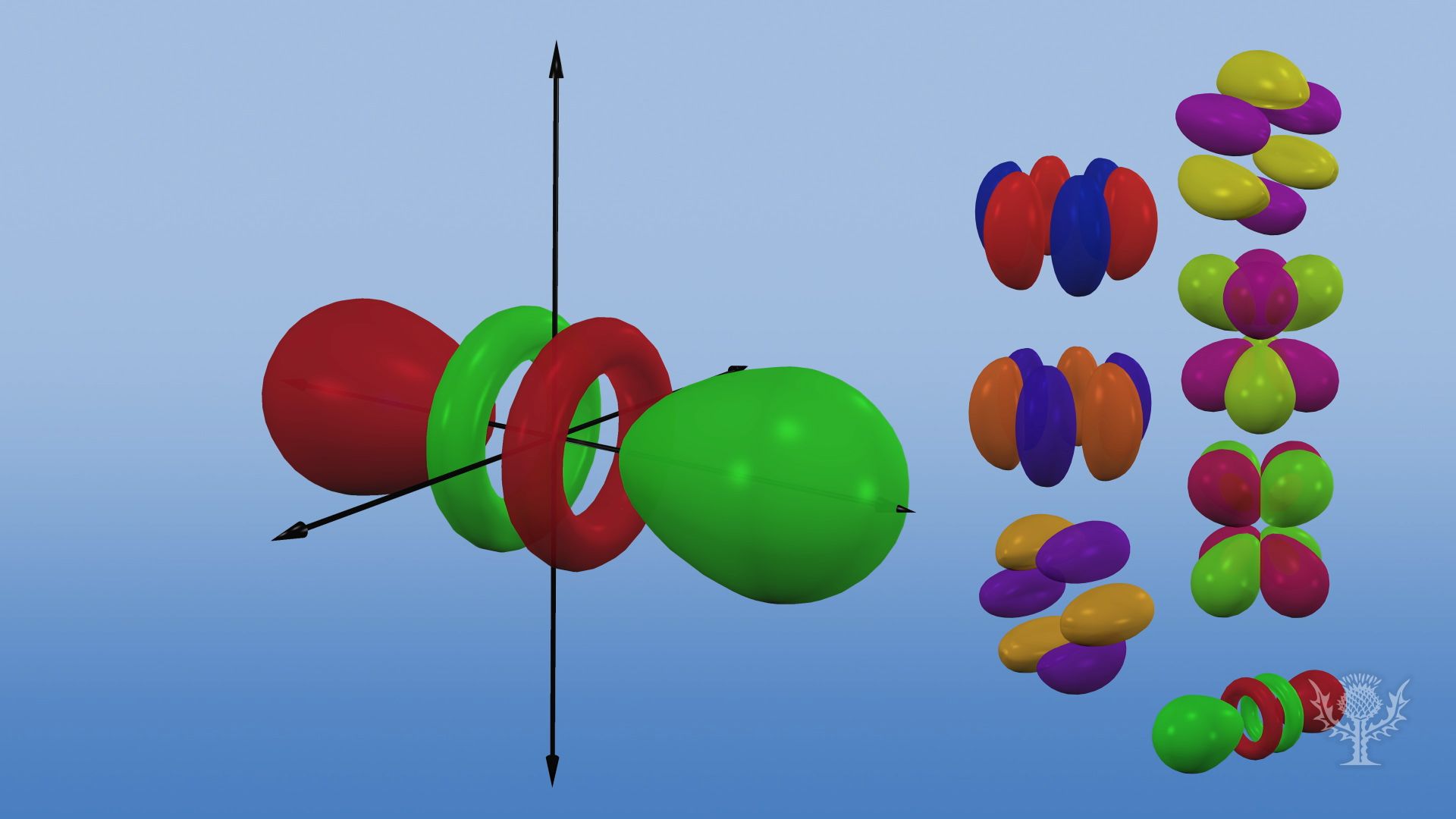
Overview of the different orbital shapes and sizes.
Encyclopædia Britannica, Inc.
-
© MinutePhysics (A Britannica Publishing Partner)A review of quantum mechanics and its effect on making factual predictions.
-
Encyclopædia Britannica, Inc.Inside an atom, electrons are arranged in layers called shells.
-
© World Science Festival (A Britannica Publishing Partner)Brian Greene discusses the key formula in the photoelectric effect, an insight that helped launch the quantum revolution. This video is an episode in his Daily Equation series.
-
© Open University (A Britannica Publishing Partner)Alfred Nobel invented dynamite, which resulted in a fortune, his disillusionment, and the Nobel Prizes—one of which, the 1964 Nobel Peace Prize, Martin Luther King, Jr., received for his role in the American civil rights movement. This video explores how Nobel's and Fritz Haber's lives provide evidence of the importance of the social responsibility of scientists.




Transcript
Did you realize that not all electrons in an atom have the same amount of energy?
It’s true!
The amount of energy of any given electron depends on where it’s located within an atom! Electrons reside in principal energy levels, or shells, which surround the atom’s nucleus at various distances. Each shell is further divided into sublevels of increasing energy named s, p, d, and f.
And these sublevels consist of orbitals--specific regions of space within the sublevel where an electron is likely to be found. Named for their energy sublevels, there are four types of orbitals: s, p, d, and f.
Each orbital type has a unique shape based on the energy of its electrons.
The s orbital is a spherical shape.
The p orbital is a dumbbell shape.
There are three p orbitals that differ in orientation along a three-dimensional axis.
There are five d orbitals, four of which have a clover shape with different orientations, and one that is unique.
There are seven f orbitals, all with different orientations. Why are there different orientations?
Because the atom is three dimensional! And … notice that the further away an orbital is from the nucleus, the more complex its shape is.
Why?
Because its electrons have more energy!