
What Is the Periodic Law?
Explanation of the periodic table.
Encyclopædia Britannica, Inc.
-
Encyclopædia Britannica, Inc.We've misidentified these snakes for almost 200 years.
-
© American Chemical Society (A Britannica Publishing Partner)Cheese comes from milk—but it's not that simple.
-
Encyclopædia Britannica, Inc.What do you call this type of animal friendship? Mutualism, of course.Media Editor: Lauren Sims
-
Created and produced by QA International. © QA International, 2010. All rights reserved. www.qa-international.comLiving organisms influence the cycling of carbon and oxygen through the environment.
-
Encyclopædia Britannica, Inc.Overview of applications of radioisotopes as tracers in nuclear medicine.
-
© American Chemical Society (A Britannica Publishing Partner)An overview of how the periodic table organizes the elements into columns and rows.
-
Encyclopædia Britannica, Inc.John Dalton and the development of the atomic theory.






Transcript
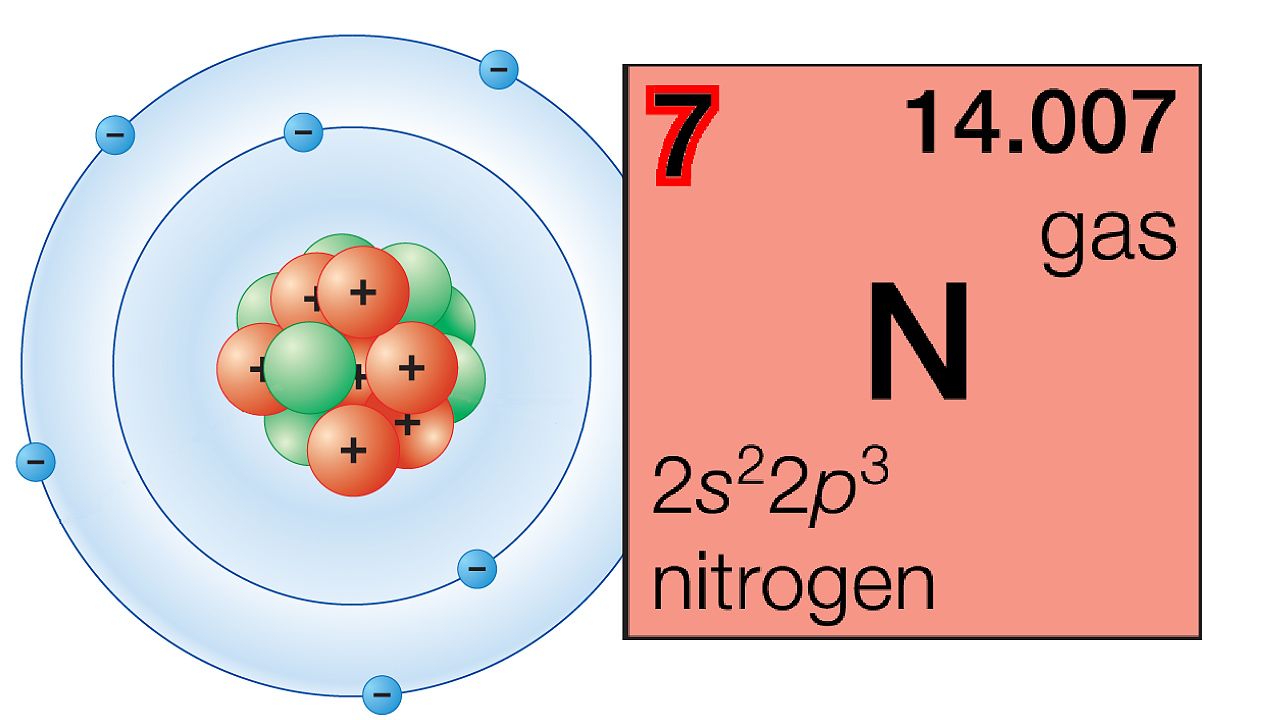
NARRATOR: The periodic law is a central idea of chemistry that has helped scientists understand the properties of elements and how they relate to one another. The law states that chemical elements show a recurrence of properties when they are arranged in order of increasing atomic number, which is the total number of protons in the atomic nucleus. This arrangement is called the periodic table.
The columns of the periodic table are called groups. Members of the same group in the table have the same number of electrons in the outermost shells of their atoms and form bonds of the same type.
The horizontal rows are called periods. Periods correspond to the relationship of orbitals, or likely areas in which electrons will be found, inside the outermost shell of the atom. Successive periods down the table correspond to atoms with a more electron-rich core of inner shells.
The formulation of the periodic table began during the 1860s, when the Russian chemist Dmitry Mendeleyev began producing a detailed study of the relationship between the properties of elements. He proposed the periodic law and devised the tabular arrangement of elements. This work made it possible to observe many types of chemical relations that previously had been studied only in isolation. It was only in the mid-1900s that progress was made in explaining the periodic law in terms of the electronic structure of atoms.