
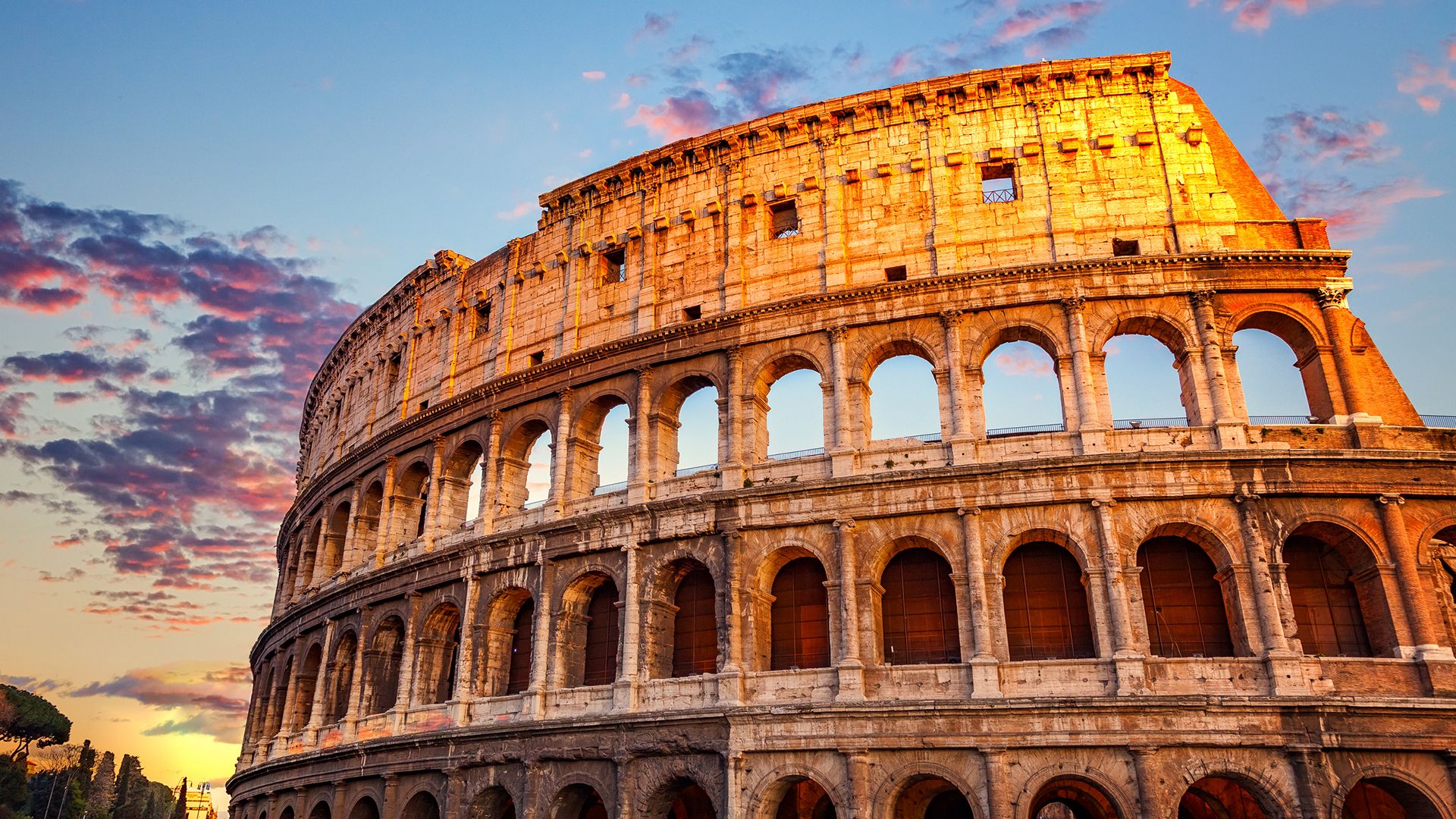
History of Rome's Colosseum
Overview of the Colosseum, Rome.
Contunico © ZDF Studios GmbH, Mainz; Thumbnail © Sborisov/Dreamstime.com
-
Giulio Mentuccia (A Britannica Publishing Partner)Time-lapse video of Rome.
-
Contunico © ZDF Studios GmbH, MainzOverview of the rise and fall of Carthage, with a detailed discussion of Hannibal's victories against Rome, including the Battle of Cannae, and his later defeat at the Battle of Zama.
-
Contunico © ZDF Studios GmbH, MainzLearn how Cleopatra used her influence over Julius Caesar to stay in power.
-
Encyclopædia Britannica, Inc.What were Russell Crowe and Paul Mescal getting themselves into?
News •
Rome demonstrators storm Colosseum as Europe's youth protests spread
• Oct. 25, 2026, 10:16 PM ET (ABC News (Australia))
Transcript
The Colosseum in Rome - it was the largest amphitheatre in the ancient world, and is still a prominent landmark in the Italian capital.
The construction of the Colosseum is said to have begun around the year 70 A.D. At the time, amphitheatres were built against hillsides to ensure stability. In Rome, they set to building the first free-standing amphitheatre. The nearly 50-meter-high and over 180-meter-long complex held around 50,000 spectators.
The best seats were reserved for senators and guests of honor. Nonetheless, every Roman citizen could attend events here for free, for the Colosseum had a political function as well. Under the arena there were gladiator schools, animal cages and storage chambers, all connected by a network of corridors, secret passageways and trap doors. Audiences could enter the Colosseum through 80 entrances, making walks to the seats short. The program included everything from early morning venationes, or animal hunts, to gladiator fights. But there are also records of executions performed here. For over 400 years fights, bloodbaths and death were normal here. Just how many people actually died here is still a matter of conjecture. All we know is that it was no small number.
Last Modification: