
Britannica
Sources used in this answer
Why is the toe bone attributed to Ardipithecus kadabba treated cautiously by some scientists?
Created from Britannica articles
using AI.
AI can make mistakes, so verify using Britannica articles.
Ardipithecus
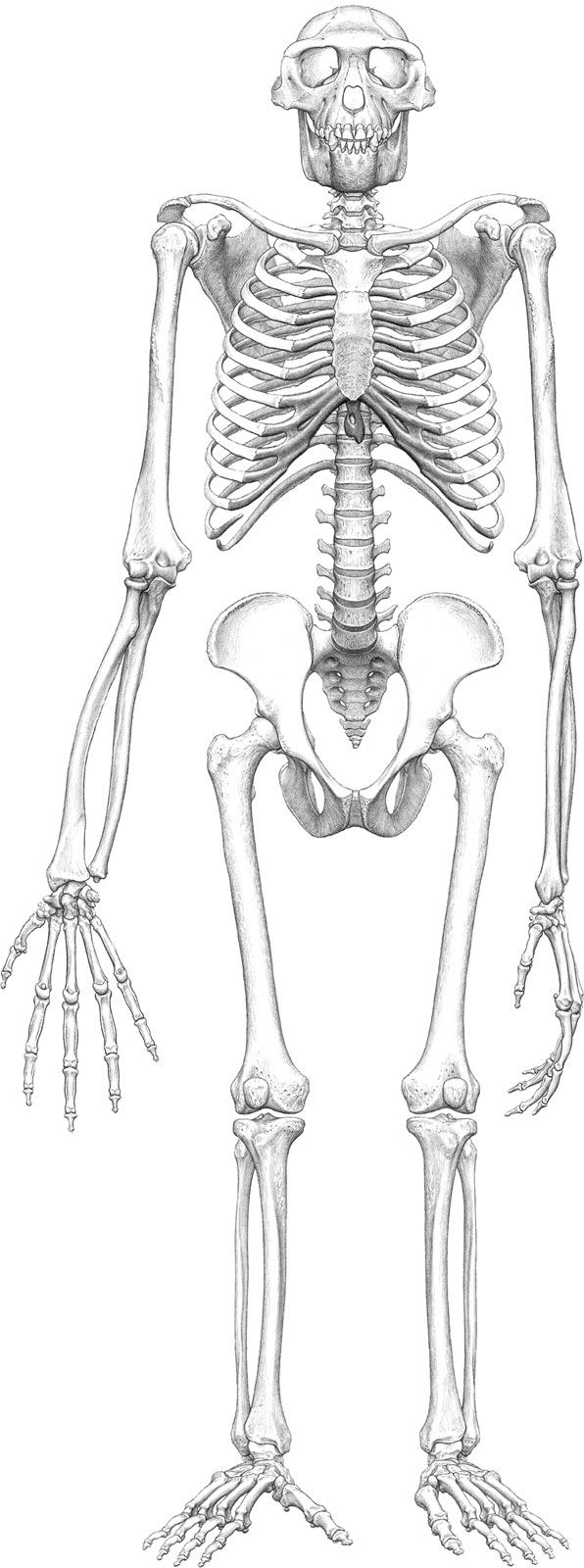
Reconstructed frontal view of the skeleton of “Ardi,” a specimen belonging to the early hominid species Ardipithecus ramidus.
The toe bone attributed to Ardipithecus kadabba is treated with caution by some scientists because of its stratigraphic and geographic context. Although the bone exhibits anatomy consistent with bipedalism, it was discovered in sediments approximately 400,000 years younger than the fossils used to define the species Ar. kadabba. Furthermore, the specimen was found about 20 km (12.4 miles) away from the primary Ar. kadabba fossil site, leading some researchers to suggest that the bone may actually belong to a different species of early hominin.1