
Why does Ardipithecus suggest that early human ancestors did not pass through a chimpanzee-like stage?
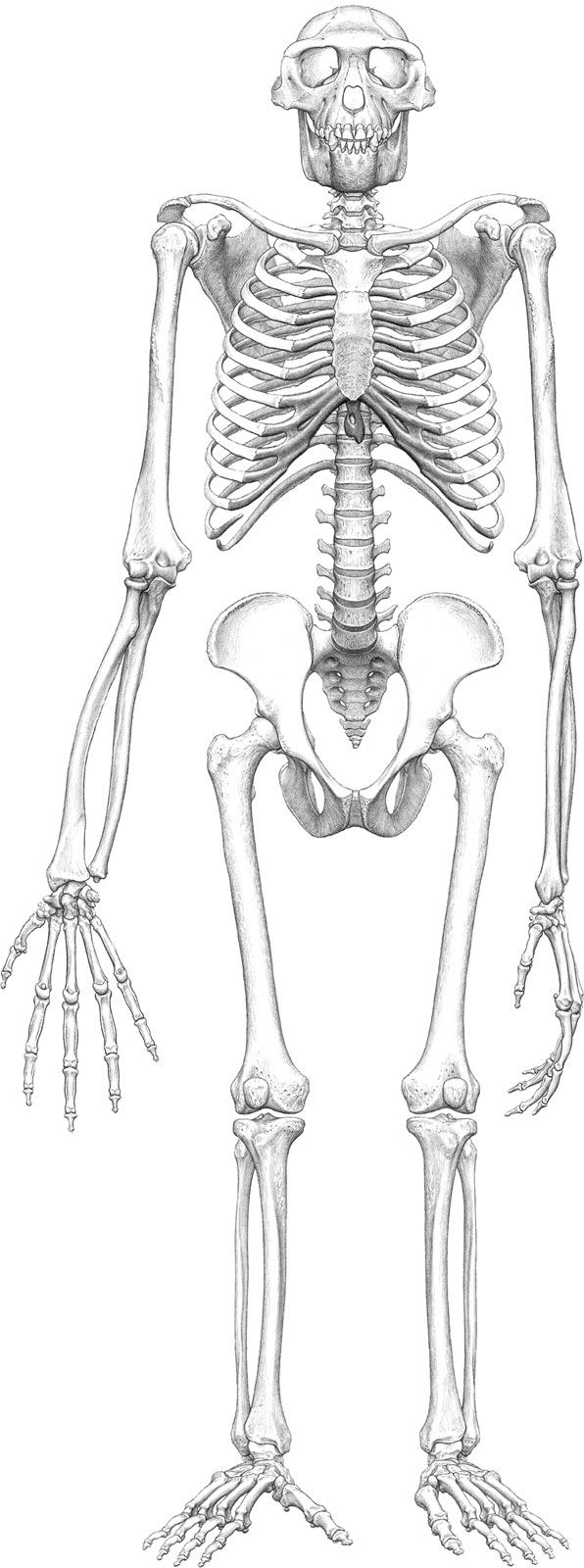
The discovery of Ardipithecus fossils has fundamentally reshaped our understanding of human evolution by demonstrating that early hominids did not pass through a chimpanzee-like stage.1
Prior to these findings, it was widely assumed that the last common ancestor of humans and chimpanzees resembled a modern, knuckle-walking, frugivorous chimpanzee. However, Ardipithecus lacks the specialized features associated with the chimpanzee lineage, such as knuckle-walking adaptations in the forelimbs, enlarged incisors for fruit eating, and tusklike male canines used for aggression.12
Instead, the anatomical evidence indicates that these chimpanzee-specific traits emerged after the human and chimpanzee lineages diverged. Ardipithecus displays a unique mosaic of features—such as a pelvis adapted for bipedalism and a lack of knuckle-walking wrist specializations—that suggest the last common ancestor was not a chimpanzee-like animal. Consequently, it is now understood that modern chimpanzees have been evolving their own specialized biology throughout the millions of years since they split from the human lineage.1