
Britannica
Sources used in this answer
What evidence supports bipedalism in Ardipithecus kadabba?
Created from Britannica articles
using AI.
AI can make mistakes, so verify using Britannica articles.
Ardipithecus
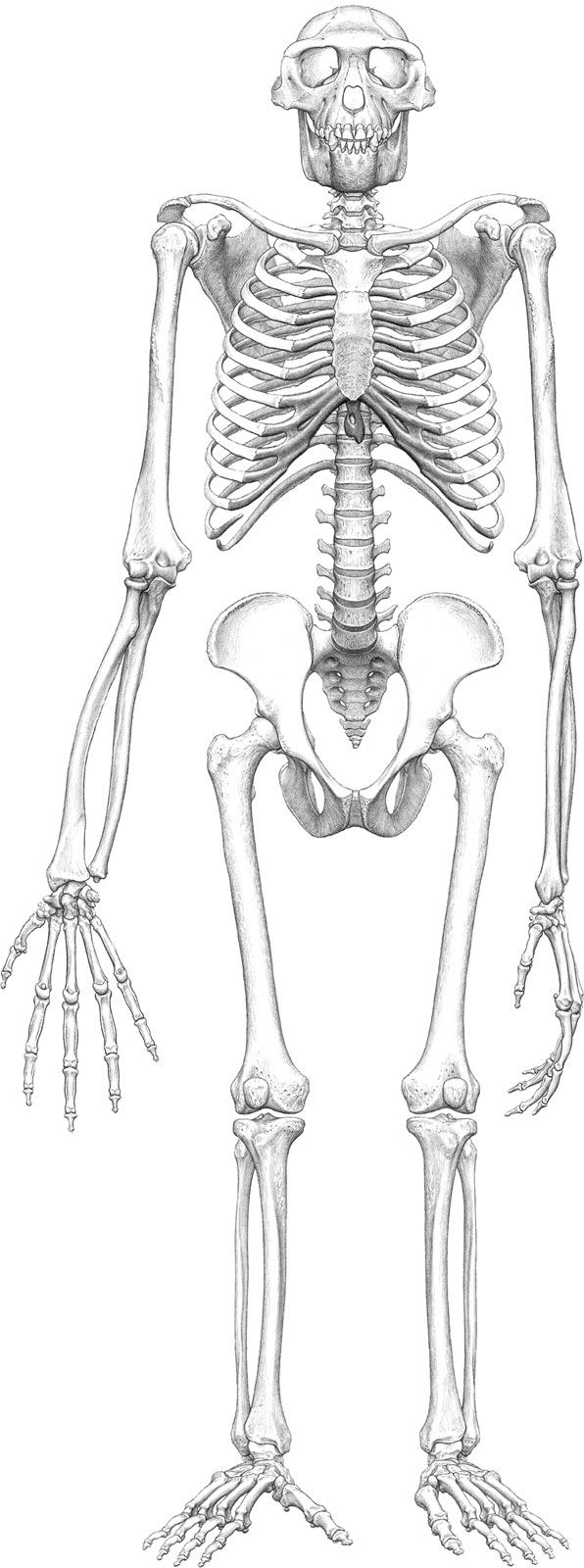
Reconstructed frontal view of the skeleton of “Ardi,” a specimen belonging to the early hominid species Ardipithecus ramidus.
Evidence supporting bipedalism in Ardipithecus kadabba is primarily based on the recovery of a toe bone that exhibits a diagnostically humanlike shape, which indicates upright walking.1
However, the scientific consensus regarding this evidence is nuanced. While some sources point to this toe bone as confirmation of bipedalism, other reports note that the specimen was discovered in sediments approximately 400,000 years younger than, and roughly 20 km away from, the fossils used to define the species. Consequently, there is uncertainty regarding whether this bone definitively belongs to Ar. kadabba or to a different species of early hominin.12