
- Also called:
- Way of the Cross
- Related Topics:
- Jesus
- Passion of Jesus
- Lent
- motif

Stations of the Cross
What are the Stations of the Cross?
How is the Stations of the Cross devotion practiced?
Where are the Stations of the Cross typically displayed?
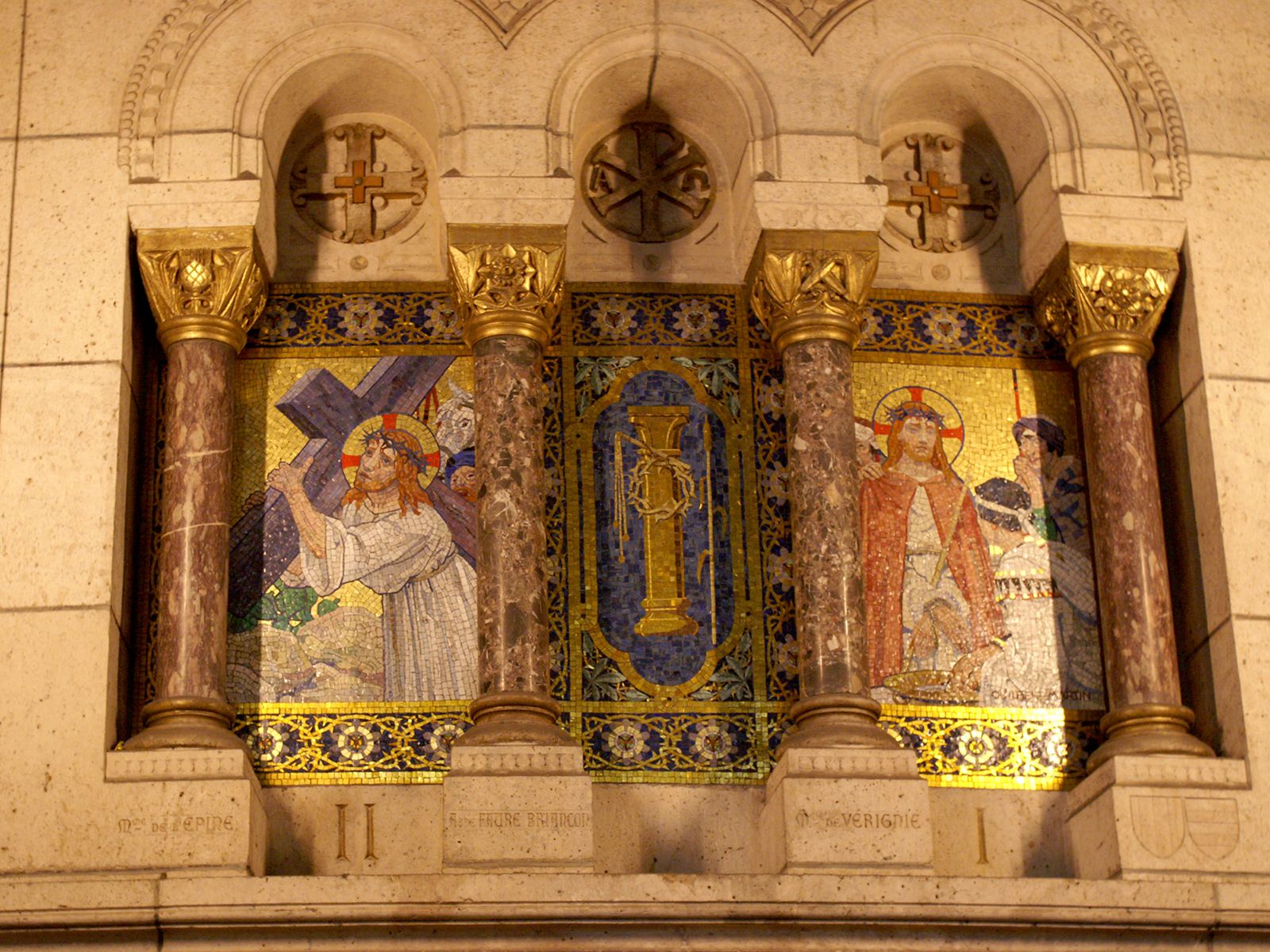
Stations of the Cross, a series of 14 pictures or carvings portraying events in the Passion of Christ, from his condemnation by Pontius Pilate to his entombment. The series of stations is as follows:
- Jesus is condemned to death.
- Jesus is made to bear his cross.
- Jesus falls the first time.
- Jesus meets his mother.
- Simon of Cyrene is made to bear the cross.
- Veronica wipes Jesus’ face.
- Jesus falls the second time.
- The women of Jerusalem weep over Jesus.
- Jesus falls the third time.
- Jesus is stripped of his garments.
- Jesus is nailed to the cross.
- Jesus dies on the cross.
- Jesus is taken down from the cross.
- Jesus is placed in the sepulchre.
The images are usually mounted on the inside walls of a church or chapel but may also be erected in such places as cemeteries, hospital corridors, religious houses, and mountainsides.

History of the devotion
The devotional exercise of visiting and praying in front of each of the 14 stations and meditating on the Passion of Christ stems from the practice of early Christian pilgrims who visited the scenes of the events in Jerusalem and walked the traditional route from the supposed location of Pilate’s house to Calvary. Tradition holds that Mary, the mother of Jesus, set up stone markers at her home outside Jerusalem to prayerfully retrace the steps of her son’s Passion, but the origin of the devotion in its present form is not clear.


 " height="20" alt="HEW Logo">
The number of stations originally observed in Jerusalem was considerably smaller than 14. In the early 16th century Ways of the Cross were established in Europe, and the tradition of 14 stations probably derived from the best known of them, that at Leuven (1505) in what is now Belgium. The Franciscans long popularized the practice, and in the 18th century they bowed to Western Christian devotional feeling and provided 14 stations in Jerusalem. The traditional stations were supplemented in the late 20th century with the Via Lucis (the Way of Light), in which the meditations focus on the resurrected Christ.
Devotional practice and prayer

Prayerful meditation through the Stations of the Cross is especially common during Lent and on Fridays throughout the year, in commemoration of Christ’s Crucifixion on Good Friday. The devotion may be done individually or in a group and is particularly important in the Roman Catholic, Anglican, and Lutheran traditions. Each station is commonly visited with some variation of the prayer “We adore you, O Christ, and we bless you. Because by your holy cross you have redeemed the world” and with a reading from a relevant passage of Scripture.
Both St. Francis of Assisi and St. Alphonsus Maria de’ Liguori wrote devotional guides for the Stations of the Cross that remain popular.