
How did the skull of Ardipithecus compare with the skulls of chimpanzees and later hominins?
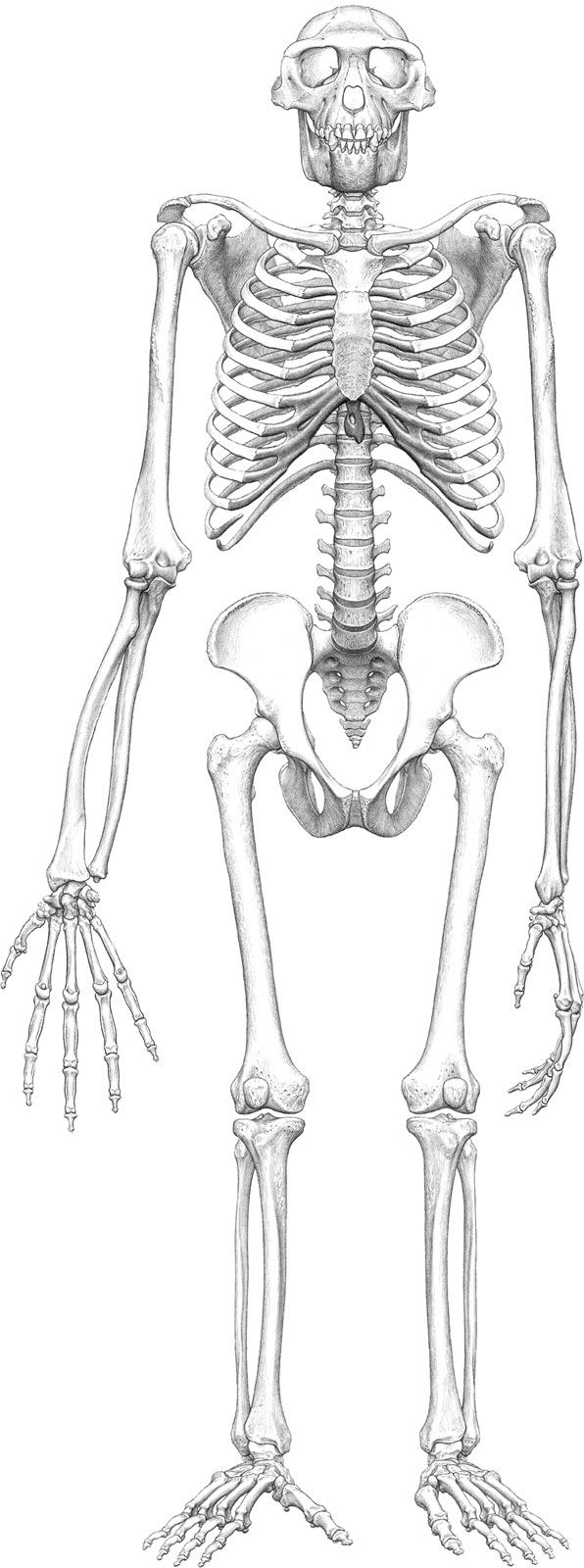
The skull of Ardipithecus ramidus exhibits a unique mosaic of features that distinguishes it from both living chimpanzees and later hominins like Australopithecus.1
Compared to chimpanzees, Ardipithecus lacked the large incisors associated with fruit-eating and the large canines typically linked to intermale aggression. While its cranial capacity was similar to that of a chimpanzee, its face and cranial base were notably short.1
When compared to later hominins, the skull of Ardipithecus lacked the specialized adaptations for heavy chewing—such as thickened enamel, robust jaws, and deep faces—that characterize Australopithecus. Its upper canines were relatively small and short, resembling those of Australopithecus, and its incisors were more similar in size and shape to those of later hominins than to those of modern apes. Overall, the skull of Ardipithecus most closely resembled earlier hominids, such as Sahelanthropus, while possessing some structural similarities to later Australopithecus specimens.1