
How did the pelvis of Ardipithecus support both climbing and bipedal movement?
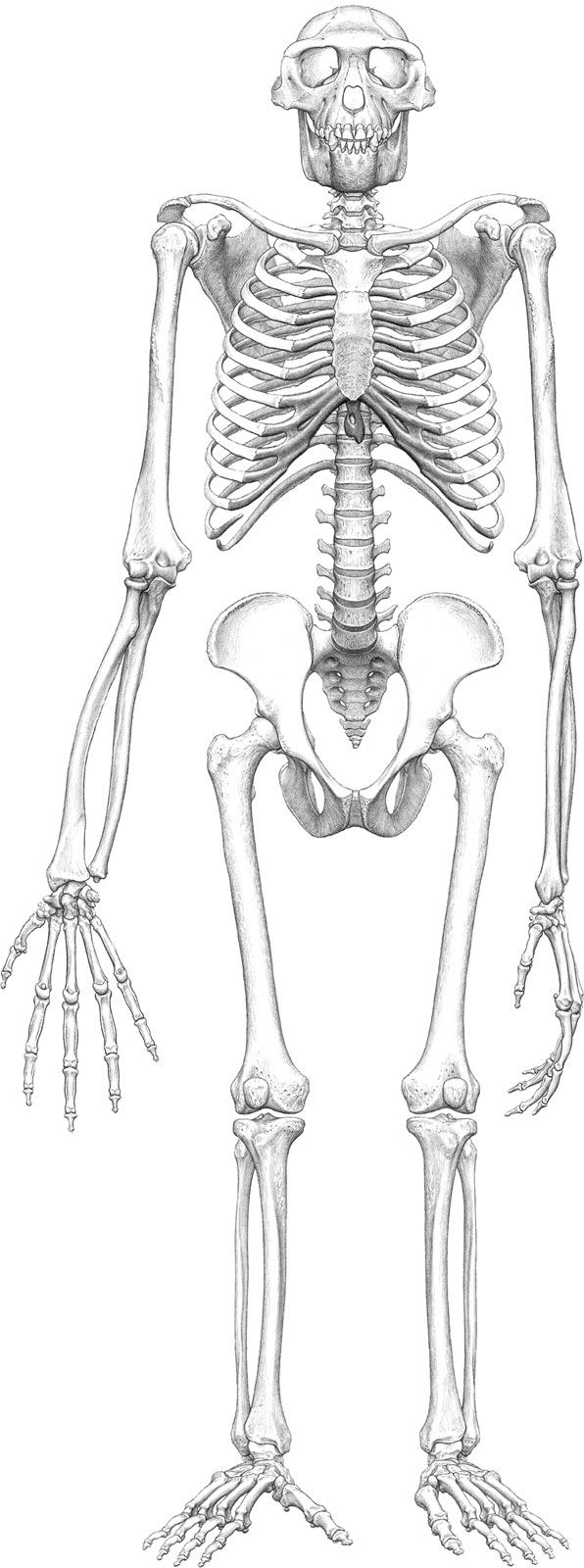
The pelvis of Ardipithecus ramidus exhibits a unique anatomical mosaic that facilitated both bipedalism and climbing.1
To support bipedal movement, the pelvis featured a short but broad upper blade (ilium) oriented from front to back, with the hip joint positioned near the level where the backbone joins the pelvis. These characteristics, which allowed for a flexible lower back, are recognized markers of bipedal locomotion also found in later hominins and humans.12
Simultaneously, the lower portion of the pelvis remained distinctly apelike. It possessed a strong posterior and inferior projection known as the ischium, which served as an anchor for the powerful muscles required for climbing. This combination of features allowed Ardipithecus to maintain a bipedal posture while retaining the physical capabilities necessary for arboreal activity.12