
Britannica
Sources used in this answer
How did the hands and wrists of Ardipithecus differ from those of knuckle-walking apes?
Created from Britannica articles
using AI.
AI can make mistakes, so verify using Britannica articles.
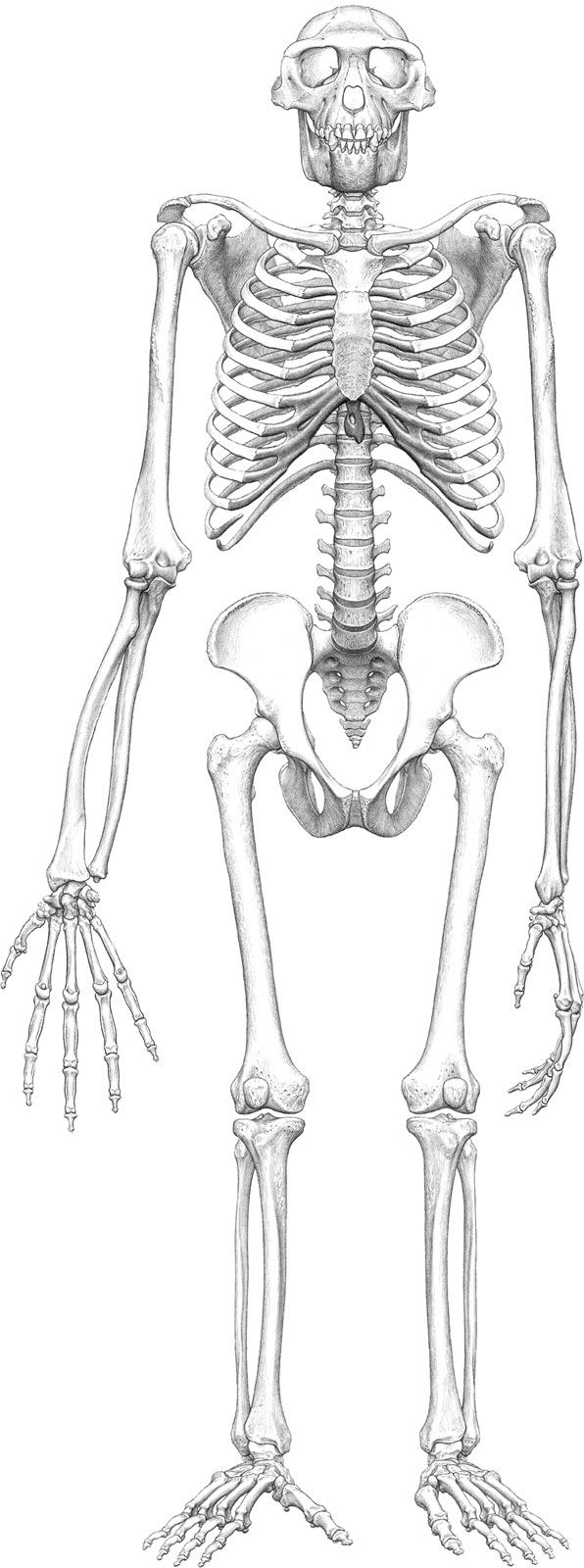
Ardipithecus
Reconstructed frontal view of the skeleton of “Ardi,” a specimen belonging to the early hominid species Ardipithecus ramidus.
The hands of Ardipithecus ramidus differed significantly from those of knuckle-walking apes in several key ways:
- Lack of knuckle-walking adaptations: Unlike knuckle-walking apes, Ardipithecus showed no evidence of specialized adaptations for this form of locomotion in its arms or hands.1
- Wrist and finger structure: The hands of Ar. ramidus lacked the wrist-stabilizing features found in knuckle-walking apes. Instead, the wrist was capable of bending upward, and the fingers were long.1
- Proportions: The overall proportions of the hands were similar to those observed in later members of Australopithecus rather than those of modern African apes.1
These anatomical features suggest that Ardipithecus did not engage in the knuckle-walking behavior characteristic of living chimpanzees and gorillas.1