
How did the discovery of Australopithecus anamensis help connect Ardipithecus with later hominins?
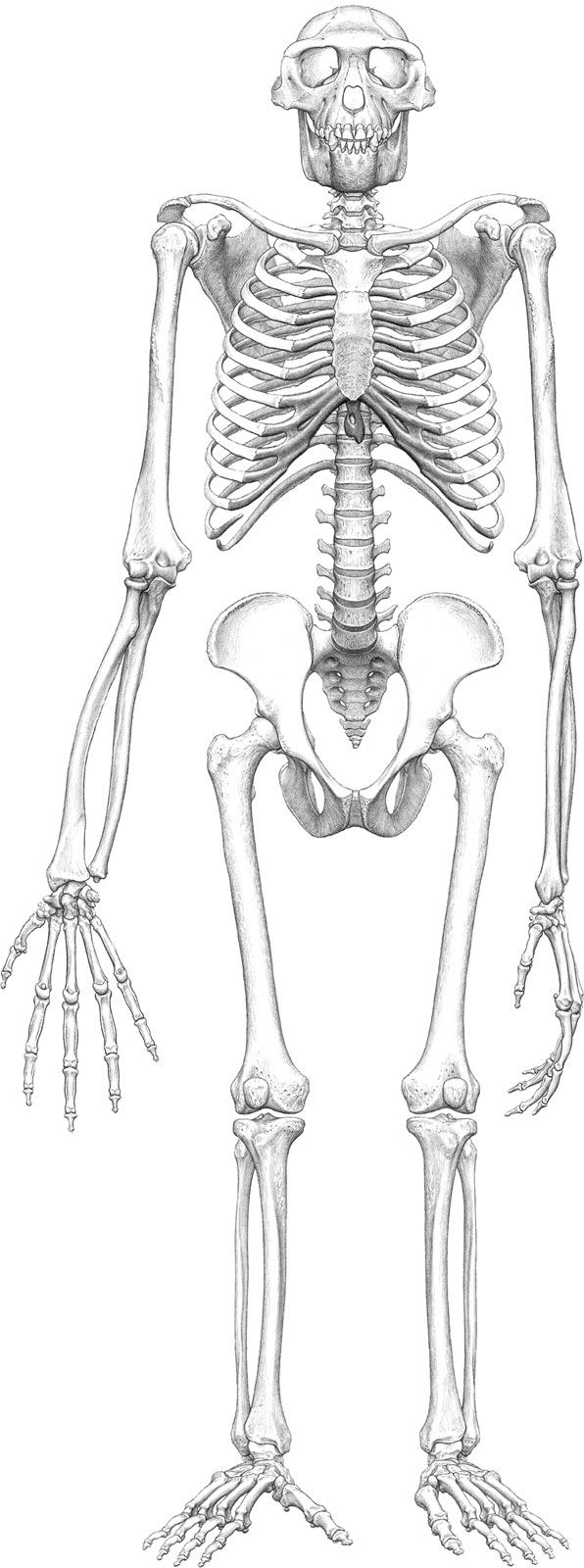
The discovery of Australopithecus anamensis in 1995 helped bridge the anatomical and temporal gaps between Ardipithecus ramidus and later hominins like Au. afarensis.21
By providing a fossil record dated to approximately 4.2–3.9 million years ago, Au. anamensis filled a critical space in the Middle Awash study area, appearing in the geological sequence after the youngest Ar. ramidus fossils (4.4 million years ago). While Ar. ramidus possessed apelike thin tooth enamel, Au. anamensis exhibited thick enamel characteristic of all later hominins. Furthermore, the tibia of Au. anamensis displayed clear anatomical features at the knee and ankle associated with the bipedalism seen in later hominins.23
Although the rapid transition between these species remains a subject of scientific discussion, Au. anamensis serves as a vital link, confirming the progression of key traits—such as dental structure and bipedal locomotion—that connect the more primitive Ardipithecus genus to the subsequent Australopithecus lineage.21