
How are the limb proportions of Ardipithecus different from those of humans and African apes?
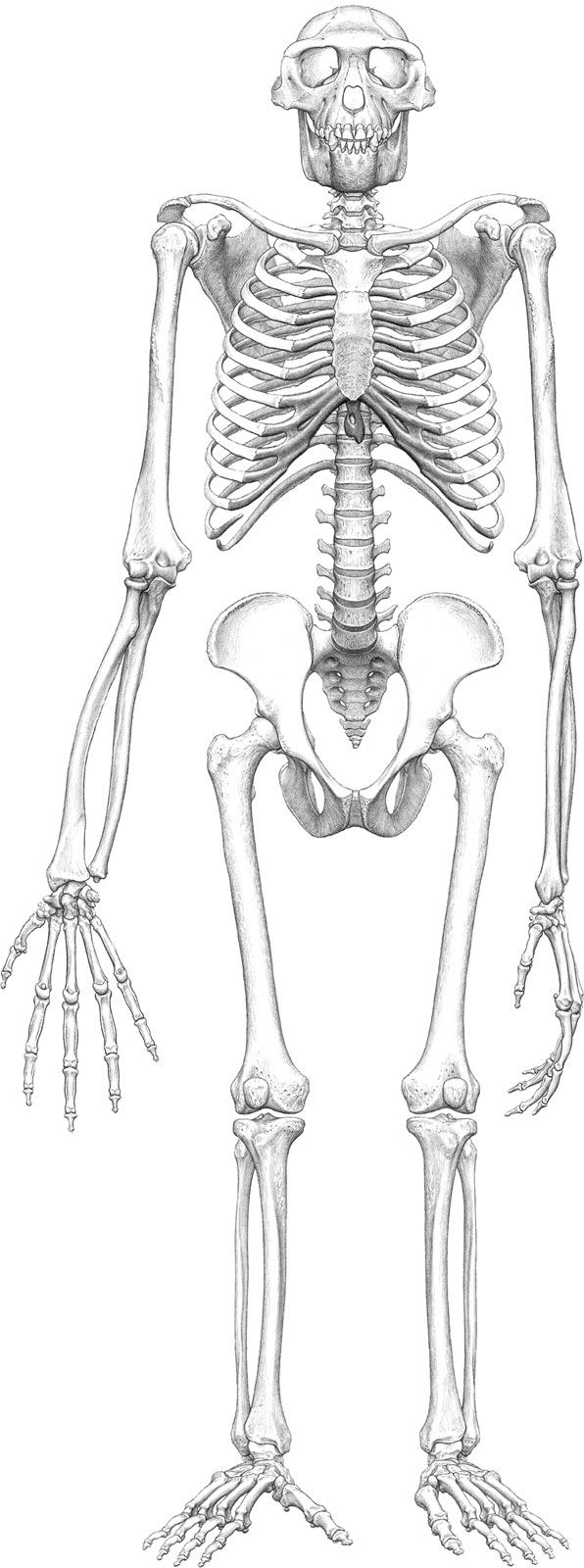
The limb proportions of Ardipithecus ramidus represent a unique anatomical mosaic that does not match those of modern humans or African apes. Instead, their proportions more closely resemble those of modern Old World monkeys.1
This distinction suggests that the specific limb proportions seen in humans and chimpanzees evolved independently after their respective lineages diverged. While Ardipithecus possessed features indicative of bipedalism—such as a pelvis structured for upright walking—it also retained traits suited for an arboreal existence, including long fingers and an opposable great toe. Unlike knuckle-walking apes, Ardipithecus lacked wrist-stabilizing features and long metacarpals, and there is no evidence of knuckle-walking adaptations in its arms or hands.12