
Britannica
Sources used in this answer
Why must iron ore be crushed before it can be used in a blast furnace?
Created from Britannica articles
using AI.
AI can make mistakes, so verify using Britannica articles.
iron processing
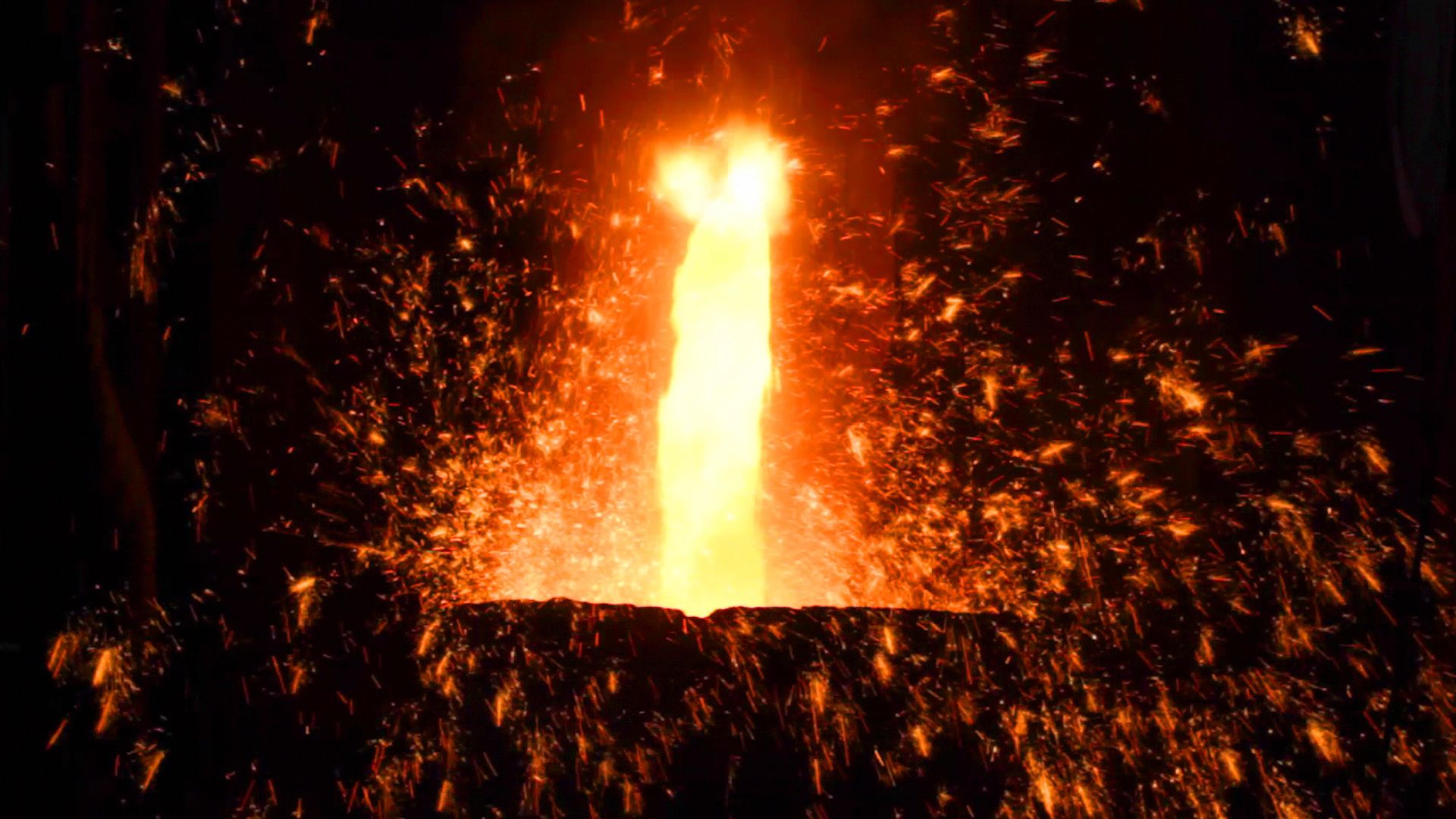
Iron ore is one of the most abundant elements on Earth, and one of its primary uses is in the production of steel. When combined with carbon, iron changes character completely and becomes the alloy steel.
Iron ore must be crushed before it can be used in a blast furnace primarily to ensure the material is of a suitable size for efficient processing. As-mined iron ore contains lumps of varying sizes, ranging from very small particles to large rocks over one meter across. However, a blast furnace requires ore lumps within a specific range, typically between 7 and 25 millimeters.1
Crushing the ore to this uniform size range is essential for several reasons:
- Consistent Gas Flow: Using evenly sized ore, sinter, or pellets allows the furnace charge to descend regularly without sticking. This uniformity ensures that the rising combustion gases flow more evenly through the furnace, which enhances contact between the gas and the descending solids.2
- Operational Efficiency: Proper sizing prevents the furnace from becoming clogged or experiencing irregular descent, which improves overall productivity and process control.2
- Preparation for Agglomeration: Crushing also allows for the separation of "fines" (material smaller than 7 millimeters). These fines are physically unsuitable for direct use in a blast furnace and must be agglomerated through processes like sintering to create larger, usable lumps.13