
Why is the gyrocompass correction for ship speed usually small?
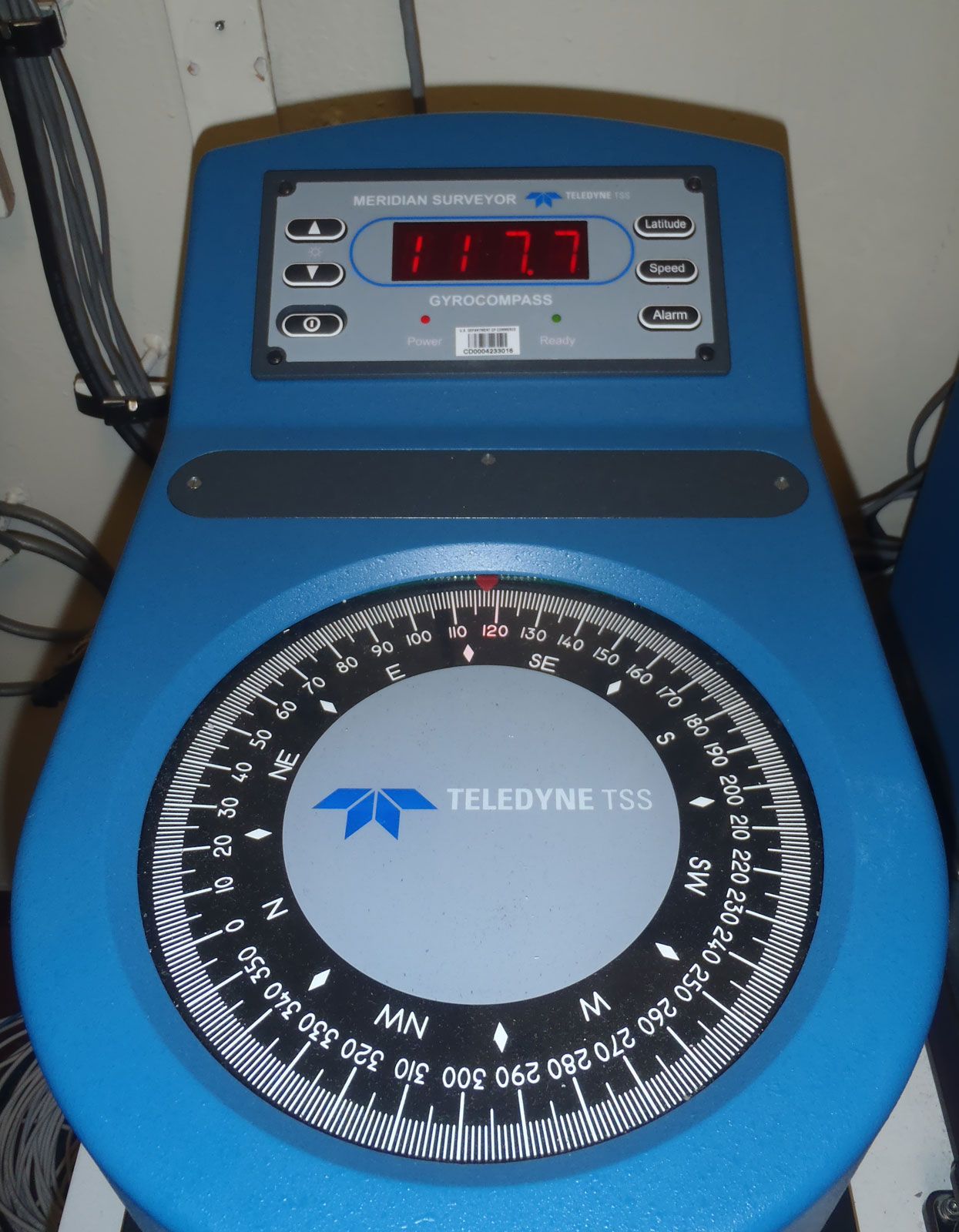
The gyrocompass correction for ship speed is generally small because the angle of rotation between the true meridian and the apparent meridian—which the instrument must compensate for—is relatively minor at typical maritime velocities.
When a vessel travels north or south, its motion over the spherical Earth creates an angular velocity relative to inertial space. This causes the apparent meridian to shift from the true meridian. The tangent of this angle of rotation is calculated as the vehicle's north-south speed divided by the product of the Earth's rotation rate and the cosine of the latitude. Because the Earth's rotational speed at the Equator is approximately 900 knots, the resulting angle of rotation remains less than 4° at standard ship speeds.2
While this correction is easily managed for ships, it becomes a significant limitation for aircraft. The high speeds associated with flight create much larger offsets, making the gyrocompass impractical for aerial navigation.12