
Britannica
Sources used in this answer
Why is a regular flow of gas and solids important in a blast furnace?
Created from Britannica articles
using AI.
AI can make mistakes, so verify using Britannica articles.
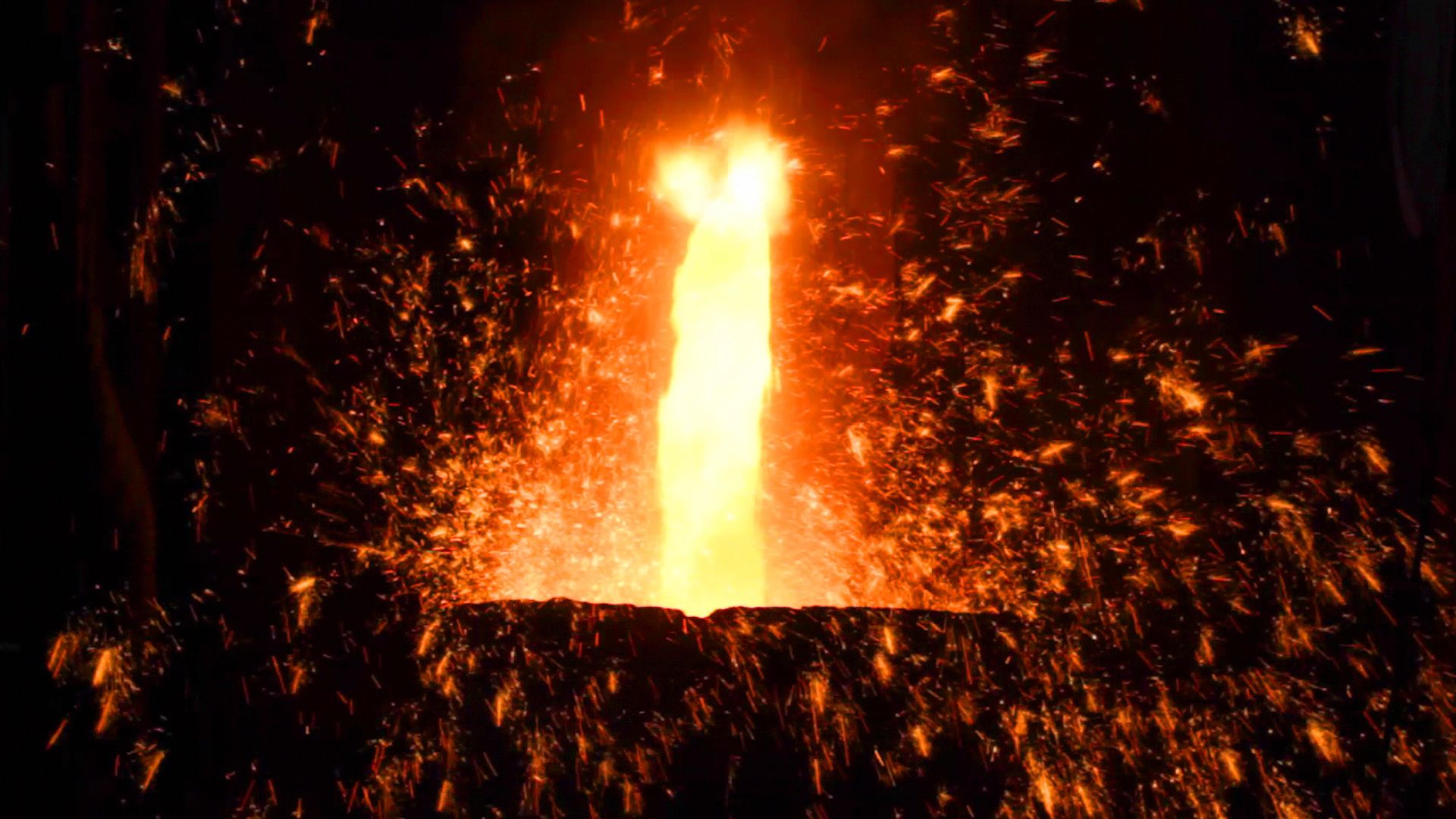
iron processing
Iron ore is one of the most abundant elements on Earth, and one of its primary uses is in the production of steel. When combined with carbon, iron changes character completely and becomes the alloy steel.
In a blast furnace, a regular flow of gas and solids is essential because the furnace functions as a countercurrent heat and oxygen exchanger.1
Maintaining this regularity is critical for the following reasons:
- Enhanced Chemical Interaction: As the solid charge (ore, coke, and flux) descends, it must react with the rising reducing gases (primarily carbon monoxide) to convert iron oxides into metallic iron. A uniform flow ensures that the gas and solids are in consistent contact, which is necessary for efficient reduction.12
- Thermal Efficiency: The rising combustion gas transfers its heat to the descending solids. If the flow is uneven, this heat exchange is compromised, reducing the furnace's overall efficiency.1
- Operational Stability: Ensuring that the charge descends regularly—without sticking—prevents blockages and promotes stable furnace performance. This is typically achieved by using evenly sized sinter and pellet charges, which allow the gas to flow more uniformly through the furnace.1
By optimizing the distribution of the burden and the flow of gases, operators can maximize productivity and ensure the consistent production of pig iron.13