
- electricity - Dielectrics, polarization, and electric dipole moment
- electric displacement
- electrostatics - Dielectrics, polarization, and electric dipole moment
- capacitor dielectric and piezoelectric ceramics
- capacitor dielectric and piezoelectric ceramics - Piezoelectric ceramics
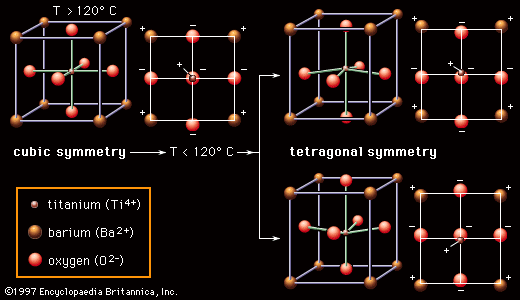
- capacitor dielectric and piezoelectric ceramics - Ferroelectric properties of barium titanate
Why does polarization reduce the electric field between capacitor electrodes?
When a dielectric material is placed between the electrodes of a capacitor, the material undergoes polarization in response to the external electric field. During this process, the bound positive and negative charges within the dielectric's atoms or molecules shift slightly in opposite directions, effectively creating internal electric dipoles that align with the applied field.123
This internal redistribution of charge generates an opposing electric field within the material. Because this induced field acts in the opposite direction to the original field created by the free charges on the capacitor's electrodes, it partially cancels out the original field. By reducing the net electric field between the electrodes, the dielectric lowers the potential difference for a given amount of charge, which in turn increases the capacitor's capacitance.2314