
Why does gravity matter in the operation of a gyrocompass?
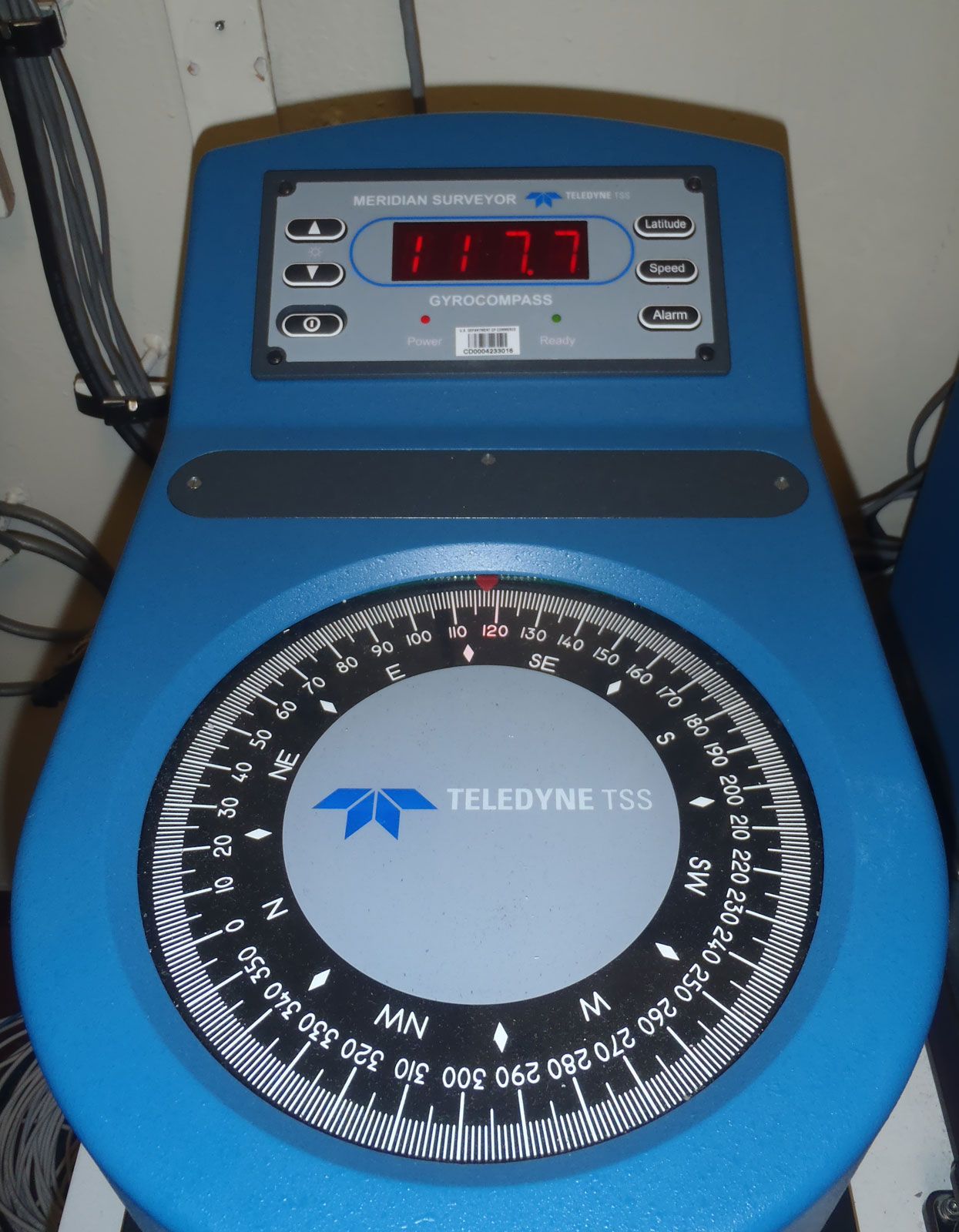
Gravity is essential to the operation of a gyrocompass because it provides the pendulosity required for the instrument to seek true north.12
A gyrocompass functions by utilizing a spinning gyroscope that is intentionally designed with a mass unbalance, creating a pendulous effect. When the spin axis is not aligned with the meridian, the Earth's rotation causes the axis to tilt relative to the horizon. Gravity acts upon this pendulosity to create a horizontal torque. According to the basic law of gyroscopics, this torque causes the gyroscope to precess—or rotate—toward the meridian.2
By combining this gravitational torque with a damping mechanism, the gyrocompass is able to settle on the meridian, effectively indicating geographic north. Without the force of gravity acting on the instrument's pendulous mass, the gyroscope would not experience the necessary torque to align itself with the Earth's axis of rotation, rendering it unable to function as a north-seeking navigational device.12