
Why does an undamped gyrocompass swing back and forth across north?
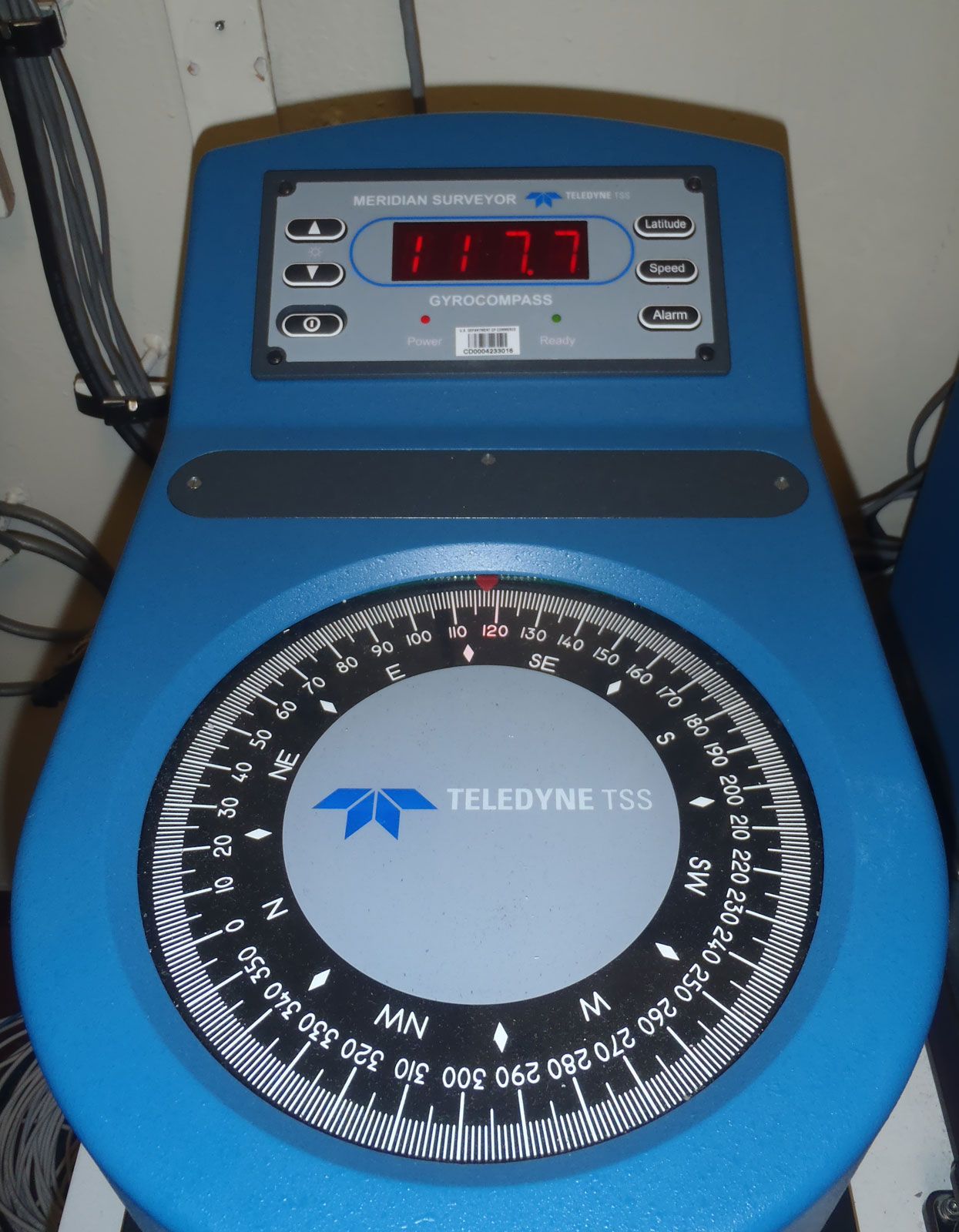
An undamped gyrocompass swings back and forth across north because of the interaction between Earth’s rotation and the instrument's pendulosity.1
When a gyrocompass is started with its spin axis horizontal and slightly east of the meridian, Earth’s rotation causes the axis to rise relative to the horizon. This creates a horizontal torque due to gravity acting on the pendulous mass. According to the basic law of gyroscopics, the gyroscope precesses toward the meridian.1
Because the instrument is undamped, it does not settle; instead, it continues to precess through the meridian. Once west of the meridian, the Earth’s rotation causes the axis to dip, creating an eastward torque that forces it to precess back toward the meridian again. This continuous cycle causes the spin axis to trace an ellipse around the meridian and the horizontal, repeatedly swinging past the true north position.1