
Why does a gyrocompass point to true north instead of magnetic north?
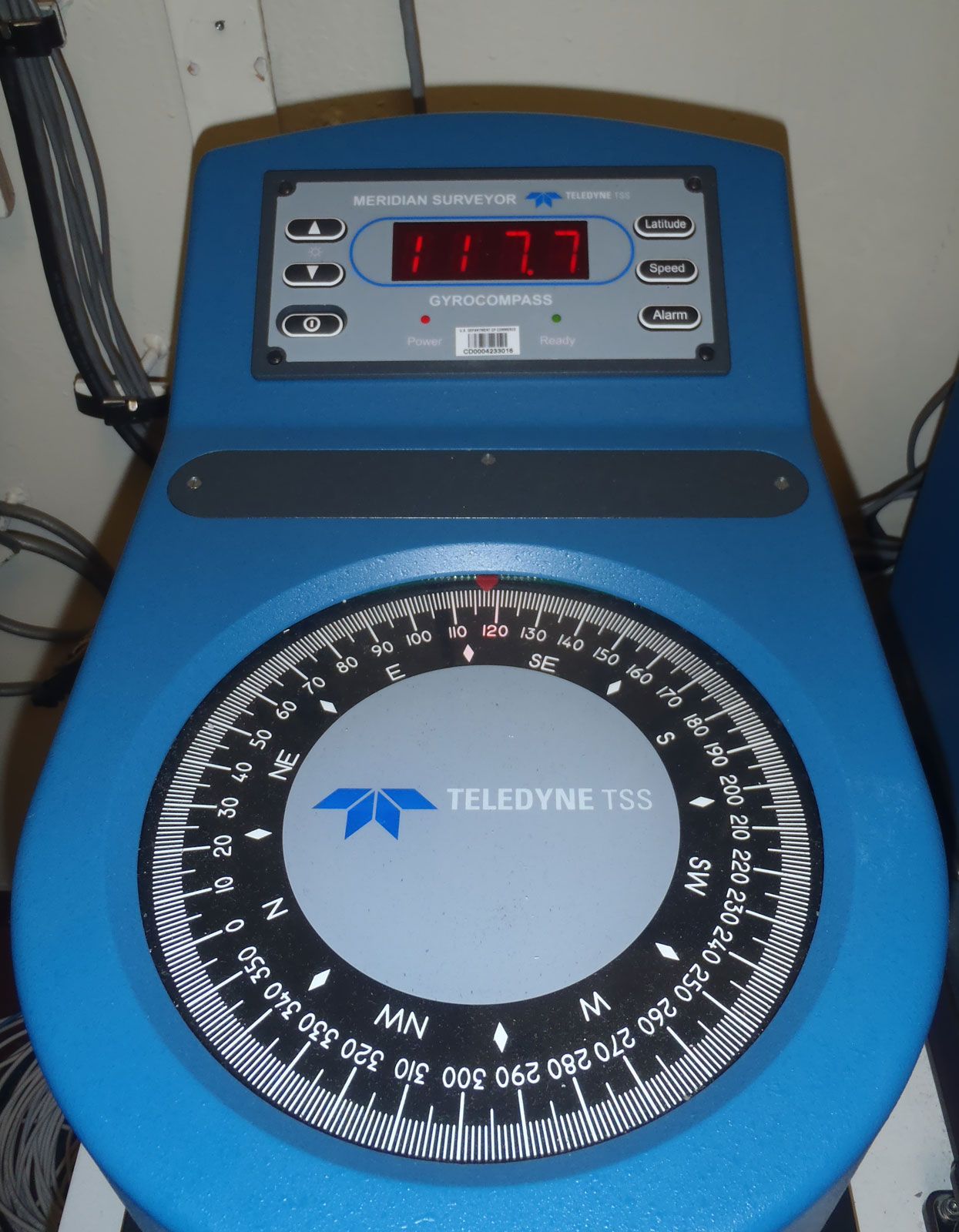
A gyrocompass points to true (geographic) north rather than magnetic north because it does not rely on the Earth’s magnetic field. Instead, it functions by utilizing the physical properties of a continuously driven gyroscope in combination with the Earth's daily rotation and the force of gravity.12
By making the gyroscope case pendulous—or using a liquid-based control system—the instrument is forced to seek an equilibrium direction. When the axis of the gyroscope tilts, this control mechanism causes the device to precess toward the meridian. Through the application of a damping factor, the instrument’s oscillations are settled until it aligns precisely with true north.12
Because it operates on these mechanical and rotational principles, the gyrocompass is entirely immune to magnetic interferences, such as those caused by steel structures, electric circuits, or ore deposits, making it a highly reliable tool for navigation on ships and submarines.1