
Why does a gyrocompass have a small equilibrium tilt in the Northern Hemisphere?
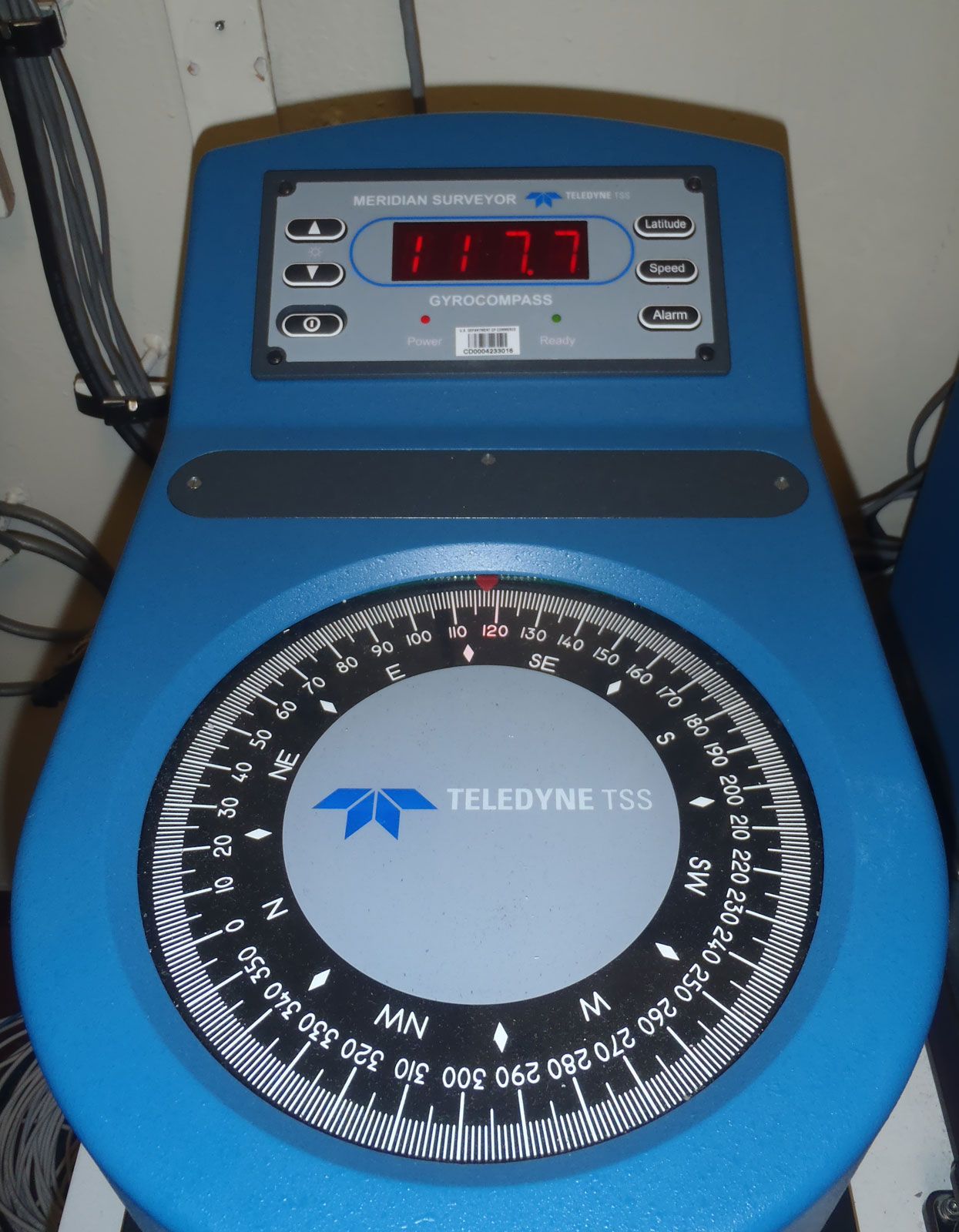
In the Northern Hemisphere, a gyrocompass maintains a slight upward tilt on the north side of its spin axis to generate the necessary torque to precess the instrument relative to inertial space.1
This precession is required to match the rate at which the local meridian rotates about the vertical axis due to the Earth's daily rotation. Because the Earth's rotation causes the meridian to appear to move, the gyrocompass must continuously adjust its orientation to remain aligned with true north. This equilibrium tilt is a physical necessity for the device to track the meridian accurately as the Earth rotates.1
It is important to note that this tilt is a small, predictable value that is easily compensated for in the instrument's heading indication. In the Southern Hemisphere, this tilt is downward, reflecting the opposite orientation required to maintain equilibrium.1