
Britannica
Sources used in this answer
Why did stepwells need more than a hundred steps in some dry seasons?
Created from Britannica articles
using AI.
AI can make mistakes, so verify using Britannica articles.
stepwell
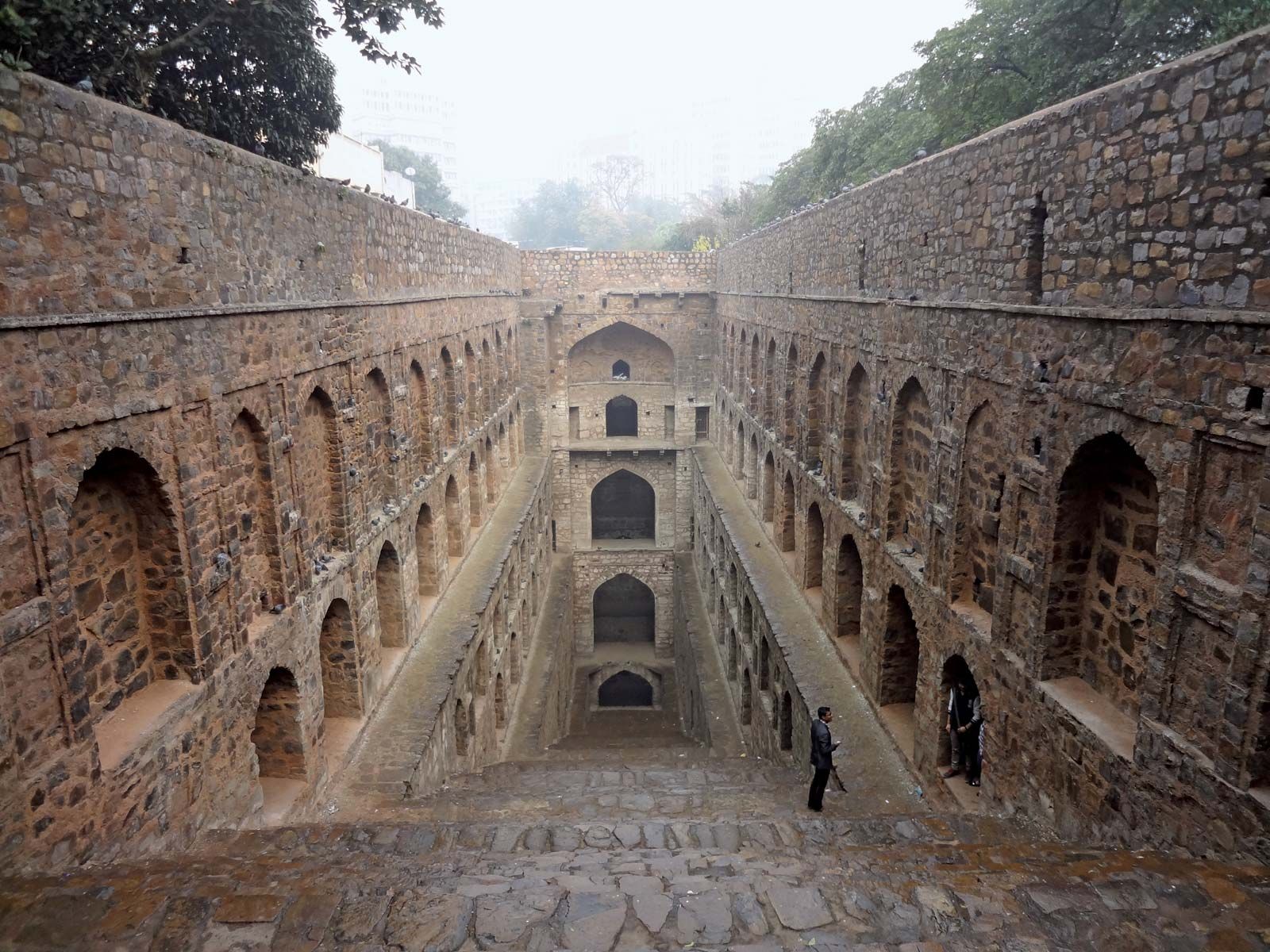
Agrasen ki Baoli, Delhi, India.
Stepwells required more than a hundred steps in dry seasons because they were designed to provide access to the water table, which could be located as deep as 10 stories underground in arid regions of India.1
Because the water level fluctuated significantly due to the monsoonal climate, the long, sloping staircases were essential to allow users to reach the water as it receded during the dry months. In these periods, the steps had to be negotiated all the way to the bottom story to access the water flowing through the well cylinder. Conversely, during the rainy season, the trench would fill with water, submerging the steps and transforming the structure into a large cistern.1